

BerQ RNG has completed the acquisition of a portfolio of assets from Sevana Bioenergy, including the Rialto Bioenergy Facility in California and a pipeline of renewable natural gas (RNG) development projects involving dairy and swine manure in Idaho, California and Kansas.
Announced on 6 October 2026, the transaction expands BerQ RNG’s portfolio across feedstocks and geographies, strengthening its position in the North American renewable natural gas sector.
Headquartered in Burlington, Ontario, BerQ RNG develops, owns and operates renewable natural gas facilities. The acquired assets combine an operating-scale organic waste processing facility with a pipeline of manure-based projects at the development stage.
Rialto facility designed to process 1,000 tonnes of waste daily
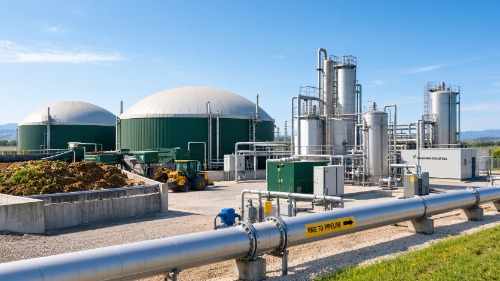
Located in Rialto, California, the Rialto Bioenergy Facility uses anaerobic digestion to convert organic waste into renewable natural gas. The facility is designed to process up to 1,000 tons of feedstock per day, including food waste diverted from municipal solid waste streams, liquid organic waste and municipal biosolids.
Its stated production capacity is up to 1 million MMBtu of RNG annually. The facility is also directly connected to the Southern California Gas Company pipeline network through a dedicated pipeline injection facility, enabling the renewable gas to be injected into the gas distribution system.
The acquisition gives BerQ RNG an asset that processes multiple organic waste streams, complementing its broader portfolio and reducing its reliance on a single feedstock category.
Acquisition expands manure-based RNG development pipeline
Alongside the Rialto facility, the transaction includes dairy and swine manure RNG development projects in Idaho, California and Kansas.
The combination of food waste, liquid organic waste, municipal biosolids and livestock manure broadens the feedstock base represented across BerQ RNG’s portfolio. It also extends the company’s development pipeline across several US states.
BerQ RNG chief executive officer Bas van Berkel said the Rialto facility fits the company’s strategy of owning and operating large-scale RNG infrastructure across North America.
“We look forward to applying our operating expertise to optimize performance at Rialto, working closely with the City of Rialto, our feedstock partners and the local community, and to advancing the development projects in Idaho, California and Kansas,” van Berkel said.
The company did not disclose the financial terms of the acquisition in the announcement.
Facility supports California’s organic waste diversion goals
The Rialto facility is intended to divert organic waste from landfills, supporting California’s efforts to reduce waste disposal and associated short-lived climate pollutants.
Its operations support the objectives of California Senate Bill 1383, which establishes requirements for reducing organic waste disposal in landfills and expanding the recovery of organic materials.
By processing food waste and other organic materials through anaerobic digestion, the facility can produce pipeline-quality renewable gas while diverting eligible waste streams from landfill disposal. The environmental benefits depend on feedstock characteristics, facility performance and the emissions associated with the full waste-to-gas pathway.
Bioenergy Business Analysis
BerQ RNG’s acquisition brings together a large-scale, multi-feedstock organic waste facility and a geographically dispersed pipeline of manure-based RNG projects. The Rialto facility’s stated design capacity of up to 1 million MMBtu of renewable natural gas annually makes it a significant component of the company’s expanded portfolio, although actual output and operating performance were not specified in the announcement.
The transaction also illustrates the role of anaerobic digestion in connecting waste management with renewable gas production. Food waste, municipal biosolids and livestock manure require different collection, handling and processing arrangements, making feedstock diversity an important operational consideration. Rialto’s direct pipeline connection provides an established route for gas injection, while the projects in Idaho, California and Kansas represent future development opportunities rather than confirmed operating capacity.