The United States could generate an additional 181 billion cubic feet of biogas annually by processing its discarded food through anaerobic digestion, according to research from the American Biogas Council (ABC).
The estimate is based on nearly 70 million US tons of surplus food generated in 2024, as reported by food-waste organisation ReFED. The additional biogas potential is equivalent to approximately 113 million million British thermal units (MMBtu) of energy, which ABC estimates could meet the annual energy needs of around 1.5 million US households.
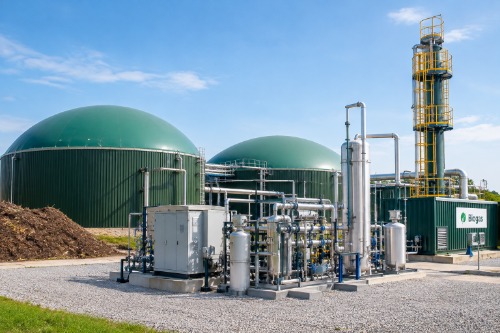
ABC’s research identified 404 operating facilities across 48 states that currently produce biogas from food waste. The findings highlight the existing role of anaerobic digestion in recovering energy from discarded food, alongside the potential to expand the sector’s capacity.
US has 404 operating food-waste biogas facilities
Of the 404 facilities identified, approximately 200 operate at farms and wastewater treatment plants, where food waste is combined with manure or wastewater to produce biogas.
The remaining 204 facilities process food waste alone. Together, these dedicated facilities capture approximately 36 billion cubic feet of biogas annually and represent nearly $3 billion in capital investment, according to ABC.
The council said its expanded research identified projects that had not been included in its previous inventory. This resulted in a 73% increase in the number of facilities compared with last year’s count, reflecting a more comprehensive assessment of the existing industry.
Food waste collected by these facilities comes from food manufacturers, grocery stores, restaurants and other sources. The material includes processing and beverage-manufacturing waste, as well as food discarded by retailers because it has spoiled, been rejected or remained unsold.
Patrick Serfass, Executive Director of the American Biogas Council, said the country was missing a significant opportunity to recover energy from discarded food.
“America is literally throwing away enough renewable energy to power millions of homes,” Serfass said. He added that the technology to produce energy from food waste was already operating, but the potential to expand its use remained substantial.
Food processing waste accounts for most dedicated facilities
Among the 204 food-waste-only facilities, 161 process pre-consumer food waste, primarily wastewater generated by food processing and beverage manufacturing.
The other 43 facilities handle retail food waste. These sites capture approximately 8.2 billion cubic feet of biogas annually, according to ABC.
Most dedicated food-waste facilities use the captured biogas to generate electricity and heat. The council reported that 164 facilities produce power, heat or both, while another 38 upgrade biogas into renewable natural gas (RNG).
Biogas is produced when microorganisms break down organic material in the absence of oxygen. Anaerobic digestion systems capture the resulting gas, which can be used directly for electricity and heat generation or upgraded to meet the requirements for renewable natural gas.
Newer projects account for a growing share of production and investment
ABC’s research also indicates that food-waste biogas projects have increased in scale and investment requirements in recent years.
The 42 facilities that have entered operation since 2020 account for 32% of the sector’s annual biogas production and 45% of its total investment. On average, these newer facilities capture nearly twice as much biogas as earlier projects and cost approximately three times as much to build.
Seven new food-waste projects became operational in 2025, all producing renewable natural gas. Together, they added more than twice the biogas capture capacity recorded in any other year since 2020, according to the council.
Anaerobic digestion could unlock five times more biogas
The largest opportunity identified in ABC’s research lies in expanding the amount of discarded food processed through anaerobic digestion.
ReFED’s 2026 US Food Waste Report estimates that the country generated 70 million tons of surplus food in 2024, equivalent to approximately 29% of its food supply. ABC estimates that processing this entire volume through anaerobic digestion could produce around 181 billion cubic feet of additional biogas each year.
That potential is approximately five times the annual output currently captured by the country’s dedicated food-waste biogas facilities, which produce around 36 billion cubic feet.
The estimated additional output represents approximately 113 million MMBtu of energy. ABC says this could meet the annual energy requirements of approximately 1.5 million US households.
Bioenergy Business Analysis
ABC’s findings point to a substantial opportunity for the US biogas sector to expand its use of food waste as a renewable energy feedstock. The existing network of 404 facilities demonstrates that food-waste digestion is already being deployed across multiple parts of the waste and agricultural sectors.
The distinction between dedicated food-waste facilities and co-digestion sites is important when assessing the market. While the 204 dedicated facilities account for approximately 36 billion cubic feet of annual biogas production, the wider network also includes farms and wastewater treatment plants that process food waste alongside other organic materials.
The estimated additional potential of 181 billion cubic feet is significant, but it should not be interpreted as a near-term production forecast. Processing all 70 million tons of surplus food through anaerobic digestion would require substantial additional infrastructure, feedstock collection and transport systems, as well as investment in digestion and gas-use facilities.