European Energy, Metafuels and Nordic airline Norwegian have signed a memorandum of understanding (MoU) to explore the development of a Danish value chain for electricity-based sustainable aviation fuel (e-SAF), linking renewable methanol production with aviation fuel technology and potential airline demand.
Under the agreement, the partners will assess the supply of e-methanol from European Energy’s Kassø facility in southern Denmark to Metafuels’ planned commercial-scale Turbe plant at the Port of Rotterdam. The facility is designed to use Metafuels’ aerobrew technology to convert renewable methanol into synthetic aviation fuel.
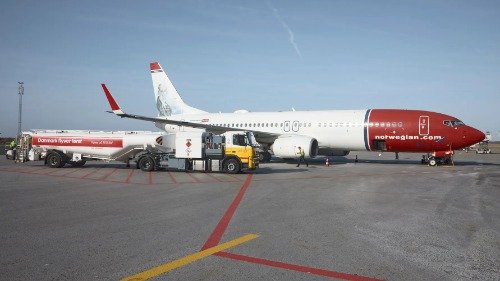
The collaboration also includes plans for a demonstration flight using e-SAF produced from European Energy’s Danish e-methanol. Metafuels will convert the methanol at its demonstration plant at the Paul Scherrer Institute (PSI) in Switzerland, after which Norwegian intends to use the resulting fuel in a flight. Norwegian’s separate announcement identifies 2028 as the target year for the demonstration.
The MoU builds on existing heads of terms between Metafuels and Norwegian for the future offtake of e-SAF from Turbe. The new partnership brings European Energy into the proposed supply chain as a potential e-methanol supplier. The companies have not disclosed a binding supply volume or a final commercial agreement under the new arrangement.
Turbe facility planned for 2030 operation
Turbe is Metafuels’ first commercial-scale aerobrew facility, planned for the Port of Rotterdam at the Evos Rotterdam terminal. McDermott is the engineering partner. According to the companies, front-end engineering and design is expected to be completed towards the end of 2026, with operations targeted for 2030.
The plant is intended to convert renewable methanol into synthetic aviation fuel for airlines, including Norwegian. Its development and operation remain subject to project execution and a final investment decision.
Beyond the Rotterdam project, the partners are exploring the possibility of establishing commercial-scale e-SAF production in Denmark, with a greater share of the value chain located in the country. Norwegian’s announcement identifies an ambition to develop Danish production capacity of up to 100 tonnes per day from 2033.
European Energy operates an e-methanol production facility at Kassø in southern Denmark. The facility began operations in May 2025 and has a stated production capacity of up to 42,000 tonnes of e-methanol annually.
Metafuels’ aerobrew process converts renewable methanol into synthetic aviation fuel through a methanol-to-jet pathway. The partnership is intended to connect methanol production, fuel conversion and airline use, with the proposed demonstration flight serving as an initial test of the value chain.
Saurabh Kapoor, chief executive officer of Metafuels, said: “aerobrew is the piece of the puzzle that turns green methanol into fuel an airline can actually fly on, and this partnership puts it to work for Denmark. We are following exactly the playbook that took us from the lab to an operating plant in Switzerland: demonstrate the full process chain, prove it works, then scale.”
Knut Olav Høeg, chief IT and business services officer at Norwegian, said the airline supports the development of new supply chains and production opportunities closer to the markets where the fuel will be used, adding that the partnership would help secure its future supply of e-SAF.
ReFuelEU Aviation creates demand for synthetic fuels
The partnership comes ahead of the synthetic aviation fuel requirements under the European Union’s ReFuelEU Aviation Regulation. The regulation sets minimum shares for sustainable aviation fuel in aviation fuel supplied at covered EU airports, alongside a dedicated sub-mandate for synthetic aviation fuels.
The synthetic-fuel requirement begins in 2030, with the required share increasing over time. The regulation is intended to create demand for e-fuels and other eligible synthetic aviation fuels as the aviation sector works to reduce its reliance on conventional fossil-based jet fuel.
The partners have also called on Danish and EU policymakers to use revenues from the EU Emissions Trading System (EU ETS) and Denmark’s air passenger duty to help address the price difference between e-SAF and conventional jet fuel.
Their proposals include increasing the number of SAF allowances under the EU ETS, directing revenue from Denmark’s passenger tax towards greener aviation and supporting a domestic flight-route tender between 2028 and 2029 that prioritises e-fuels.
The companies argue that financial support and long-term policy mechanisms will be needed to make European e-SAF production commercially viable and support the development of supply chains.
For now, the agreement establishes a framework for cooperation rather than a confirmed production or supply commitment. The proposed 2028 demonstration flight, the planned 2030 start-up of Turbe and the longer-term Danish production ambition represent separate stages in the partners’ intended development pathway.