


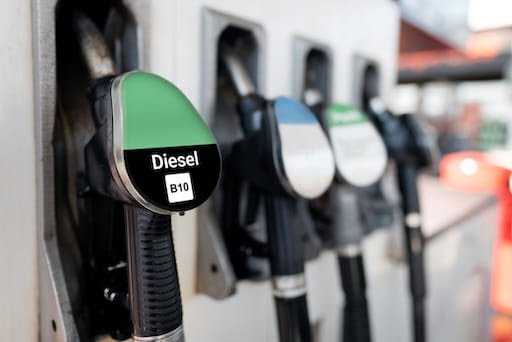
Thailand’s proposed plan to increase the market share of B20 biodiesel to 20% by 2032 could create additional domestic demand for palm-based fuel, with Petchsrivichai Enterprise (PCE) saying its existing production capacity and supply chain can support the expansion.
The Thai company currently operates its biodiesel facilities at approximately 30–40% of capacity, leaving room to increase production without immediate additional capital investment, according to comments from PCE Chief Strategy Officer Pornpipat Prasitsupaphol.
The proposed target is included in Thailand’s draft 2026 National Oil Plan, which aims to raise B20’s share of diesel sales from around 10% currently to 20% by 2032. The plan is undergoing public consultation and has not yet been finalised.
B20 is a diesel blend containing 20% biodiesel, with Thailand primarily using palm oil-derived methyl ester as its biodiesel feedstock. The government aims to expand domestic consumption of palm oil while reducing exposure to imported crude oil and global fuel-price volatility.
Thailand’s draft Oil Plan sets 2032 B20 target
The proposed B20 expansion forms part of Thailand’s broader strategy to strengthen domestic biofuel consumption and make greater use of agricultural feedstocks.
Under the draft National Oil Plan 2026, the government intends to retain B7 as the standard diesel grade while encouraging wider B20 adoption. The target is to increase B20’s share of the diesel market to 20% by 2032, compared with approximately 10% currently.
The proposal is also intended to absorb domestic palm oil supplies that might otherwise be exported. However, achieving the target will require coordination between fuel producers, palm oil suppliers, distributors and vehicle users.
PCE’s Pornpipat said domestic palm production could grow by around 5% annually over the longer term, potentially providing sufficient feedstock for higher biodiesel demand. He added that existing plantation areas could support increased B20 consumption over the next decade.
He cautioned, however, that an immediate move to full-scale B20 use would face supply constraints. Palm oil demand must also be balanced against food consumption and export requirements.
Weather conditions remain a factor in palm feedstock availability
Palm oil supply remains an important consideration for Thailand’s biodiesel expansion plans.
Pornpipat said the country’s palm fruit production in 2026 was expected to remain below 20 million tonnes, broadly in line with the previous year’s level. He also pointed to abundant rainfall during the year, noting that the period when palm trees require significant moisture had already passed.
The company is monitoring developments linked to El Niño and preparing for the possibility of tighter feedstock availability. Weather conditions in the coming year will be important in assessing future production levels.
The potential impact of weather-related supply fluctuations is particularly relevant as Thailand seeks to increase palm oil consumption in the energy sector without disrupting supplies for food and other uses.
PCE has room to increase biodiesel production
PCE said its biodiesel facilities are currently operating at approximately 30–40% of installed capacity, providing scope to increase output without significant additional investment in production infrastructure.
The company has also expanded its raw material sourcing network, improved extraction efficiency and strengthened its logistics capabilities. Its infrastructure includes ports, trucks and storage facilities intended to support feedstock procurement and product distribution.
PCE’s website lists three biodiesel production facilities with combined nameplate capacity of 1,100 tonnes per day. The company has not disclosed in the supplied announcement how much additional output it expects to produce specifically in response to the proposed B20 target.
Pornpipat also said the company’s profit margin stood at approximately 5–6%, compared with an industry benchmark of 4–4.5%. He attributed the performance to cost controls and its experience in methyl ester production.
Inventory and contracts form part of PCE’s supply strategy
PCE uses forward purchase and sales contracts to manage raw material availability and reduce exposure to fluctuations in crude palm oil prices.
The company holds approximately 4 billion baht worth of palm fruit inventory, according to Pornpipat. Its procurement and sales arrangements are intended to help manage price volatility and maintain continuity of supply.
The company’s available production capacity and supply-chain infrastructure could position it to respond to higher domestic biodiesel demand if Thailand proceeds with the proposed B20 expansion.
However, the draft Oil Plan remains subject to public consultation and further government consideration. The pace of B20 adoption will also depend on feedstock availability, fuel distribution infrastructure and the ability to balance biodiesel demand with other uses of palm oil.