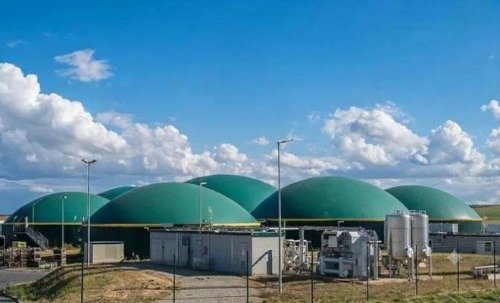
Bangladesh is planning to establish biogas villages across the country to expand access to renewable energy, address rural fuel shortages and create employment opportunities for young entrepreneurs. The initiative, announced by State Minister for Youth and Sports Md Aminul Haque on 21 November 2026, will involve the Department of Youth Development (DYD) in promoting biogas plants at village and community levels.
The proposed model would allow rural households to meet their cooking fuel requirements through locally produced biogas while generating additional income by supplying surplus gas to other consumers.
The government also intends to simplify loan disbursement procedures and increase financing limits, where necessary, to encourage young entrepreneurs to establish and operate biogas facilities.
Bangladesh seeks to develop community-based biogas enterprises
Speaking at an exchange meeting with Department of Youth Development officials at the National Institute of Youth Development in Savar, Aminul Haque said biogas plants would be encouraged in villages, neighbourhoods and localities across the country.
Under the proposed initiative, youth development officials will supervise the establishment of biogas villages. The approach is intended to promote decentralised energy production while creating opportunities for rural communities to participate in small-scale energy businesses.
The government plans to support young entrepreneurs through improved access to credit, with the possibility of increasing loan amounts depending on their requirements.
The announcement follows earlier government efforts to extend biogas technology to remote areas. In October 2026, the state minister said an action plan was being prepared to expand biogas facilities to underserved rural communities within two years.
Government reports 12,000 existing biogas connections
Bangladesh’s latest announcement builds on an existing programme to expand household-level biogas access.
In a separate statement reported on 21 November, Aminul Haque said that 12,000 biogas connections had already been provided, with the programme expected to expand further. He also indicated that additional loans would be made available to young people interested in producing and commercially supplying biogas.
This figure should be distinguished from a new installation target: the announcement reported 12,000 existing connections rather than a commitment to install another 12,000 plants.
Earlier, on 28 October, the state minister said the government was targeting 15,000 biogas connections nationwide, of which 12,000 had already been installed. The announcement was made during the inauguration of a biogas plant in Harinafulia, Barishal.
The same announcement highlighted the government’s interest in using biogas for electricity generation in addition to household cooking.
Barishal projects demonstrate local biogas potential
Existing installations in the Barishal region provide an example of how decentralised biogas production could support rural households and agricultural businesses.
According to the state minister’s announcement on 27 October, 81 biogas plants had already been installed in the region. Some entrepreneurs financed their facilities independently, while others received support through loans and training from the Department of Youth Development.
The programme is also intended to encourage more productive use of agricultural and livestock waste.
Cattle manure and poultry droppings can serve as feedstocks for anaerobic digestion, a biological process in which microorganisms break down organic material in oxygen-free conditions to produce biogas.
The resulting gas can be used for cooking and, with appropriate equipment, electricity generation. The remaining digestate can also be processed and used as an organic fertiliser, creating an additional potential revenue stream for agricultural households.
Financing and implementation will determine programme expansion
The government’s approach places considerable emphasis on youth entrepreneurship and access to finance.
Simplifying loan procedures and increasing credit limits could help address the upfront investment requirements associated with installing biogas digesters and associated equipment. However, the nationwide expansion will also require technical training, reliable plant maintenance, appropriate feedstock management and arrangements for distributing gas to consumers.
The October announcement of a two-year expansion plan for remote areas and the November proposal for biogas villages indicate that Bangladesh is pursuing a broader community-based approach to decentralised energy production.
The extent to which the initiative can reduce dependence on conventional fuels and generate sustainable rural income will depend on implementation, financing and the commercial viability of individual installations.