Queensland’s Governance, Energy and Finance Committee has recommended against proposed legislation to strengthen ethanol and biodiesel blending requirements, creating further uncertainty for Australia’s domestic biofuels industry and potential investment in sugarcane-based fuel production.
The committee’s recommendation, follows its review of the Liquid Fuel Supply (Ethanol and Other Biofuels Mandate) Amendment Bill 2026, introduced by Katter’s Australian Party MP Shane Knuth in May.
The proposed legislation sought to increase the minimum ethanol content in E10 petrol to at least 9%, introduce a minimum 1% ethanol requirement for other petrol blends and establish a 2% biodiesel blending requirement for diesel.
However, the committee raised concerns about compliance obligations, penalties and potential conflicts with national fuel-quality standards. It recommended that the Bill not be passed and called for a nationally consistent approach to biofuel policy.
The Bill remains before the Queensland Parliament, with its second reading yet to be scheduled for debate, according to ABC News on 25 November.
Queensland committee questions proposed biofuel mandate changes
The proposed amendment sought to strengthen the state’s existing biofuel framework under the Liquid Fuel Supply Act 1984.
Under Queensland’s current requirements, liable fuel retailers must ensure that sustainable biobased petrol accounts for at least 4% of the combined sales volume of regular unleaded petrol and ethanol-blended petrol. Fuel wholesalers are separately required to meet a 0.5% biodiesel mandate.
The proposed changes would have introduced additional minimum blending requirements:
- E10 petrol: At least 9% ethanol.
- Other petrol blends: At least 1% ethanol.
- Diesel: At least 2% biodiesel.
The Bill also proposed requiring retailers to display the octane rating of fuels marketed as E10.
The committee’s concerns included the practical implications of enforcing the proposed requirements and the potential for different state-level fuel specifications to conflict with national standards.
The Australian Institute of Petroleum opposed strengthening the mandates, warning that additional blending requirements could create fuel-quality and infrastructure challenges. Its chief executive, Malcolm Roberts, also raised concerns that some service stations could face modification costs that might ultimately be passed on to consumers.
The committee argued that a nationally coordinated policy framework would be a more appropriate way to advance biofuel adoption.
Sugar industry calls for stronger policy support
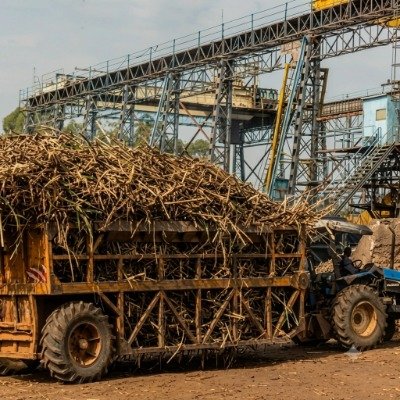
The committee’s recommendation has disappointed sections of Australia’s sugar and agricultural industries, which see biofuels as an opportunity to diversify agricultural production, strengthen domestic fuel supply and create additional regional economic activity.
Queensland Canegrowers and Australian Sugar Manufacturers have argued that the state has considerable agricultural resources and existing industrial infrastructure that could support expanded ethanol production.
Australian Sugar Manufacturers chief executive Ash Salardini has suggested that domestically produced ethanol could potentially meet almost 15% of Australia’s petrol demand and support approximately 20,000 jobs.
However, these figures represent industry estimates of potential opportunities rather than confirmed production or employment outcomes.
Industry representatives have also argued that Australia could make greater use of its existing biofuel production capacity instead of relying on imported fuel supplies while domestic producers export some of their output.
According to the Biofuel Producers Alliance, facilities across Queensland, New South Wales and Victoria have combined ethanol and biodiesel production capacity of approximately 470 megalitres annually.
The availability of this capacity does not necessarily translate into equivalent domestic supply, as production, feedstock availability, market demand and commercial purchasing arrangements influence how much fuel is sold within Australia.
MSF Sugar links ethanol investment to policy certainty
The uncertainty surrounding Queensland’s biofuel policy is also affecting investment considerations in the sugar industry.
MSF Sugar, which operates four sugar mills in Queensland, has invested A$86 million in a renewable energy power station at its Tablelands Sugar Mill. The facility uses sugarcane fibre, known as bagasse, to generate electricity and has a stated generation capacity of 24 MW.
The company is also considering a multi-million-dollar ethanol production facility in Far North Queensland.
MSF Sugar’s strategic programme director and head of cane supply, Mark Magnanini, has highlighted the importance of clearer policy settings before the company commits further capital to the proposed development.
He indicated that the project could potentially produce 65 million litres of ethanol annually by 2029 if investment decisions and supporting conditions were in place.
The proposed production capacity remains a potential development rather than an operational achievement.
For sugar producers, a stronger domestic biofuel market could provide an additional outlet for agricultural feedstocks and create revenue opportunities beyond conventional sugar production.
Australia’s national cleaner fuels policy adds another dimension
The Queensland committee’s recommendation comes as the Australian federal government advances its broader bioenergy and cleaner fuels agenda.
In August 2026, the federal government released its National Bioenergy Feedstock Strategy and announced a A$1.1 billion Cleaner Fuels Program aimed at supporting the development of Australia’s domestic low-carbon liquid fuels industry.
The government is also consulting on measures to increase demand for low-carbon liquid fuels.
These national initiatives could provide an alternative policy pathway for expanding ethanol, biodiesel, renewable diesel and sustainable aviation fuel production.
However, the relationship between federal policy and state-level blending obligations will be important in determining how quickly domestic producers can secure long-term demand.
For Queensland’s sugar and biofuel industries, the committee’s recommendation leaves the proposed state-level mandate changes facing another legislative hurdle. The next significant development will be the Bill’s consideration by the Queensland Parliament and the direction of the federal government’s national cleaner fuels framework.