

Researchers at Washington University in St. Louis (WashU) have developed a laboratory process that converts waste carbon dioxide (CO₂) into protein-rich fungal biomass, demonstrating a potential route for using captured carbon in food production.
The research, combines electrochemical carbon conversion with fungal cultivation to produce biomass containing 48.5% protein. The system uses electricity and a copper-gold catalyst to convert CO₂ into compounds that can support the growth of Neurospora intermedia, an edible fungus traditionally used in the production of Indonesia’s fermented food, oncom.
The study, led by researchers associated with WashU’s Engineering Research Center for Carbon Utilization Redesign through Biomanufacturing-Empowered Decarbonization (CURB), explores how carbon utilisation technologies can be extended beyond chemicals and materials to alternative protein production.
Electrochemical conversion supplies carbon for fungal growth
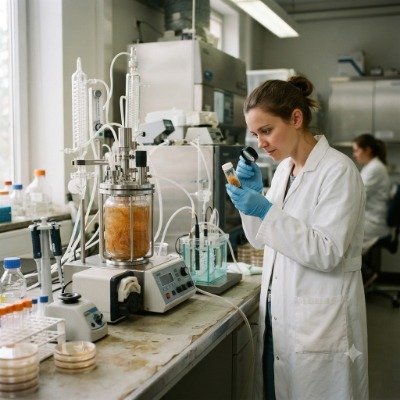
The process consists of two connected stages. In the first, an electrochemical conversion system uses electricity and a catalyst containing copper and gold to transform CO₂ into intermediate compounds that the fungus can consume.
The second stage uses these compounds as a carbon source for cultivating N. intermedia, which converts them into fungal biomass.
The researchers designed the conversion stage around the fungus’s specific nutritional requirements and sensitivity to certain chemical byproducts. The catalyst was selected to favour the production of usable intermediates while limiting the formation of compounds that could inhibit fungal growth.
Explaining the challenge, doctoral researcher Wei Wei said: “This fungus is a picky eater.”
The coordinated design of the electrochemical and biological stages is central to the approach, allowing the carbon conversion system to produce a more suitable feedstock for microbial cultivation.
Fungal biomass contains 48.5% protein
According to WashU, the researchers produced the fungal biomass in seven days before harvesting and freeze-drying it.
The resulting material was processed into a light, brittle sheet and ground into powder for potential food applications.
The university reported a protein content of 48.5%, alongside beta-carotene, B vitamins and unsaturated fatty acids. These characteristics indicate potential for further development as an alternative protein ingredient.
However, the research remains at the laboratory stage. The material’s nutritional composition does not, by itself, establish its suitability for commercial food production. Further work will be needed to establish ingredient specifications, processing performance, consistency between production batches and consumer acceptability.
Research builds on traditional fungal fermentation
The choice of Neurospora intermedia draws on the organism’s established use in food fermentation.
A separate study published in Nature Microbiology in 2024 identified the fungus as the dominant species in oncom samples collected from small-scale producers in western Java, Indonesia.
Traditional oncom production uses residues from food processing as fermentation feedstocks. The WashU research takes a different approach by supplying the fungus with carbon-derived intermediate compounds produced through electrochemical conversion.
The two approaches demonstrate different ways of using fungal fermentation to turn carbon-containing feedstocks into food-related products.
System reports 4.35% sunlight-to-biomass efficiency
The research also reported an efficiency of 4.35% for converting sunlight energy into edible biomass through the system.
The university highlighted the potential for renewable electricity, including solar and wind power, to support the process and reduce its environmental footprint.
However, the reported efficiency should be considered alongside the energy requirements of the complete production chain. Electrochemical CO₂ conversion, biomass recovery and freeze-drying all contribute to the process’s overall energy demand.
The availability and purity of the CO₂ feedstock, electricity source, catalyst requirements and downstream processing costs will also influence the technology’s industrial feasibility.
Consequently, the laboratory efficiency figure alone does not establish commercial production costs, industrial throughput or the process’s net greenhouse gas balance.
CURB researchers explore scale-up and product development
The research was conducted through CURB, which focuses on developing electro-biomanufacturing technologies that convert waste carbon into useful products.
Joshua Yuan, who directs the centre and chairs WashU’s Department of Energy, Environmental & Chemical Engineering, said the group intends to increase production capacity and develop a product that consumers would accept.
“We want to scale up our production,” Yuan said.
According to the university, CURB researchers have already established one startup company and are working towards establishing another to commercialise technologies emerging from the centre’s wider research programme. A separate company focused on this fungal protein process could become a third venture.
The next stage will involve developing a viable food product from the laboratory-produced biomass. Its commercial potential will depend on whether researchers can demonstrate consistent production, acceptable taste and texture, suitable processing characteristics and competitive manufacturing economics.
For the carbon utilisation industry, the research adds another potential application for CO₂ conversion technologies. Rather than using captured carbon exclusively to manufacture fuels, chemicals or industrial materials, the approach explores its use as a feedstock for microbial protein production.
However, commercial deployment will depend on successful scale-up and a clearer understanding of the technology’s energy, economic and environmental performance.