

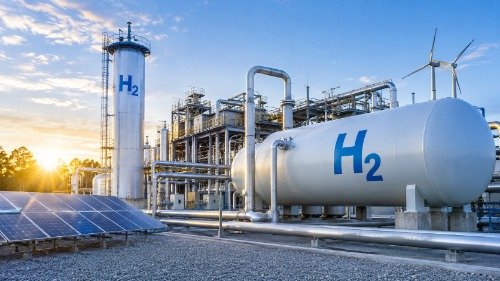
Thyssenkrupp Steel has launched a new tender to secure hydrogen supplies for its direct reduction plant in Duisburg, Germany, with the first procurement tranche expected to cover between 20,000 and 40,000 tonnes annually from 2031.
The German steelmaker said suppliers can register their interest until 17 December 2026, after which the bidding phase will begin. The final volume awarded will depend on the bids received and the commercial terms offered.
The tender marks a revised approach to securing hydrogen for the company’s tkH2Steel decarbonisation project, following the suspension of its previous procurement process in 2025. The revised schedule reflects changes in the hydrogen market, including higher-than-expected prices and slower development of production and transport infrastructure.
Hydrogen use planned to begin in 2031
Under the revised plan, the Duisburg direct reduction plant will initially operate on natural gas during its production ramp-up after construction is completed. Thyssenkrupp Steel said this operating configuration would still reduce CO₂ emissions by more than 50% compared with conventional blast furnace-based production.
Hydrogen is scheduled to begin replacing part of the natural gas from 2031. The company plans to increase its use over time, with full hydrogen operation envisaged at a later stage.
The phased approach is aligned with the revised funding conditions approved for the project by the German federal government and the state of North Rhine-Westphalia. The company said the revised requirements provide greater flexibility to increase hydrogen use in line with market availability and economic conditions.
Duisburg plant designed for 2.5 million tonnes of DRI annually
The direct reduction plant is designed to produce 2.5 million tonnes of direct reduced iron (DRI) annually. It will be integrated into thyssenkrupp Steel’s existing Duisburg steelworks alongside two downstream smelters, which have a combined capacity of 2.3 million tonnes of hot metal per year.
Direct reduction uses a reducing gas to remove oxygen from iron ore and produce DRI, an intermediate material used in steelmaking. Hydrogen can replace carbon-based reducing agents in this process, potentially reducing emissions when produced using renewable electricity.
According to thyssenkrupp Steel, the plant has the potential to avoid approximately 3.5 million tonnes of CO₂ emissions annually compared with blast furnace production when operating entirely on hydrogen.
New tender follows suspension of earlier procurement process
The latest tender replaces an earlier procurement process launched in February 2024. At that time, thyssenkrupp Steel sought renewable and low-carbon hydrogen under long-term supply contracts, with deliveries planned to begin in 2028.
The original procurement schedule envisaged 104,000 tonnes of hydrogen in 2028, rising to 143,000 tonnes annually between 2029 and 2035, and reaching 151,000 tonnes per year in 2036 and 2037.
However, the company suspended the tender in 2025 after initial price indications from potential suppliers were significantly higher than anticipated. The decision also reflected uncertainty over the development of the hydrogen market and the availability of the infrastructure needed to supply the Duisburg site.
On 30 October 2026, thyssenkrupp Steel announced that it had received the definitive revised funding decision for the tkH2Steel project. The updated funding requirements provide for a more gradual increase in hydrogen use, taking account of slower-than-expected market development and the higher cost of hydrogen.
The new procurement process is intended to secure the initial volumes needed for the plant’s revised transition schedule. The final contracted quantity will be determined after the company evaluates supplier bids.