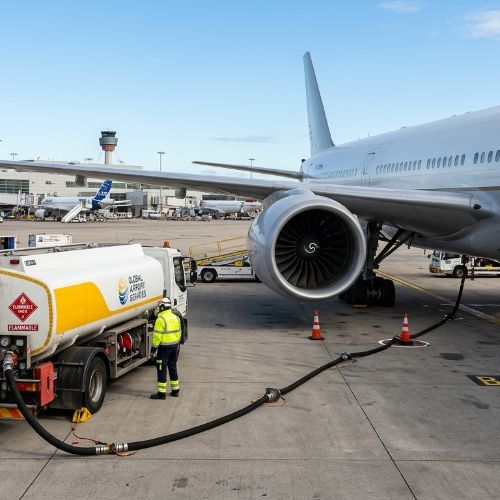
The high cost and limited availability of sustainable aviation fuel (SAF) are creating significant barriers to aviation decarbonisation in Asia-Pacific, with the Association of Asia Pacific Airlines (AAPA) calling for greater involvement from governments, fuel producers, airports and investors to make the transition commercially viable.
AAPA Director General Wong Hong said airlines should not be expected to bear the financial burden of switching to lower-carbon aviation fuels independently, as production capacity, supply constraints and pricing continue to challenge wider SAF adoption. Asia-Pacific supply is also a policy issue. India has proposed a national council on sustainable aviation fuel to coordinate its approach.
Speaking at the association’s 70th Assembly of Presidents in Kuala Lumpur on 13 November 2026, Wong highlighted the difficulty of balancing emissions reduction commitments with airlines’ financial performance.
He noted that the transition remained expensive and uneven, despite SAF being central to the aviation industry’s decarbonisation ambitions.
SAF Costs Two to Five Times More Than Conventional Jet Fuel
The price difference between sustainable aviation fuel and conventional jet fuel remains a major obstacle to commercial adoption.
According to AAPA, SAF typically costs between two and five times more than conventional jet fuel. This premium increases the financial commitment required from airlines seeking to incorporate sustainable fuels into their operations.
SAF can be produced from several sustainably sourced feedstocks and energy pathways, including used cooking oil, biomass waste, agricultural residues, renewable energy and captured carbon.
However, scaling production while maintaining competitive prices remains a challenge for the emerging fuel market.
The International Air Transport Association (IATA) estimates that SAF could account for up to 65% of the emissions reductions required for the aviation industry to achieve net-zero carbon emissions by 2050.
This makes the availability of commercially viable SAF an important factor in the sector’s long-term decarbonisation strategy.
AAPA Calls for Wider Industry Participation
Wong said the transition to sustainable aviation fuel requires coordinated action across the aviation and energy value chains.
He identified governments, fuel producers, airports, investors and other industry stakeholders as essential participants in creating the conditions needed for wider SAF adoption.
The association’s position highlights the limitations of relying on airlines alone to absorb the additional costs associated with sustainable fuel procurement.
Greater collaboration across the ecosystem will be necessary to address production capacity, improve fuel availability and support the development of a commercially sustainable market.
The challenge extends beyond the cost of individual fuel purchases to the broader infrastructure, investment and supply-chain requirements associated with expanding SAF production and distribution.
Rising Jet Fuel Prices Add to Airline Cost Pressures
The SAF affordability challenge comes as Asia-Pacific airlines face wider operating cost pressures.
Rising conventional jet fuel prices amid the prolonged conflict in Iran have added to airline expenditure, putting further pressure on profit margins. Airlines also have limited scope to pass the full increase in operating costs on to passengers.
These conditions create an additional commercial challenge for carriers considering the adoption of more expensive sustainable fuels.
The broader fuel-price environment is also affecting airline financial planning, as operators attempt to balance operating expenditure with longer-term sustainability commitments.
Aircraft and Engine Supply Constraints Complicate the Transition
Fuel affordability is not the only challenge facing the regional aviation industry.
Wong also highlighted persistent supply-chain constraints affecting aircraft deliveries, engine availability and maintenance operations.
Delivery delays are restricting airlines’ ability to expand their fleets, while engine shortages and maintenance bottlenecks are affecting fleet utilisation.
These constraints are making operational planning increasingly difficult, particularly as airlines attempt to manage capacity and respond to sustained demand for air travel across the region.
Despite the challenging operating environment, Wong said underlying demand for connectivity in Asia-Pacific remained strong.
He stressed the importance of building resilience, pursuing growth opportunities and strengthening cooperation across the aviation industry to manage future disruptions.
Bioenergy Business Analysis
The concerns raised by AAPA highlight a central challenge for the sustainable aviation fuel market: expanding production is not enough unless the resulting fuel can be supplied at prices airlines can commercially absorb.
With SAF potentially contributing up to 65% of the emissions reductions required for aviation to reach net zero by 2050, the gap between its strategic importance and current commercial affordability remains significant.
For SAF producers, the challenge is to expand production capacity, improve feedstock availability and develop more competitive production pathways. For governments and investors, the priority is to create financing and policy conditions that support market development without placing a disproportionate cost burden on airlines.
The development of a commercially viable SAF market will therefore depend on coordinated investment and cooperation across the fuel-production and aviation value chains.