


The Anaerobic Digestion and Bioresources Association (ADBA) has called on the UK government to reinvest a share of North Sea gas revenues into the Green Gas Support Scheme (GGSS), warning that the programme’s budget is fully committed and biomethane projects are being held back.
The appeal follows approval of the Jackdaw gas field, which ADBA welcomed as a step towards strengthening domestic gas supply. However, the trade association argued that investment should also support renewable gas production to provide a longer-term alternative to imported liquefied natural gas (LNG) and declining North Sea reserves.
ADBA has urged the government to increase the GGSS budget using revenues from North Sea production, including through the newly announced Energy Wealth Fund. It said additional funding could enable more biomethane projects to progress and expand the UK’s domestic renewable gas supply.
ADBA Calls for Additional Green Gas Support Scheme Funding
ADBA said the existing GGSS budget is fully committed, leaving further biomethane developments without the support needed to move forward.
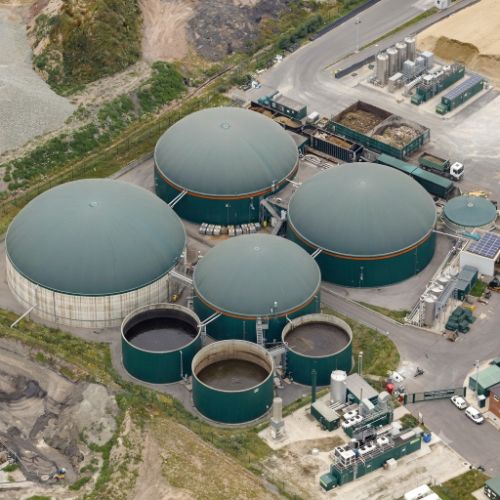
The scheme supports biomethane production through anaerobic digestion, helping eligible projects supply renewable gas to the UK gas network. Additional funding could create opportunities for new projects to secure support and contribute to domestic energy supply.
The association welcomed the Jackdaw approval as a “good first step” towards prioritising domestically produced gas over imported LNG. However, it argued that North Sea revenues should also be directed towards technologies capable of supplying renewable gas beyond the productive lifespan of individual fossil fuel fields.
The proposed approach would connect revenues from conventional gas production with investment in renewable gas infrastructure, including biomethane facilities that process organic materials such as agricultural residues and waste.
Biomethane Could Outlast North Sea Gas Production
ADBA highlighted the expected production profile of the Jackdaw gas field to underline the need for longer-term investment in domestic gas supplies.
According to the association, Jackdaw is expected to produce up to 25 TWh of gas annually at peak output over a lifespan of up to 11 years.
By comparison, ADBA estimates that British biomethane production could exceed Jackdaw’s peak annual output by the early 2030s if the sector receives adequate policy support. By 2050, the association projects that domestic biomethane production could exceed 100 TWh annually.
ADBA said this level of production could meet between 20% and 50% of UK gas demand, while reducing carbon and methane emissions associated with agriculture and waste management.
These figures represent the association’s projections rather than confirmed production commitments. Achieving them would depend on additional investment, project development, feedstock availability and the policy framework governing renewable gas deployment.
North Sea Revenues Could Support Renewable Gas Expansion
ADBA has proposed using a share of North Sea revenues, including resources associated with the Energy Wealth Fund, to increase funding for the GGSS.
The association argues that this could help accelerate domestic biomethane production while strengthening energy security and reducing reliance on imported gas.
Biomethane offers a route to convert organic materials into a usable gas that can be supplied through existing gas infrastructure, subject to the necessary processing and network requirements. Anaerobic digestion can also support waste management and provide opportunities to recover value from agricultural and other organic residues.
An increase in scheme funding could therefore support renewable gas production alongside the UK’s existing gas supply sources. However, the proposal would require government action, and no additional GGSS allocation was confirmed in the association’s announcement.
ADBA Highlights Energy Security and Emissions Benefits
Chris Huhne, chair of ADBA and a former UK energy secretary, argued that domestically produced gas offers advantages over imported LNG in terms of energy security, cost and carbon emissions.
He said reinvesting a share of North Sea revenues into the GGSS would allow the biomethane industry to expand domestic renewable gas production over time, continuing to supply energy after the Jackdaw field reaches the end of its productive life.
His comments reflect ADBA’s broader argument that renewable gas should form part of the UK’s long-term energy security strategy rather than relying on investment in finite fossil fuel resources alone.
Related international developments include Delorean’s SA1 biomethane plant operating licence, which precedes commissioning, and PurposeEnergy’s commissioned Ohio biogas facility, which supplies industrial process heat rather than grid-injected biomethane.
Bioenergy Business Analysis
ADBA’s proposal places biomethane funding at the intersection of UK energy security, waste management and the transition towards lower-carbon gas supplies.
The comparison with Jackdaw highlights the different production profiles of fossil gas and renewable gas. While a conventional gas field has a finite operating life, biomethane production could continue across multiple facilities as long as suitable feedstocks, infrastructure and viable operating conditions remain available.
However, the sector’s projected growth will depend on more than funding alone. Developers also need predictable policy support, access to feedstocks, viable project economics and suitable routes to market.
Reinvesting North Sea revenues into the Green Gas Support Scheme is ADBA’s proposed mechanism for addressing the current funding constraint. Whether the government adopts this approach, and how any additional support is structured, will determine its potential contribution to the UK’s renewable gas capacity.
The key question is whether the UK can translate its biomethane resource into sustained commercial production at a scale that meaningfully strengthens domestic gas supply while delivering measurable environmental benefits.


