


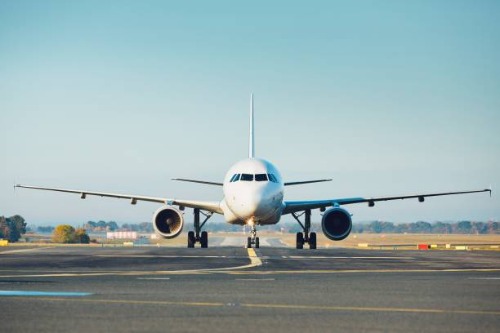
Air France-KLM sees India as a potential sustainable aviation fuel (SAF) production hub as the country’s aviation market expands and policymakers move towards establishing a domestic SAF ecosystem.
Speaking to CNBC-TV18, Zita Schellekens, Senior Vice President, Strategy, Sustainability & Transformation at KLM, said India has “tremendous potential” to become a successful SAF producer, pointing to its growing aviation market and increasing focus on sustainability. “India has all the ingredients to become a successful SAF producer,” Schellekens added further.
Her comments come as Air France-KLM explores opportunities to work with Indian SAF producers, including potential partnerships and long-term offtake arrangements.
Air France-KLM explores Indian SAF partnerships
Schellekens said the opportunity for India extends beyond supplying SAF for its domestic aviation market.
According to her, Air France-KLM could explore cooperation with Indian producers, including offtake agreements for SAF produced in the country. The group could also work with corporate customers and other Indian stakeholders as the domestic SAF market develops.
The comments are consistent with Air France-KLM’s broader approach to securing future SAF supply through producer partnerships and offtake agreements. The group says it is targeting up to 10% SAF incorporation by 2030 and continues to secure volumes through agreements with producers across different technologies and regions.
However, Schellekens indicated that Air France-KLM is not primarily looking to become a direct investor in every SAF production project. A separate report by The Economic Times said the group is exploring investments alongside partners but “hardly” makes direct investments, while offtake agreements remain possible where sufficient demand exists.
India could serve both domestic and international SAF demand
India’s expanding aviation market provides a potential domestic demand base for SAF, while its access to agricultural residues, waste-based feedstocks and renewable energy could support production across several SAF pathways.
A recent Boeing and Roundtable on Sustainable Biomaterials assessment cited by The Economic Times gave India an overall SAF-readiness score of 52% and identified substantial potential production capacity relative to projected demand under a 2030 blending scenario.
For Air France-KLM, Indian production could therefore create an opportunity to connect a growing aviation market with international SAF demand.
Schellekens said the group could work with Indian stakeholders to ensure that SAF produced in the country meets the sustainability requirements applicable to the European market.
That consideration is important because Air France-KLM applies sustainability requirements to SAF purchased globally. The group says the fuels it sources must demonstrate at least a 65% lifecycle CO₂ reduction, avoid competition with human and animal food supplies and not use palm-oil-derived materials.
SAF remains significantly more expensive than conventional jet fuel
Cost and availability remain major barriers to wider SAF deployment.
Schellekens said SAF currently costs around two to four times more than conventional kerosene, while production volumes remain insufficient to meet potential demand.
“If there’s no SAF available, you cannot use it,” she said, highlighting supply availability as a central constraint.
Air France-KLM has previously identified the limited scale of SAF production as one of the key challenges facing the market. The group has responded by securing long-term supply through offtake agreements and partnerships with producers using different SAF technologies.
The price gap also means that policy mandates and voluntary demand mechanisms remain important to creating a market for new production capacity.
European demand creates potential export opportunity
For Indian producers, meeting European sustainability requirements could be particularly important if SAF is intended for international offtake.
Air France-KLM says all SAF it purchases must meet its sustainability requirements and be certified through recognised systems such as the Roundtable on Sustainable Biomaterials (RSB) or International Sustainability and Carbon Certification (ISCC+).
This could make certification, traceability and feedstock sustainability important considerations for Indian SAF projects targeting international airlines.
The issue is particularly relevant for waste- and residue-based pathways, where the sustainability performance of the feedstock and its supply chain can have a significant effect on the lifecycle emissions profile of the resulting fuel.
HEFA dominates current SAF production
Schellekens said HEFA, or hydroprocessed esters and fatty acids, is currently the most widely produced SAF pathway.
HEFA uses oils and fats, including waste-based feedstocks, but the availability of suitable feedstocks can constrain future scale. KLM has similarly noted that most current SAF supply comes from HEFA and that the quantities of suitable waste oils and fats are limited.
This limitation is one reason the industry is developing additional pathways, including alcohol-to-jet (ATJ), Fischer-Tropsch routes and power-to-liquid synthetic fuels.
Air France-KLM sees potential in e-SAF
The group is also interested in synthetic e-SAF produced using renewable electricity, hydrogen and captured CO₂.
Schellekens said Air France-KLM is open to different SAF pathways provided they satisfy the group’s sustainability requirements. However, she identified affordability as a significant challenge for newer technologies such as e-SAF.
The pathway has attracted increasing attention because it does not depend on the same waste-oil and fat feedstocks used by HEFA. Instead, e-SAF can be produced from renewable hydrogen and carbon dioxide using renewable energy.
KLM has already participated in e-SAF demonstration activity. Its current sustainability material notes that the group uses SAF certified against strict sustainability requirements, while KLM has also publicly highlighted e-SAF as an important technology for future aviation decarbonisation.
SAF also viewed as an energy-security issue
Beyond emissions reduction, Schellekens described SAF as increasingly important from a strategic and “sovereign” aviation-fuel perspective.
The argument is that greater domestic production could reduce exposure to global fossil-fuel markets and give countries greater control over part of their aviation fuel supply.
For India, this adds an energy-security dimension to the development of a domestic SAF industry. Production capacity could potentially serve Indian airlines while also creating opportunities to supply international carriers, subject to applicable sustainability, certification and market requirements.
India’s SAF opportunity depends on scaling supply
Air France-KLM’s interest does not by itself establish a confirmed investment or offtake agreement with an Indian SAF producer. Instead, the comments indicate that the airline group is examining potential partnerships and supply opportunities as India’s SAF market develops.
For Indian producers, the potential opportunity will depend on more than available feedstock. Projects targeting international airlines will need to demonstrate reliable production, sustainable feedstock sourcing, certification, competitive lifecycle emissions and commercially viable pricing.
The challenge is therefore to move from India’s theoretical feedstock and renewable-energy potential to bankable SAF projects capable of delivering consistent volumes.
Bioenergy Business Analysis
Air France-KLM’s comments highlight a potentially important link between India’s emerging SAF industry and international aviation demand. India could develop SAF production for both domestic consumption and export-oriented offtake, but international sales will require projects to satisfy stringent sustainability and certification requirements.
The bigger constraint remains economics. With SAF still significantly more expensive than fossil kerosene and supply below potential demand, Indian producers will need long-term offtake commitments, supportive policy frameworks, reliable feedstock supply chains and access to competitive renewable energy. Air France-KLM’s willingness to explore partnerships and offtake arrangements indicates potential market interest, but it should not be interpreted as a confirmed commitment to any specific Indian project at this stage.