


Assam is strengthening its solid waste management framework under the Solid Waste Management Rules, 2026, with mandatory four-stream segregation, tighter obligations for bulk waste generators, expanded waste-to-energy infrastructure and time-bound remediation of legacy dumpsites.
The national rules, notified by the Ministry of Environment, Forest and Climate Change (MoEFCC), replaced the 2016 framework and came into effect on April 1, 2026. The revised rules place greater emphasis on source segregation, biological processing of organic waste, material recovery, online monitoring and restrictions on landfilling.
Assam’s implementation strategy was outlined at a joint press conference involving the Pollution Control Board Assam (PCBA), Swachh Bharat Mission (Urban) and Swachh Bharat Mission (Gramin).
PCBA Chairman Dr Arup Kumar Mishra said waste management needs to be treated as a shared responsibility involving local bodies, institutions and citizens, rather than as an issue limited to pollution control authorities.
Four-way waste segregation becomes mandatory
Under the new rules, waste generators are required to segregate municipal solid waste at source into four streams: wet biodegradable waste, dry recyclable waste, sanitary waste and special care waste.
The special-care category covers materials requiring separate handling, including batteries, medicines, bulbs and certain healthcare-related items. The national framework requires wet waste to be composted or processed through biomethanation, while dry waste is to be channelled towards material recovery and recycling.
Assam has begun incorporating the four-stream system into its local implementation framework. The Kamrup Metropolitan district administration, for example, identifies four-way segregation, bulk waste generators, legacy waste management and material recovery facilities as key implementation areas.
The revised rules also prohibit practices including dumping waste on roadsides or into drains and open burning. Environmental compensation can be imposed for non-compliance under the national framework.
Bulk waste generators face new processing obligations
The 2026 rules introduce a defined category of Bulk Waste Generators (BWGs).
Entities with a floor area of at least 20,000 square metres, water consumption of 40,000 litres or more per day, or solid waste generation of at least 100 kg per day fall within the definition.
Bulk waste generators are required to register through the centralised system and take responsibility for processing their waste. For wet waste, the framework provides for on-site treatment through options such as composting and biomethanation.
The rules also move reporting and monitoring towards a centralised online platform, while waste-processing facilities are subject to audit requirements.
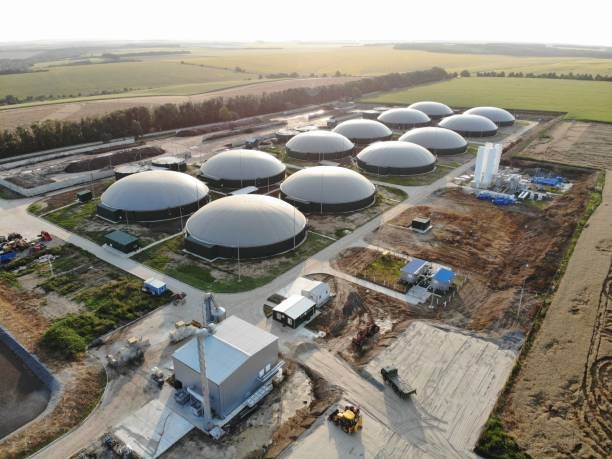
For Assam, this creates a stronger regulatory basis for decentralised organic-waste processing, including biomethanation facilities capable of converting segregated wet waste into biogas and, where upgraded, compressed biogas (CBG).
Assam expands CBG and waste-to-energy infrastructure
Assam is also linking its municipal waste strategy with renewable-gas production.
According to the state-level implementation announcement, CBG plants are being established in five major cities through public-private partnerships involving Oil India Limited.
The approach is significant because segregated organic municipal waste can serve as a feedstock for anaerobic digestion. The resulting biogas can be cleaned and upgraded to increase methane concentration before being compressed for use as CBG.
This provides a potential pathway for Assam to move a portion of biodegradable municipal waste away from disposal and towards energy recovery.
The national SWM Rules 2026 specifically require wet waste to be processed through composting or biomethanation at the appropriate facility, reinforcing the role of biological waste treatment in the new waste-management framework.
Focus shifts to legacy waste and dumpsite remediation
Assam is simultaneously addressing accumulated waste at existing disposal sites.
Of 651 identified garbage-vulnerable points, 561 have reportedly been transformed. In addition, 59 Urban Local Bodies (ULBs) have mapped legacy waste sites, while infrastructure audits are being carried out across all 96 ULBs.
The national rules require states and local authorities to map and assess legacy waste dumpsites and undertake time-bound biomining and bioremediation, with progress monitored through the centralised online system.
This is particularly relevant to Assam because remediation can recover recyclable and combustible fractions from old dumpsites while reducing the volume of material requiring final disposal.
The rules also restrict sanitary landfills primarily to non-recyclable, non-energy-recoverable and inert material, strengthening the policy preference for recovery, recycling and energy conversion before landfilling.
Rural waste management to receive greater focus
The implementation programme extends beyond Assam’s urban areas.
In rural Assam, Gaon Panchayat-level orders are planned for introduction across villages from October 2, alongside community composting and digital tracking of waste-collection vehicles.
The national framework assigns rural local bodies responsibility for developing solid waste action plans, assessing collection and processing infrastructure, establishing decentralised composting arrangements and ensuring recyclable waste is channelled to registered recyclers.
The rules also contain specific provisions for waste management in hilly areas and islands, reflecting the logistical challenges associated with collection, transportation and processing in geographically difficult locations.
Assam moves towards an integrated waste-to-resource model
Assam’s implementation of the 2026 rules combines source segregation, organic-waste treatment, recycling, legacy-waste remediation and renewable-gas production.
The emphasis on biomethanation is particularly relevant to the bioenergy sector because improved segregation can increase the quality and consistency of organic feedstock available to anaerobic digestion facilities. At the same time, the expansion of CBG infrastructure could create a route for converting municipal organic waste into a transport or natural-gas substitute rather than treating it solely as a disposal problem.
The effectiveness of this model will depend on consistent source segregation, reliable collection systems, adequate processing capacity and commercially viable outlets for recovered materials and renewable gas.
Bioenergy Business Analysis
Assam’s approach illustrates how the Solid Waste Management Rules 2026 could connect municipal waste policy with India’s broader bioenergy transition. The combination of mandatory wet-waste segregation and biomethanation creates the feedstock-side foundation for CBG projects, while legacy-waste remediation addresses material already outside the organised collection system.
The key implementation challenge will be maintaining segregation through the entire collection and processing chain. CBG plants require suitable organic feedstock, and contamination can affect digestion performance and downstream gas-upgrading operations. For Assam, the success of the new framework will therefore depend not only on establishing plants, but also on whether local bodies can consistently deliver segregated waste and sustain the infrastructure required to process it.