


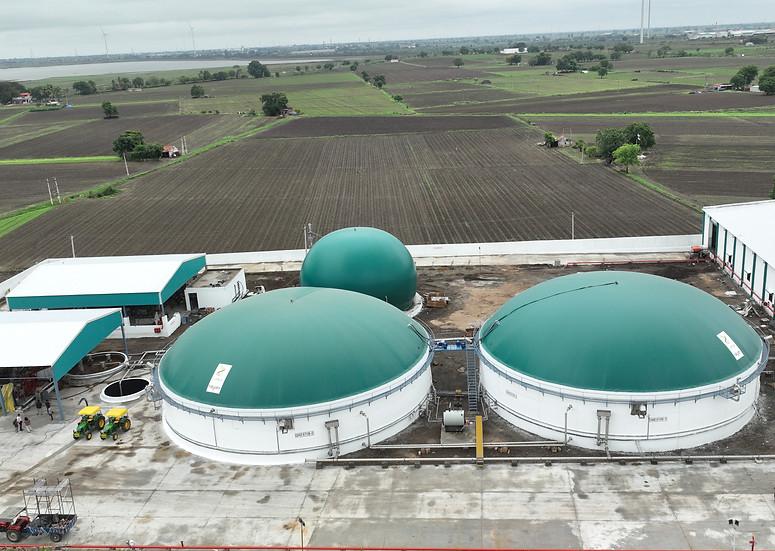
Bharat Petroleum Corporation Ltd. (BPCL) has called for coordinated action among central and state governments, industry participants, farmers and financial institutions to accelerate compressed biogas (CBG) project development in Maharashtra, highlighting the need to address feedstock availability, financing, policy implementation and infrastructure gaps.
The call was made at a Mumbai workshop titled Waste to Wealth – Scaling GOBARdhan, organised by BPCL in collaboration with the Ministry of Petroleum and Natural Gas (MoPNG) and the Maharashtra government. The discussions focused on converting agricultural residues, cattle dung, sugar-industry press mud and municipal organic waste into renewable gas while strengthening waste management and agricultural resource recovery.
The workshop also examined policy alignment, project approvals, financing mechanisms and demand for organic manure produced by CBG facilities. These issues are central to moving projects from policy planning to implementation.
BPCL highlights CBG’s role in waste management and rural economies
BPCL Chairman and Managing Director Sanjay Khanna said compressed biogas could connect renewable energy production with scientific waste management, sustainable agriculture and rural livelihood generation.
He identified agricultural residues, cattle dung, press mud and municipal organic waste as potential feedstocks for CBG production, emphasising the opportunity to recover energy and resources from organic waste streams.
The approach could also support a circular economy by creating value from materials that might otherwise be discarded or inadequately managed. However, the commercial viability of individual projects will depend on feedstock quality, collection systems, transport costs and the reliability of plant operations.
Centre urges Maharashtra to strengthen project implementation
Vikas Singh, Director (GP) at the Ministry of Petroleum and Natural Gas, outlined the Centre’s approach to expanding the GOBARdhan initiative and stressed coordination among government departments, urban local bodies, farmers, industry and financial institutions.
He urged Maharashtra to align its state-level policy with the initiative and identified two practical requirements for facilitating project development: establishing a land bank and conducting a detailed assessment of feedstock availability.
A land bank could help identify suitable sites for proposed facilities, while feedstock assessments could give developers a clearer picture of the volume, location and availability of organic material needed to sustain plant operations.
Maharashtra Chief Secretary Rajesh Aggarwal also highlighted the potential of agricultural waste and municipal solid waste for renewable energy generation and improved waste management, calling for more efficient utilisation of these resources.
Organic manure emerges as a key part of the CBG value chain
The workshop highlighted the agricultural benefits of organic manure generated during CBG production, including enriched fermented organic manure (EFOM).
BPCL’s research and development team presented a dedicated session on EFOM and its potential contribution to soil health and sustainable farming. The material can provide an additional resource-recovery pathway alongside renewable gas production, potentially connecting waste-processing facilities with agricultural users.
However, wider adoption will depend on product quality, nutrient consistency, farmer awareness, distribution networks and reliable demand. Developing a market for the organic output is therefore an important consideration alongside securing buyers for the gas itself.
Policy, financing and offtake remain key challenges
Participants discussed the GOBARdhan scheme, the Model State CBG Policy, SASCI 2026–27 and Maharashtra’s CBG policy, focusing on the requirements for implementation.
The discussions underscored the importance of coordinating policy, infrastructure development and commercial arrangements rather than treating plant construction as an isolated activity.
BPCL reiterated its commitment to the CBG sector in multiple capacities—as a producer, offtaker and facilitator—and emphasised collaboration among government agencies, farmers, cooperatives and industry participants.
Related project development in the state includes Mahanagar Gas and Organic Recycling Systems’ CBG project MoU. At the national level, Petronet LNG and Gruner’s proposed 10-plant CBG venture illustrates another planned investment in the sector.
Bioenergy Business Analysis
Maharashtra’s agricultural base and municipal waste streams offer potential feedstock sources, but the existence of organic waste does not automatically make it economically viable for CBG production. Collection, segregation, transportation, seasonal availability and competing uses of agricultural residues can all affect project economics.
The proposed focus on land identification and feedstock mapping is therefore significant. Better information about suitable sites and locally available biomass could help developers assess project feasibility before committing substantial capital. Coordination between state departments, local authorities, farmers and developers will also be important for securing supplies and establishing workable collection systems.
A second consideration is revenue diversification. CBG facilities may generate both renewable gas and organic manure, but the commercial contribution of the latter will depend on processing standards, logistics and actual market demand. Establishing reliable markets for both outputs could strengthen project economics, although the workshop announcement does not provide financial projections or quantified benefits.
Finally, the issues of financing, pricing, offtake and approvals identified at the workshop point to the need for predictable implementation frameworks. Policy announcements can support investment, but developers also need clarity on project timelines, purchasing arrangements and operational requirements.
The next indicators to watch are whether Maharashtra advances its proposed land-bank and feedstock-assessment measures, whether policy changes address the challenges raised, and whether these efforts translate into new projects reaching financial closure and commissioning. Until such developments are documented, the workshop should be viewed as a coordination and policy-development initiative rather than evidence of additional operational CBG capacity.


