


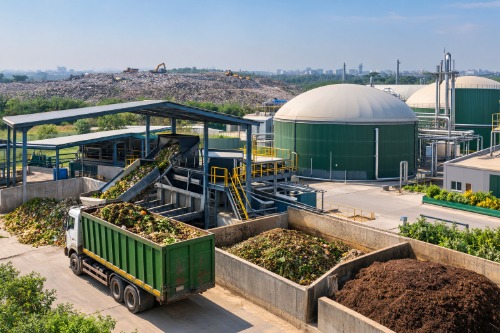
Delhi is expanding its municipal waste-processing infrastructure with three new fresh-waste treatment plants and a 300-tonnes-per-day (TPD) biogas facility at Ghazipur, as the city seeks to reduce its dependence on landfill disposal and prevent new accumulations of waste.
Delhi Chief Minister Rekha Gupta laid the foundation stones for the four facilities on Saturday, virtually from the Okhla landfill site, and inspected the landfill to review waste disposal, land reclamation and the progress of new processing infrastructure.
The three waste-processing plants at Okhla, Singhola and Ghazipur will collectively add 2,900 TPD of fresh-waste processing capacity. The Okhla facility will process 1,400 TPD, while the Singhola and Ghazipur plants will have capacities of 800 TPD and 700 TPD, respectively.
The expansion comes as Delhi generates approximately 13,500 tonnes of municipal waste every day, while the Municipal Corporation of Delhi (MCD) currently processes around 60% of the city’s daily waste, according to the source material.
Ghazipur biogas plant to process biodegradable waste
The 300-TPD biogas facility at Ghazipur is being developed as part of efforts to manage biodegradable waste and reduce the amount of organic waste entering the city’s drainage network and contributing to pollution of the Yamuna.
An MCD survey identified approximately 125,000 cattle across Delhi, generating an estimated 1,500 tonnes of dung each day. According to the source material, central and state authorities directed the civic body to intercept this waste and prevent it from entering drains.
The Ghazipur facility is therefore expected to form part of the city’s broader effort to capture and process biodegradable waste rather than allowing organic material to enter waterways or accumulate at landfill sites.
Two other biogas facilities, at Goyla and Ghoga, are also expected to become operational within the next two months, officials said.
The development of multiple biogas facilities could increase Delhi’s capacity to convert suitable biodegradable waste streams into biogas while reducing the quantity of organic material requiring landfill disposal.
Delhi continues work on legacy landfill waste
The new fresh-waste facilities are being developed alongside a major programme to remove accumulated waste from Delhi’s existing landfill sites.
Government figures cited in the source material indicate that 217.17 lakh metric tonnes of legacy waste have been disposed of from the Okhla, Bhalswa and Ghazipur landfill sites over the past 18 months.
The work has reportedly freed nearly 100 acres of land.
MCD officials said the Okhla and Bhalswa landfill sites are expected to be cleared within three months, while the target for completing the clearance of Ghazipur is December 2027.
The timelines indicate that Delhi’s waste-management strategy is operating on two parallel tracks: removing the substantial stock of legacy waste already accumulated at landfill sites while simultaneously increasing fresh-waste processing capacity.
Focus shifts from landfill clearance to waste prevention
During her inspection of Okhla landfill, Gupta reviewed the status of waste disposal, reclaimed land and the capacity of new processing facilities. She directed officials to make the new units operational at the earliest and ensure that they operate at full capacity.
Gupta said clearing the existing landfill sites alone would not resolve Delhi’s waste problem. The city also needs stronger systems for processing the waste generated each day, she said, to prevent new waste mountains from developing.
That distinction is significant for the city’s long-term waste strategy. Legacy-waste remediation can release land and reduce the environmental burden of existing dumpsites, but without sufficient processing capacity for incoming municipal waste, landfill accumulation can resume.
The planned 2,900 TPD of additional centralised processing capacity, nearly 3,000 TPD of decentralised capacity and new biogas infrastructure are intended to address that continuing flow of waste.
Bioenergy Business Analysis
Delhi’s latest waste infrastructure expansion highlights the growing importance of treating fresh waste and legacy waste as separate but interconnected challenges. Clearing existing landfill sites can reclaim valuable urban land, but the environmental gains will be difficult to sustain unless the city can process a much larger share of its daily waste before it reaches landfill.
The 300-TPD Ghazipur biogas facility is particularly relevant to the bioenergy sector because it introduces additional infrastructure for processing biodegradable material within the city’s waste-management system. The reported availability of around 1,500 tonnes of cattle dung per day also indicates a potentially significant organic-waste resource, although the source material does not establish how much of that feedstock will ultimately be directed to the new plant. The project’s actual bioenergy impact will therefore depend on feedstock collection, segregation, plant utilisation, gas yields and downstream use of the biogas.
The larger capacity additions also underline a critical implementation issue which is that the installed capacity does not automatically translate into effective waste diversion. Delhi currently generates around 13,500 TPD of municipal waste, making reliable collection, segregation, transportation and continuous plant operation as important as the headline processing capacity. If the new facilities operate consistently and are supported by effective source segregation, they could help reduce the rate at which fresh waste reaches landfill sites while creating opportunities for greater recovery of energy and materials.