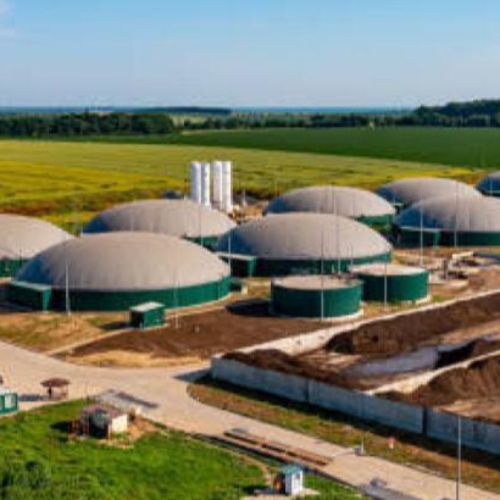
Nigeria’s Environmental Health Council of Nigeria (EHCON) and the National Biotechnology Research and Development Agency (NBRDA) have entered into an agreement to develop, train personnel in, and deploy biogas technology at abattoirs and related facilities, linking waste management with renewable energy generation.
The partnership is intended to strengthen the application of biotechnology to environmental sanitation, public health protection and the conversion of organic waste into economically useful resources. The agencies also signed an agreement to cooperate on biotechnology initiatives aimed at safeguarding environmental and public health.
The agreements were announced on Monday at the NBRDA Board in Abuja, where leaders and representatives of both agencies attended the signing.
Nigeria Targets Better Abattoir Waste Management Through Biogas Technology
Under the agreement, EHCON and NBRDA will cooperate on the development and implementation of biogas technology for abattoirs and associated facilities. The initiative also includes training, intended to support the adoption and use of the technology.
Abattoirs generate organic waste that requires appropriate handling to minimise environmental pollution and public health risks. Depending on the waste composition and treatment process, biodegradable material can be processed through anaerobic digestion to produce biogas, which can be used as a source of energy.
The agencies’ proposed collaboration brings together environmental health oversight and biotechnology research capabilities. However, the announcement does not specify the number of abattoirs targeted, the locations selected for deployment, the planned project timeline or the expected biogas production capacity.
EHCON Highlights Economic Opportunities in Waste-to-Energy
EHCON Registrar Dr. Yakubu Mohammed Baba welcomed the partnership, emphasising the importance of inter-agency cooperation in addressing environmental challenges.
He said the collaboration could help turn waste management problems into economic opportunities, wealth creation and employment. Baba also highlighted the agencies’ technological and research capabilities, expressing confidence that the initiative would benefit Nigerians and support the Federal Government’s Renewed Hope Agenda.
The agreement positions waste management as a potential source of economic value alongside its environmental and public health functions. For abattoir operators, successful biogas deployment could offer a route to recovering energy from suitable organic waste, subject to the technology selected and the economics of implementation.
NBRDA Offers Biotechnology Expertise for Deployment
NBRDA Director-General Prof. Abdullahi Mustapha welcomed the agreement and commended EHCON for formalising cooperation between the two institutions.
Mustapha highlighted biotechnology’s potential applications in environmental sanitation, waste-to-wealth initiatives and sustainable energy generation. He also stated that NBRDA had developed technology with potential applications in abattoirs and related facilities and expressed the agency’s readiness to support deployment and implementation of the agreed initiatives.
The announcement did not identify the specific technology developed by NBRDA or provide technical details on its operating requirements, treatment capacity, energy output or commercial readiness. These details will be important in assessing how the proposed collaboration could be implemented across Nigeria’s abattoir sector.
Bioenergy Business Analysis
The EHCON–NBRDA agreement highlights a potential application for biogas technology in Nigeria’s abattoir sector, where organic waste management, environmental sanitation and energy recovery intersect.
The opportunity lies in connecting waste treatment with usable energy. Anaerobic digestion can convert suitable biodegradable waste into biogas, potentially reducing the volume of untreated organic material while generating energy for appropriate applications. Depending on plant design and feedstock characteristics, the remaining digestate may also require treatment or management before beneficial use.
The agencies’ combined research and environmental health responsibilities could provide a foundation for developing and deploying suitable technology. However, the announcement does not yet establish the scale of the programme, the financing arrangements or a deployment schedule.
For Nigeria’s bioenergy sector, the key next step will be translating the agreement into operational projects with transparent performance data. Details on participating abattoirs, installed capacity, feedstock volumes, energy utilisation and implementation costs would help industry stakeholders assess the initiative’s potential contribution to waste-to-energy development.
The partnership therefore represents a proposed avenue for expanding the use of biotechnology in organic waste management. Its wider significance will depend on the technology deployed, the quality of implementation and evidence of sustained environmental and energy benefits.