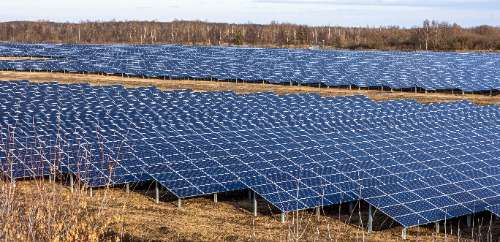
Dutch development bank FMO has signed a long-term financing agreement for the 50 MWp Kong Solaire solar power project in northern Côte d’Ivoire, supporting construction of a utility-scale renewable energy facility expected to enter operation in 2028. The financing, reported in the partners’ financing announcement at up to €55.5 million with a 20-year tenor, covers the project’s long-term debt, while a separate loan supports transmission infrastructure.
Developed by Africa Via alongside InfraCo, the project development arm of the Private Infrastructure Development Group (PIDG), Kong Solaire is expected to supply electricity to the national grid under a 25-year power purchase agreement with CI-ENERGIES, Côte d’Ivoire’s state-owned electricity-sector entity.
The project is expected to deliver approximately 96 GWh of electricity annually and avoid around 54,000 tonnes of carbon dioxide emissions each year, according to PIDG. Its development comes as Côte d’Ivoire pursues a target of generating 45% of its energy from renewable sources by 2030.
FMO Financing Supports Kong Solaire’s Construction
FMO’s financing agreement represents a key funding milestone for the solar project, which is being developed near the town of Kong in northern Côte d’Ivoire.
PIDG puts the long-term financing at up to €55.5 million, with a 20-year tenor. The financing structure is designed to accommodate the requirements of infrastructure projects in emerging West African markets.
FMO has also disclosed a separate loan associated with the transmission infrastructure required to connect the project to the electricity network. According to the source material, that infrastructure will transfer to the Government of Côte d’Ivoire upon completion.
Construction is under way and is expected to take approximately 18 months, with commissioning planned for 2028. The financing agreement supports the project’s development, although the final construction and commissioning schedule remains subject to implementation progress.
Africa Via and InfraCo Lead Project Development
The development of Kong Solaire began in 2020 in collaboration with the Ivorian state, according to Africa Via chief executive Minkaila Salami. The project was launched in October 2025 and is being developed by Africa Via and InfraCo.
Africa Via is an Ivorian company founded and led by local entrepreneurs. AXIAN, a pan-African group operating in 20 countries, holds a 55% stake in Africa Via, giving it an indirect ownership interest of approximately 28% in Kong Solaire.
The project’s ownership structure brings together local project development expertise and international investment and infrastructure development capabilities.
Marnix Monsfort, FMO’s director of energy, described Kong Solaire as one of Côte d’Ivoire’s first privately developed utility-scale solar projects. Benjamin Memmi, chief executive of AXIAN’s energy division, said the development reflected the country’s renewable energy ambitions and the role of government policy in supporting the energy transition.
96 GWh of Annual Electricity Expected from the Solar Plant
Kong Solaire is expected to generate approximately 96 GWh of electricity annually for the national grid. PIDG estimates that this output could meet the electricity needs of around 240,000 people and prevent approximately 54,000 tonnes of CO₂ emissions each year.
The electricity will be sold to CI-ENERGIES under a 25-year power purchase agreement. Such long-term contracts can provide revenue visibility for renewable energy projects and help support financing by establishing a framework for electricity sales.
The separate transmission infrastructure financing is also significant because utility-scale solar development requires more than generation capacity alone. Grid connection and transmission availability are essential to delivering electricity from the plant to consumers.
Project Supports Côte d’Ivoire’s 2030 Renewable Energy Target
Côte d’Ivoire aims to achieve a 45% renewable energy share by 2030. The Kong Solaire project is intended to contribute to this objective by adding large-scale solar generation to the country’s electricity system.
The project also illustrates the role of development finance institutions in mobilising capital for renewable energy infrastructure in emerging markets. By providing long-term debt, FMO is supporting a project whose construction costs and extended development timeline require financing arrangements aligned with its expected operating life.
The anticipated 2028 commissioning date means that the project’s contribution to national renewable energy targets will depend on construction completion, grid integration and the start of commercial operations.
Bioenergy Business Analysis
The Kong Solaire project highlights how development finance, long-term electricity contracts and private-sector participation can support utility-scale renewable energy deployment in West Africa. While the project is solar-focused rather than bioenergy-based, its financing structure offers relevant lessons for the wider clean energy sector, including developers of biogas, biomass power and other capital-intensive renewable energy infrastructure.
The central development is the alignment of long-term debt with a 25-year electricity purchase agreement. FMO’s financing, reported at up to €55.5 million with a 20-year tenor, provides a funding framework for construction and long-term project development. The power purchase agreement with CI-ENERGIES establishes a contractual route to market for the electricity generated.
For the wider renewable energy market, the project illustrates how local developers, international investors and development finance institutions can work together to advance infrastructure. Its longer-term significance will depend on whether construction stays on schedule, the transmission system is completed and the plant delivers its projected output after commissioning.
Related project coverage: Nofar Energy’s 73 MW Slobozia solar plant reaches grid testing in Romania.