


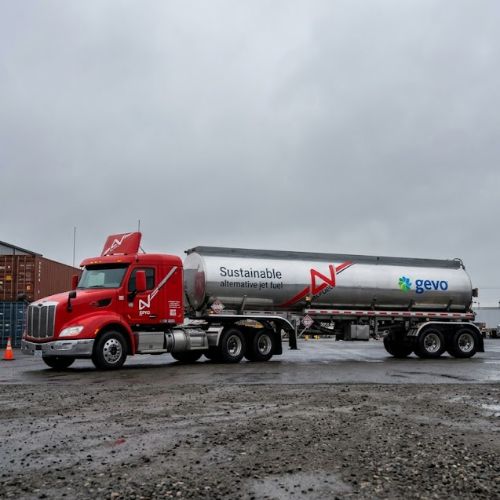
Gevo has signed a three-year agreement with carbon management platform CEEZER to supply carbon dioxide removal (CDR) credits generated at its North Dakota ethanol facility, marking the company’s first multi-year carbon removal supply agreement. The deal covers a five-figure volume of tonnes through 2029 and involves a Fortune 500 enterprise software company whose identity has not been disclosed.
Announced on 14 October 2026, the agreement adds to Gevo’s contracted carbon removal portfolio and reflects a procurement approach in which corporate buyers seek longer-term access to verified carbon removal credits rather than relying solely on individual purchases.
Under the arrangement, CEEZER will procure and manage the carbon removal portfolio on behalf of the software company. The credits will originate from Gevo North Dakota, where biogenic carbon dioxide generated during ethanol fermentation is captured and stored in deep geological formations.
Gevo said the agreement supports its ambition to develop a carbon business generating more than $30 million in annual revenue from existing operations. This is a company-stated target, rather than a reported revenue figure achieved under the new contract.
Multi-year offtake expands Gevo’s carbon removal portfolio
The agreement covers a five-figure volume of contracted carbon removal tonnes, with deliveries extending through 2029. Gevo did not disclose the precise volume, contract value, per-tonne price or the identity of the end buyer in its announcement.
The company views the transaction as evidence of demand for durable carbon removal credits produced through bioenergy with carbon capture and storage (BECCS). It also points to a shift among corporate purchasers towards multi-year offtake agreements intended to provide greater certainty around supply, pricing and credit quality.
Alex Clayton, Gevo’s chief carbon officer, said the company expects further sales to buyers seeking permanent carbon removal supported by measurement, reporting and verification (MRV) standards. He also highlighted the growing interest in securing access to carbon removal capacity over several years.
For Gevo, longer-term contracts could provide greater visibility into future carbon-credit sales while extending the commercial value of its existing carbon capture and storage infrastructure.
How Gevo North Dakota generates carbon removal credits
Gevo North Dakota produces ethanol and captures biogenic carbon dioxide released during the fermentation process. According to the company’s announcement, the captured CO₂ is stored more than a mile underground through geological sequestration, without requiring a dedicated carbon dioxide pipeline.
The process is designed to generate durable carbon removal credits by capturing carbon of biogenic origin and storing it underground. Each eligible stored tonne can support the issuance of a carbon removal credit, subject to the applicable accounting, verification and crediting requirements.
BECCS combines the use of biomass-derived feedstocks for energy or fuel production with carbon capture and storage. In ethanol production, fermentation releases a relatively concentrated stream of biogenic CO₂, which can be captured and directed to permanent geological storage.
The resulting credits are intended for organisations seeking to address residual emissions and support climate targets. Their climate value depends on factors including the carbon accounting methodology, lifecycle emissions, storage permanence, monitoring and verification, and the treatment of any associated emissions.
Gevo describes its North Dakota operation as one of the first commercial-scale US BECCS projects supplying verified carbon removal credits to the voluntary carbon market. That characterisation is the company’s own assessment and should not be interpreted as an independently established ranking of all operational projects.
CEEZER highlights demand for traceable, long-term carbon removal
CEEZER will manage procurement and delivery of the credits for the undisclosed corporate buyer. The platform works with enterprise customers on carbon credit sourcing and portfolio management.
Stephan Fuechtenhans, CEEZER’s senior vice-president of sourcing and delivery, said corporate purchasers increasingly need confidence in the availability, pricing and quality of carbon removal over several years.
He added that a recent site visit by CEEZER’s team to Gevo North Dakota provided an opportunity to assess the operation, on-site storage and supply chain. He identified traceability and a supplier’s ability to demonstrate operational delivery as important considerations for corporate buyers entering long-term agreements.
The deal illustrates the role of intermediaries and carbon management platforms in connecting carbon removal producers with corporate purchasers. For buyers, such arrangements can help organise procurement and portfolio management; for suppliers, they can create a route to longer-term commercial commitments.
However, the announcement does not disclose the contract’s detailed delivery schedule, pricing provisions, verification methodology or remedies if contracted volumes are not delivered. Those details would be relevant to assessing the agreement’s financial and operational risk allocation.
Carbon removal delivery remains a key market challenge
Gevo cited data from CDR.fyi indicating that only about 3% of approximately 50 million tonnes of carbon removal contracted across the broader market had been delivered. The current CDR.fyi website reports approximately 50.5 million tonnes contracted and 1.7 million tonnes delivered, broadly consistent with the scale of the gap highlighted in the announcement.
The difference between contracted and delivered volumes matters because carbon removal agreements may cover deliveries over several years. A signed contract demonstrates a purchasing commitment, but does not establish that all contracted tonnes have already been removed, verified or delivered.
Gevo said its North Dakota operation has supplied credits to customers including Nasdaq and Whirlpool. It also identified Amgen and PayPal as appearing on its registry through purchases made via intermediaries. These examples are company-reported customer relationships; the announcement does not provide transaction-level details for each buyer.
The company says the project stores CO₂ at a depth exceeding one mile, with an expected permanence of more than 1,000 years. Those figures describe Gevo’s stated project characteristics; independent assessment of the storage methodology and monitoring arrangements would be needed to evaluate the claim fully.
What the agreement means for Gevo’s low-carbon fuels strategy
Gevo is positioning carbon removal as a complementary business alongside its low-carbon fuels activities. By capturing and storing fermentation CO₂ at an existing ethanol facility, the company aims to generate a separate revenue stream from its operating infrastructure.
The CEEZER agreement adds another multi-year customer commitment to that strategy. However, the undisclosed contract value and precise delivery volumes prevent an independent assessment of its contribution to annual revenue or profitability.
Gevo’s stated ambition to exceed $30 million in annual carbon-business revenue will depend on factors such as the volume of eligible credits generated and delivered, realised credit prices, operating and storage costs, and the availability of additional buyers. The new agreement alone does not establish whether or when that target will be reached.


