


Greenjoules Private Limited has raised ₹150 crore in a Series B funding round co-led by Amazon’s Smbhav Venture Fund and Climate Pledge Fund, as the Indian renewable fuels company prepares to scale its agricultural waste-to-fuel technology through a planned biocrude production facility in Pune.
The company has also secured a ₹100 crore loan from the government’s Technology Development Board (TDB), bringing the total funding and loan support announced to ₹250 crore. The financing will support the development of a facility at Khed City, Pune, designed to produce 200,000 litres of biocrude per day from agricultural waste. Other projects are exploring how to use agricultural residues for fuel, including Uttar Pradesh’s crop-residue collection plans for compressed biogas.
The Series B round also saw participation from Rainmatter, the investment arm of Zerodha, and Singularity’s Strategic Autonomy Fund. Blue Ashva Capital, which led Greenjoules’ Series A funding round in 2021, remains its largest shareholder, according to the announcement.
Greenjoules to develop biocrude production facility in phases from 2027
The proposed facility at Khed City will be developed in phases beginning in 2027. Once completed, it is expected to be India’s largest facility of its kind, according to the company.
The planned production capacity of 200,000 litres per day represents a significant scale-up of Greenjoules’ agricultural residue conversion technology. However, the company has not specified in the supplied announcement the construction timeline, individual development phases or expected commissioning date.
Greenjoules’ technology converts agricultural residue into biocrude, which can subsequently be refined into renewable diesel. The company describes the resulting fuel as a drop-in alternative, meaning it can be used in existing vehicles and fuel infrastructure without requiring modifications.
The process was developed and tested at the company’s Chakan facility near Pune. Greenjoules says it has spent more than six years developing the technology and demonstrating its application at an industrial plant.
Amazon-backed funding supports renewable fuels expansion
Amazon’s Smbhav Venture Fund and Climate Pledge Fund co-led the Series B investment. The investment aligns with Amazon’s broader efforts to reduce emissions across its transportation network and advance its goal of achieving net-zero carbon emissions by 2040.
Abhinav Singh, Vice-President, Amazon Operations, Amazon India, APAC, Middle East and Türkiye, said decarbonising long-haul transportation would require simultaneous investment in railways, alternative fuels and electric mobility.
He said the investment in Greenjoules formed part of Amazon’s wider approach to supporting innovations that could contribute to transportation decarbonisation.
Rainmatter and Singularity also highlighted the company’s progress in developing and demonstrating its technology beyond laboratory conditions.
Abhinav Singh Negi, who leads climate and deeptech at Rainmatter, said the company had developed its process in an operating plant and established a commercial business around the resulting fuel.
Suyash Kela, part of Singularity’s investment team, said technologies that convert domestically available resources into fuels could contribute to India’s energy security.
Agricultural residue offers feedstock for domestic fuel production
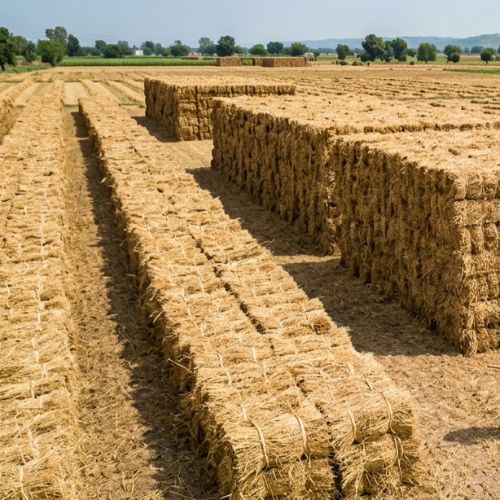
Greenjoules’ technology is based on converting agricultural waste into liquid fuels, offering a potential route to utilise crop residues that might otherwise be burned or disposed of.
India imports more than 80% of the crude oil it consumes, making the development of domestic alternative fuel sources relevant to its energy security objectives.
By sourcing agricultural residues from farmers, the company’s proposed expansion could create an additional market for crop waste while potentially providing supplementary income to agricultural producers.
The utilisation of crop residues for fuel production could also contribute to efforts to reduce agricultural burning. However, the extent of these benefits will depend on feedstock procurement, plant operations, fuel economics and the ability to scale production.
Greenjoules eyes sustainable aviation fuel and green hydrogen
Beyond renewable diesel, Greenjoules intends to extend its technology and capabilities into sustainable aviation fuel (SAF), green hydrogen and sustainable materials.
Co-founder and Chief Technology Officer Shweta Viraraghavan said the company had spent more than six years addressing the technical challenges of converting low-energy-density agricultural waste into specification-grade fuel.
She also identified SAF, green hydrogen and sustainable materials as areas for future expansion.
The proposed Pune facility represents the company’s next major step in scaling its agricultural waste-based fuel technology. Its eventual contribution to India’s renewable fuels supply will depend on the execution of the planned development phases and the achievement of the announced production capacity.
Bioenergy Business Analysis
Greenjoules’ ₹250 crore financing package highlights investor and government interest in technologies that can convert agricultural residues into transport fuels. The proposed 200,000-litre-per-day biocrude facility could represent an important industrial-scale application of agricultural waste valorisation in India.
The distinction between biocrude production capacity and finished renewable diesel output will be important when assessing the project’s eventual contribution to fuel supply. Biocrude requires further processing, and the announcement does not specify the expected renewable diesel yield, feedstock requirements or refining capacity.
The project also illustrates the potential intersection of agricultural waste management, domestic fuel production and transport decarbonisation. Its commercial significance will ultimately depend on whether Greenjoules can translate its existing technology demonstration into a facility operating consistently at the proposed scale.



