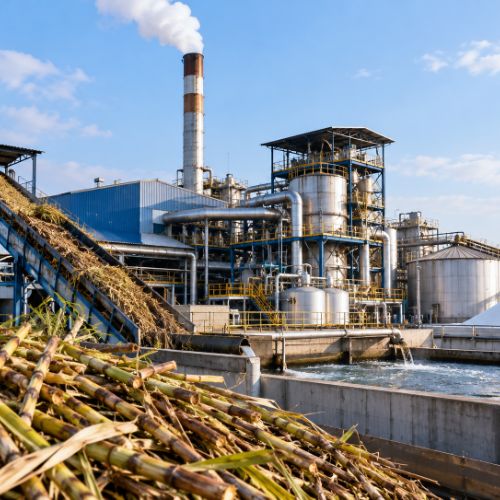
Maharashtra’s worsening water stress is raising concerns over operations at sugar mills, ethanol plants and associated bioenergy facilities as the 2026–27 sugarcane crushing season gets underway. Falling water availability has increased pressure on water-intensive industries, prompting plans for a national conference in Pune on November 2 to examine water recovery, treatment and reuse in sugar and ethanol production.
The conference will be organised by COEP Technological University in collaboration with the Maharashtra Sugar Commissionerate and the Indian Federation of Green Energy’s West Zone. It will focus on improving water security in sugar factories and ethanol plants, including recovering and reusing condensate generated during industrial processes.
The discussions come as the state manages drought conditions and seeks to prioritise drinking-water supplies. In early October, the government directed local bodies to implement a minimum 10% water-supply cut from October 16. It also instructed industries to recycle or reuse at least 30% of the water they consume.
Water shortages add pressure as crushing season begins
Water availability is a concern for sugar factories because processing sugarcane requires water at multiple stages. Distilleries and ethanol plants linked to sugar mills also need reliable water supplies to maintain operations.
The current season has already begun, but drought-like conditions and reduced cane availability are adding uncertainty for parts of the industry. A shortage of process water could disrupt production at individual facilities and potentially shorten their operating periods, depending on local water access and the availability of sugarcane.
The implications extend beyond sugar output. Sugar mills support rural employment, sugarcane procurement and associated activities, while many facilities also operate cogeneration units and distilleries that produce energy and biofuels. Disruptions could therefore affect connected parts of the rural economy and bioenergy supply chain.
Pune conference to focus on condensate recovery and reuse
A central focus of the November 2 conference will be the collection, treatment and reuse of evaporation condensate water generated at sugar factories. Recovering this water could reduce the need for fresh water in suitable processes, subject to treatment requirements and plant-specific operating conditions.
The event is expected to bring together government officials, sugar-sector representatives, researchers and technical experts. Attendees listed by the organisers include Maharashtra Cooperation Minister Babasaheb Patil, Sugar Commissioner Dr Sanjay Kolte, former Sugar Commissioner Shekhar Gaikwad, VSI Director General Sambhaji Kadu Patil and representatives of COEP Technological University.
The agenda also covers water conservation, energy efficiency, wastewater management, resource recovery and collaboration between industry and research institutions. These discussions are intended to identify practical approaches that factories can use to reduce freshwater demand.
Ethanol and integrated bioenergy operations face water constraints
Sugar mills increasingly operate as integrated industrial complexes, combining sugar production with cogeneration, distilleries and ethanol manufacturing. Some facilities are also developing compressed biogas projects that use organic residues and other feedstocks.
While these activities can diversify revenue streams and support renewable energy production, each facility has its own water requirements. A shortage may therefore affect different units in different ways, depending on their process design, recycling systems and access to water.
Improved condensate recovery and wastewater treatment could help plants use water more efficiently. However, the extent of any savings will depend on the volume and quality of recoverable water, treatment performance, infrastructure investment and whether the recovered water is suitable for reuse in specific processes.
The conference comes as water management becomes a more immediate operational consideration for Maharashtra’s sugar and ethanol industries, alongside cane availability, production costs and seasonal operating schedules.
Bioenergy Business Analysis
Maharashtra’s water stress highlights a key operational risk for sugar-based bioenergy: ethanol and other energy products depend not only on feedstock and market demand, but also on reliable access to water.
Recovering evaporation condensate offers a practical area for efficiency improvements because it targets water already present within industrial processes. However, recovery systems need to be assessed against plant-specific water balances, treatment costs, energy requirements and water-quality standards. Water reuse can reduce freshwater demand, but it does not automatically eliminate a facility’s dependence on external supplies.
For integrated sugar mills, water planning also needs to account for competing uses across sugar processing, distillation, cogeneration and any biogas operations. Better measurement of water use, process-level recycling and contingency plans for drought periods could help facilities manage supply disruptions.