


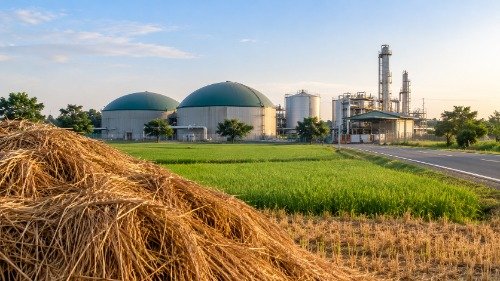
Pratapgarh district in Uttar Pradesh is preparing to use paddy straw as an additional feedstock for biogas production at cattle shelters, in an initiative aimed at addressing agricultural residue management and reducing energy costs at these facilities.
The initiative will initially be implemented at the Paharpur cattle shelter, where an existing biogas plant has been operating on cow dung. Paddy straw collected from agricultural fields in the Tarai region of Lalganj tehsil will also be used for gas production, with the expanded operation scheduled to begin on 1 December 2026, according to a report by Dainik Jagran.
The initiative seeks to provide an alternative use for crop residue that would otherwise need to be removed from fields before the next cropping cycle or risk being burned. Mechanised collection of paddy straw is being undertaken to facilitate its use as a feedstock for the plant.
Paharpur Cattle Shelter to Use Paddy Straw for Biogas
Pratapgarh has approximately 66 cattle shelters, including large cattle shelters, Kanji houses and temporary facilities, accommodating more than 17,000 cattle, according to the source report.
The Paharpur facility already has a biogas plant that uses cattle dung. The proposed expansion will introduce agricultural residue into its feedstock mix, extending the plant’s operations beyond livestock waste.
The report also states that biogas production has brought the cattle shelter’s electricity bill down to zero. However, it does not provide details of the plant’s installed capacity, gas output, electricity-generation equipment or the quantity of crop residue expected to be processed.
More Cattle Shelters to Be Equipped with Biogas Plants
The district administration is also planning to expand biogas infrastructure to other cattle shelters.
A facility in Devli village, located in Lakshmanpur, houses more than 600 cattle and has received government approval for the installation of a biogas plant, according to the report.
Chief Veterinary Officer Dr Dayanand Srivastava said that biogas plants would be installed at several additional cattle shelters in the coming days. The installations are expected to support energy conservation and reduce electricity expenditure at these facilities.
The proposed expansion would extend the use of biogas across Pratapgarh’s cattle-shelter network, although implementation timelines and the number of facilities to be covered have not been specified.
Agricultural Residue Offers an Additional Biogas Feedstock
The proposed use of paddy straw at Paharpur illustrates how agricultural residues can complement livestock waste in decentralised biogas production.
Using crop residue as a feedstock could provide an alternative to open-field burning while creating an additional source of energy for cattle shelters. However, the project’s wider impact will depend on factors such as feedstock availability, collection logistics, plant capacity and the efficiency of the conversion process.
The planned expansion will therefore be an important development to monitor as Pratapgarh considers extending biogas production to more cattle shelters.



