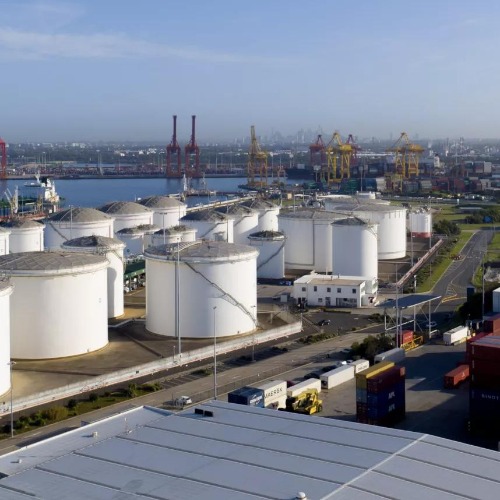
Vopak Terminals Australia has secured New South Wales (NSW) Government endorsement for a proposed expansion of aviation fuel infrastructure at Port Botany, with approximately 120,000 cubic metres (cbm) of additional capacity planned to strengthen fuel supply security and storage resilience.
The project has been identified as a key initiative to support the state’s fuel security objectives. It would add storage tanks and pipeline connections at Vopak’s independent terminal, while providing infrastructure capable of storing sustainable aviation fuel (SAF).
The endorsement was provided through the NSW Government’s Investment Delivery Authority (IDA), which will offer non-financial assistance to help address project delivery barriers, improve coordination between government bodies and facilitate progress.
However, the project remains subject to a final investment decision (FID), planning requirements and regulatory approvals. The government endorsement does not constitute confirmation that construction will proceed.
Port Botany expansion targets aviation fuel supply resilience
The proposed expansion is intended to increase fuel storage capacity and strengthen the resilience of supply chains serving businesses and consumers in New South Wales.
Additional storage tanks and pipeline connections would expand the terminal’s infrastructure and support the movement and storage of aviation fuel. Greater storage capacity can provide additional flexibility in managing supply disruptions, although the extent of the project’s eventual contribution to fuel security will depend on its final configuration, operating arrangements and access to supply.
Vopak describes the facility as an independent, open-access terminal. According to Managing Director Mats de Groot, this model could support competition by providing infrastructure that can serve multiple market participants rather than being dedicated exclusively to a single fuel supplier.
The company has positioned the expansion as part of its response to changing energy requirements and the need for adaptable fuel infrastructure. The announcement does not specify the project’s construction schedule, total investment value or the anticipated breakdown of storage capacity by fuel type.
NSW Government endorsement to support project delivery
The Investment Delivery Authority’s endorsement is intended to help Vopak navigate project delivery challenges through practical, non-financial government support.
The assistance is expected to improve coordination across government and help remove barriers that could delay the expansion. The announcement does not indicate that the project has received all necessary planning approvals or that public funding has been committed.
The distinction is important because the project remains conditional on a final investment decision and the relevant regulatory and planning processes. Its construction and commissioning timelines have not been confirmed in the supplied announcement.
Storage capability could support sustainable aviation fuel
Alongside conventional aviation fuel infrastructure, the proposed expansion is intended to provide storage capability for sustainable aviation fuel.
SAF can be produced from eligible renewable and waste-derived feedstocks, depending on the production pathway and applicable fuel standards. It can help reduce aviation’s lifecycle greenhouse gas emissions compared with conventional jet fuel, although the scale of the reduction varies by feedstock, production process and energy inputs.
Storage and distribution infrastructure will be an important component of SAF supply chains as producers and airlines work to increase availability. Terminals that can handle different fuel types may provide logistical flexibility, subject to the required technical specifications, fuel-quality controls, segregation arrangements and regulatory compliance.
Vopak’s announcement identifies SAF storage as a capability the expansion would support. It does not disclose a dedicated SAF storage volume, expected throughput, supply contracts with SAF producers or airline offtake agreements. The project should therefore be viewed as a potential infrastructure enabler for SAF deployment rather than evidence of secured SAF supply.
Vopak highlights open-access infrastructure model
Mats de Groot, Managing Director of Vopak Terminals Australia, said the company welcomed the NSW Government’s endorsement and emphasised the importance of secure and adaptable infrastructure as the state’s energy needs evolve.
He said the project would expand the role of an independent, open-access facility in addressing fuel security, supporting market competition and preparing infrastructure for the energy transition.
The proposed investment would combine conventional fuel storage and pipeline infrastructure with the capability to accommodate SAF. Its eventual contribution to the market will depend on the final investment decision, project approvals, construction and the commercial arrangements governing the terminal’s use.
Bioenergy Business Analysis
Vopak’s proposed Port Botany expansion highlights the role of fuel storage and distribution infrastructure in maintaining aviation fuel security while preparing supply chains for lower-carbon alternatives. Although SAF production often attracts attention as a route to aviation decarbonisation, storage capacity, pipeline connections and fuel-handling facilities are also necessary to move alternative fuels from producers to end users.
The planned 120,000 cbm expansion could provide additional flexibility for aviation fuel logistics in New South Wales. However, the announcement does not establish how much of that capacity would be allocated to conventional jet fuel versus SAF, so the scale of its direct contribution to SAF deployment remains uncertain.
The proposed open-access model may also be relevant to market development. Infrastructure available to multiple suppliers could give fuel producers and customers additional options for storage and distribution, provided access terms, technical compatibility and commercial arrangements support effective use. The actual effect on competition will depend on how the facility is operated and the market participants it serves.