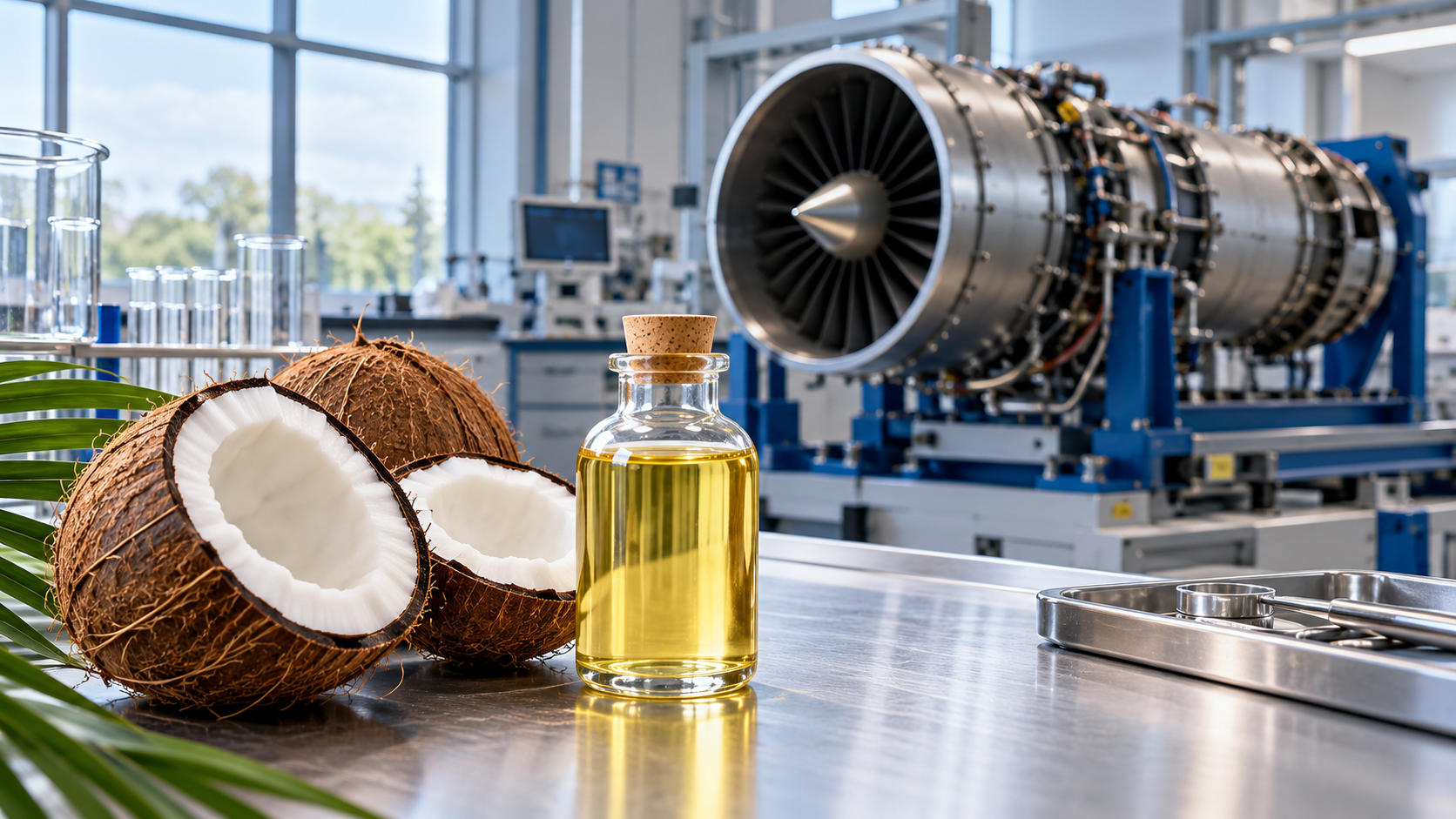
Coconut oil-derived biofuels matched kerosene’s thermal efficiency in small jet-engine experiments by Osaka Metropolitan University researchers, offering a possible avenue for aviation fuel research. The results also revealed trade-offs: the blends consumed more fuel and produced slightly more carbon monoxide.
The study appeared online in the journal Fuel on June 8, 2026, according to the university. It received renewed attention in an October 22 report by Good News Network. The findings concern laboratory-scale engine testing, rather than a new commercial fuel launch.
What the coconut oil biofuel tests measured
The team blended kerosene with two coconut-derived fuels: fatty acid methyl ester (FAME) and fatty acid ethyl ester (FAEE). Tests used biofuel proportions of 10–50% and different operating speeds in a micro jet engine, examining fuel consumption, thermal efficiency and exhaust emissions.
The research group’s published abstract reports that specific fuel consumption increased because the biofuels had lower heating values than kerosene. Thermal efficiency nevertheless remained comparable. Hydrocarbon emissions fell as the biofuel share increased, while carbon monoxide rose slightly; carbon dioxide and nitric oxide results showed no substantial change.
A lower-energy production route under investigation
The researchers used a co-solvent process combining coconut oil with acetone and an alcohol. Methanol produces FAME, while ethanol produces FAEE. In its August research summary, the university describes production under ambient temperature and pressure as a way to reduce processing energy.
The work is relevant to efforts to find additional feedstocks for sustainable aviation fuel (SAF), particularly materials that would otherwise be discarded. However, reduced manufacturing energy is only one part of a fuel’s overall environmental performance.
Engine performance does not establish airline readiness
The university identified long-term storage stability, material compatibility and life-cycle assessment as areas for further investigation. Those questions matter because a fuel must perform throughout storage, distribution and use, rather than only during a short engine experiment.
The reported combustion results do not establish an approved blend limit for passenger aircraft. They also do not demonstrate a quantified reduction in life-cycle greenhouse gas emissions. The study should therefore be read as evidence about an experimental fuel candidate.
The distinction between research testing and fuel qualification also arises in Bioenergy Business’s coverage of OXCCU’s synthetic SAF component testing. That work concerns a different production route and should not be treated as validation of the coconut-derived blends.
For coconut-based aviation fuels, the useful next step is to establish whether the laboratory findings can be sustained alongside the durability, fuel-quality and environmental evidence needed for practical use. Comparable thermal efficiency is encouraging, but the higher fuel requirement remains a performance issue to address.
The paper, by Shinichiro Ogawa and colleagues, is titled Combustion and emission characteristics of aviation biofuel derived from coconut oil using the co-solvent method: toward eco-friendly micro jet engines. DOI: 10.1016/j.fuel.2026.140208.