


Sugar complexes can evolve into clean energy hubs that power India’s rural economy, according to Sameer Sinha, CEO, Sugar Business, Triveni Engineering and Industries Ltd.
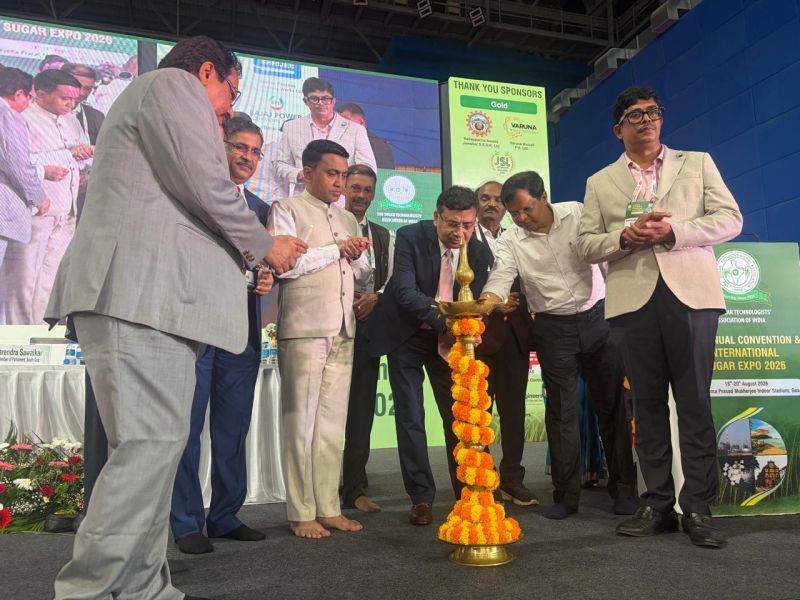
Sinha made the remarks while delivering the “Mangal Singh Memorial” lecture at the 84th Sugar Technologists’ Association of India Convention and International Sugar Expo in Goa. His address, titled “Reimagining the Indian Sugar Industry for the Next Decade – Beyond Sugar,” outlined his vision for the Indian sugar industry by 2036.
According to Sinha, the Indian sugar industry is at an inflection point amid multiple challenges, including stagnant sugarcane yields, plateauing domestic sugar consumption and the need for expanded ethanol offtake given production capacities already at E30+ levels.
He highlighted an opportunity for transformative change rather than incrementalism, driven largely by four factors: energy transition, technology, new product markets, and green and innovative finance.
Sugar Complexes Need Higher Sugarcane Productivity
Sinha said higher sugarcane productivity will be essential for the industry’s transformation. Targeted precision agriculture using satellite imagery, IoT sensors, AI/ML, drones, hyperlocal weather data and efficient irrigation can help raise yields while reducing cultivation costs.
He also highlighted the importance of research-led varietal development, including the use of genome editing to significantly shorten the development, commercialisation and release cycle and create a pipeline of high-yielding, high-sucrose, disease- and pest-resistant and climate-resilient varieties.
Together, these measures could potentially deliver an increase in sugarcane yields of up to 50% by 2036, Sinha said.
Smart Manufacturing Can Transform Sugar Complexes
Inside the smart manufacturing factory, technologies such as energy reduction systems, IIoT, AI/ML, advanced process control, automation, predictive maintenance, membrane-based clarification, separation and concentration, and robotics will drive efficiency and competitiveness, according to Sinha.
He said these developments could also help turn sugar factories into water-smart complexes.
At the same time, innovative value-added products such as low-GI sugar, Policane, fructo-oligosaccharides and mycoproteins could help address changing consumer health preferences.
Sugar Complexes Can Expand Beyond Conventional Ethanol
Sinha said the downstream portfolio of sugar complexes could expand significantly and become a key game changer.
Apart from supporting higher ethanol blending, he identified potential new applications for ethanol, including sustainable aviation fuel (SAF), marine fuels, solid oxide fuel cells (SOFC), cookstoves, generators, green hydrogen and green chemicals.
He also pointed to compressed biogas (CBG), green methanol and bio-isobutanol as areas that could further broaden the industry’s landscape.
Green Finance Can Support Sugar Complexes
According to Sinha, favourable policy frameworks, carbon credit markets and ESG-driven capital can support the transformation of sugar complexes into clean energy hubs.
“Thus, the mills that think beyond will multiply value, and the future will belong to them,” Sinha said.
The vision places the Indian sugar industry beyond its traditional focus on sugar and ethanol, with integrated sugar complexes potentially playing a broader role in energy transition, advanced manufacturing, new product development and the rural economy.
Read also: Uttar Pradesh plans Rs 200–250 crore integrated ethanol, sugar and power plant