


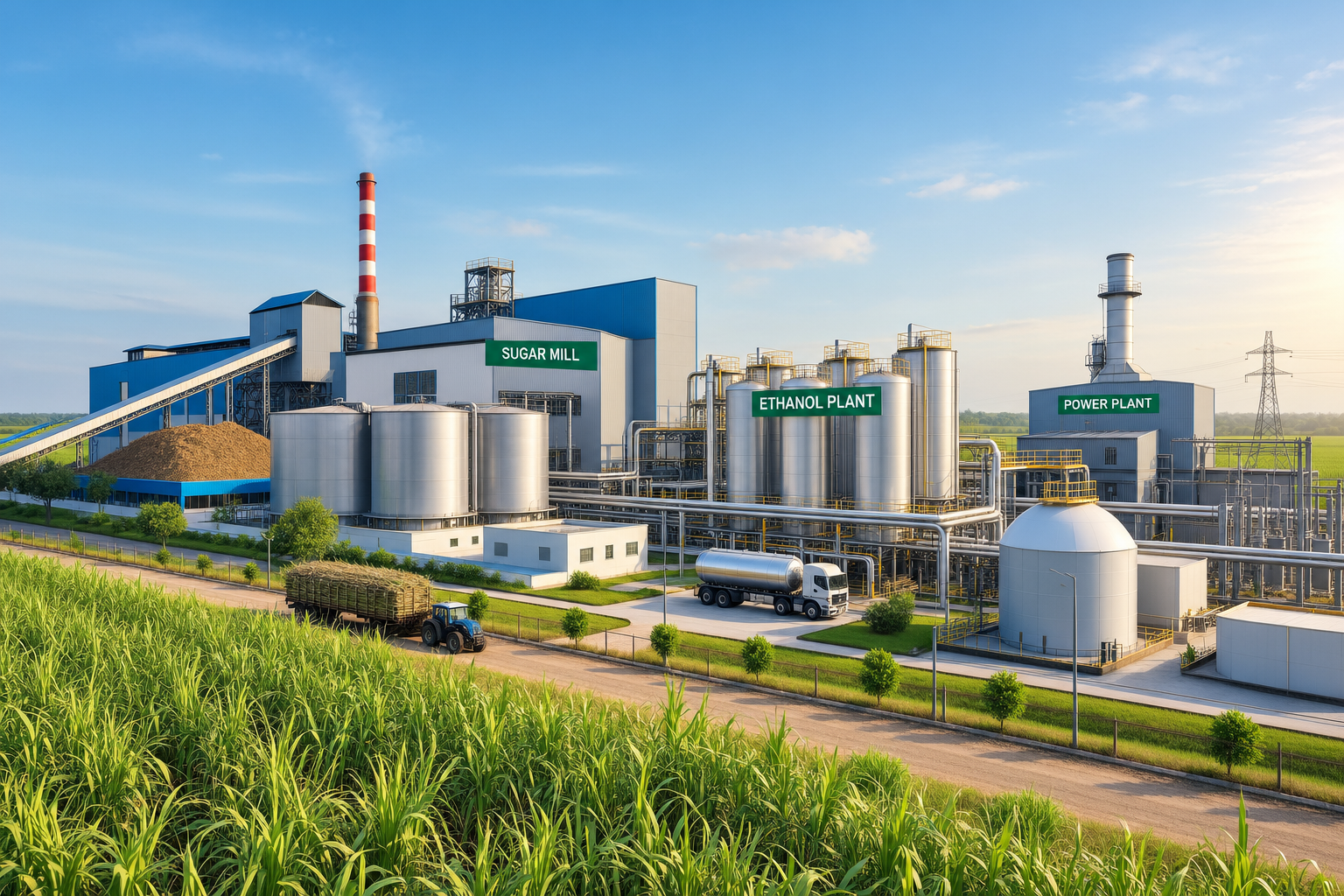
A ₹1,000-crore integrated sugar, ethanol and power project has been announced for Chhata in Mathura district, Uttar Pradesh, with development planned in three phases.
According to Sugarcane and Sugar Mills Development Minister Chaudhary Laxmi Narayan, the project will begin with a ₹200-crore ethanol plant, followed by a ₹550-crore sugar mill and a ₹250-crore power plant. The proposed investment is expected to create employment opportunities and provide a new industrial outlet for local sugarcane production.
As reported by Amar Ujala, the first phase of the proposed project will involve an ethanol plant with an investment of ₹200 crore. This will be followed by the construction of a sugar mill in the second phase, with a proposed investment of ₹550 crore. The third phase will involve development of a power plant at an estimated cost of ₹250 crore.
The three components together account for the stated ₹1,000-crore investment. The Uttar Pradesh Cabinet approved the ethanol plant proposal on September 15, 2026. The approved facility is expected to cost more than ₹200 crore and have annual ethanol production capacity of 3.96 crore litres. The plant is planned to operate for about 11 months a year.
According to reporting based on the Cabinet decision, sugarcane will be used during the crushing season, while maize and paddy will be used after the sugarcane season ends.
This recent Cabinet approval provides additional context for the ethanol component described in the supplied announcement. However, the supplied source’s broader ₹1,000-crore three-phase project does not provide enough detail to establish whether all three proposed components have received equivalent approvals.
The proposed configuration combines sugar processing, ethanol production and power generation within one development.
Such an integrated model can connect sugarcane processing with downstream biofuel and energy production. The sugar component would provide the core processing activity, while the ethanol and power components would broaden the potential uses of agricultural feedstock and associated processing streams.
Project expected to support employment and farmers
The announcement states that the project will provide employment to 1,000 young people and benefit farmers in the region.
The project’s potential agricultural impact will depend on the final capacity of the sugar mill and ethanol facility, as well as the amount of sugarcane and alternative feedstocks required.
Chhata positioned for renewed industrial activity
The announcement was made following the reopening of the Chhata Sugar Mill, with local residents welcoming the minister in the town.
The proposed development would represent a broader industrialisation of the site if the three phases proceed as described, moving beyond sugar processing to include ethanol and power generation.
Earlier state budget documents had also included a provision for a new 2,000-tonnes-crushed-per-day sugar mill and logistics hub at the closed Chhata Sugar Mill, indicating that redevelopment of the site has featured in Uttar Pradesh’s sugar-sector planning.
However, the current announcement should be distinguished from those earlier budget provisions because the supplied source describes a new three-phase ₹1,000-crore project with separate investments for ethanol, sugar and power.
Bioenergy Business Analysis
The proposed Chhata project illustrates an integrated approach to sugar-sector investment in which ethanol and power generation are developed alongside sugar processing. If implemented as described, the ₹1,000-crore programme would combine three linked industrial assets and create additional routes for converting agricultural feedstock into fuel and energy.
The ethanol component has gained more concrete policy backing, with the Uttar Pradesh Cabinet approving a more than ₹200-crore ethanol facility at the closed Chhata Sugar Mill and specifying an annual capacity of 3.96 crore litres. The broader sugar-and-power phases, however, require further details on capacity, financing, approvals and implementation timelines.
For the bioenergy sector, the key issue will be how the proposed ethanol and power facilities are integrated with sugarcane availability and the mill’s eventual operating scale. The use of maize and paddy as alternative ethanol feedstocks after the sugarcane season, as reported following the Cabinet approval, could also allow the ethanol facility to operate beyond the crushing season.
The stated 1,000-job target and proposed investment make the project relevant to the regional sugar and biofuels economy, but the final scale and economic impact will depend on implementation of the three proposed phases.