


Surat-based Navitas Solar is planning to invest about ₹100 billion (₹10,000 crore) over the next five years to build an integrated renewable energy platform spanning solar manufacturing, power generation and battery storage in Gujarat and Maharashtra.
The planned expansion includes manufacturing capacity for ingots, wafers and high-efficiency solar cells, alongside battery energy storage systems (BESS) and two solar parks. The strategy would increase the company’s upstream integration as India places greater emphasis on domestic manufacturing and value addition across clean-energy supply chains.
Navitas Solar expands upstream manufacturing
Navitas Solar has already commissioned a 2.5 GW solar module manufacturing facility at Sisodara in Surat district, taking its overall module production capacity to 3 GW.
The company is now developing a 2.4 GW solar cell manufacturing line on an adjoining site. It is also establishing 100 MW pilot facilities for ingot and wafer production, which are intended to provide technical experience before the company considers larger-scale manufacturing.
The first phase of the solar cell facility involves an investment of ₹12 billion (₹1,200 crore), with operations expected to begin by July 2027, according to the source material.
The move would extend Navitas Solar’s manufacturing footprint beyond modules into upstream components. Ingot and wafer production sits earlier in the photovoltaic manufacturing chain, while solar cells convert sunlight into electricity before being assembled into modules.
Solar parks add generation capacity
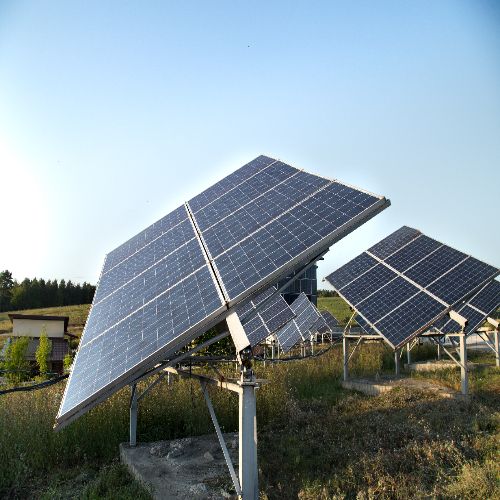
Navitas Solar is also expanding beyond equipment manufacturing into renewable power generation.
The company is developing two solar parks in Maharashtra, using both engineering, procurement and construction (EPC) and independent power producer (IPP) models. The projects have capacities of 200 MW and 25 MW.
The combination of manufacturing and project development gives the company exposure to different segments of the solar value chain, from equipment production to electricity generation.
The source does not provide commissioning timelines for the two Maharashtra projects.
5 GWh battery storage facility planned
Energy storage is another component of Navitas Solar’s expansion strategy.
The company is entering the BESS market with a planned 5 GWh battery energy storage facility in Vadodara, Gujarat. The investment associated with the facility is reported at about ₹1 billion (₹100 crore).
The project would add an energy-storage business to Navitas Solar’s existing solar manufacturing activities. The source does not specify the battery technology, duration of storage or intended customers for the planned facility.
IPO could support expansion funding
The scale of the proposed investment is also prompting Navitas Solar’s promoters to consider capital-market funding.
The promoters are planning an initial public offering (IPO) over the next couple of years, with the offering expected to raise part of the capital required for the company’s expansion programme.
The promoters currently hold about 67% of Navitas Solar, following earlier equity dilution.
The company was founded in 2013 by Vineet Mittal, Sunay Shah, Ankit Singhania and Aditya Singhania. Navitas Solar reported revenue of approximately ₹13 billion (₹1,300 crore) in FY2026 and is targeting revenue of more than ₹20 billion (₹2,000 crore) in FY2027, according to the supplied source.
Integrated solar strategy
Navitas Solar’s proposed investment programme combines three areas of the renewable energy value chain: manufacturing, electricity generation and storage.
For the manufacturing business, the planned progression from modules into cells, wafers and ingots would increase the company’s level of vertical integration. The solar parks would provide a project-development and power-generation component, while the BESS facility would establish a presence in energy storage.
Bioenergy Business Analysis
Navitas Solar’s proposed ₹100 billion expansion reflects the increasing scale and breadth of investment being directed towards India’s renewable-energy manufacturing and infrastructure ecosystem. Rather than focusing exclusively on module production, the company is seeking to build capabilities across upstream solar manufacturing, project development and storage.
The key execution challenge will be managing a capital-intensive expansion across several business lines at the same time. The planned IPO could become an important source of funding, while the performance of the new manufacturing facilities, solar projects and BESS business will determine how effectively the proposed integrated model develops.
For India’s renewable-energy supply chain, the planned ingot, wafer and cell capacity is particularly relevant because it extends domestic manufacturing further upstream. However, the source does not provide details on the eventual scale of commercial ingot and wafer production beyond the initial 100 MW pilot facilities.
Navitas Solar expects its next major manufacturing milestone to be the start of operations at the first phase of its 2.4 GW solar cell facility in July 2027.
Read also: Juniper Green Energy fully commissions 75 MW Tata Hybrid Project in Maharashtra