


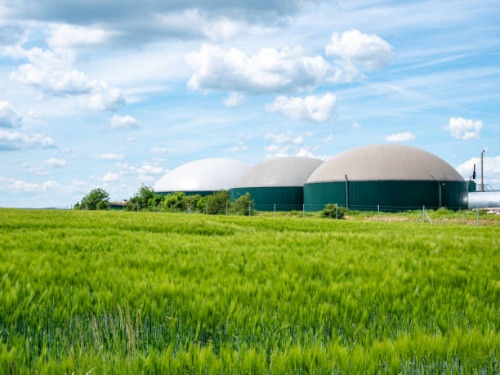
Omega Group Holding is preparing a multi-sector development plan in Armendag village under Tulbul panchayat in Kanha Chatti block of Jharkhand’s Chatra district, with proposed projects spanning biogas, solar power, battery storage, food processing and dairy farming.
The plan includes a 15-tonne-per-day (TPD) biogas plant, 20 MW solar power plant, 40 MWh battery energy storage system (BESS), 10-acre food park and a 100-cow dairy farm.
The proposals were discussed during a meeting between representatives of the company and local farmers and landowners in Tulbul (Armendag), as the group explores using land provided with the cooperation of local landowners for employment-oriented projects.
Biogas project forms part of wider energy plan
The proposed 15 TPD biogas plant would be developed alongside the solar and battery-storage projects rather than as a standalone bioenergy facility.
The source does not specify the proposed biogas feedstock, gas production capacity, technology supplier, end use of the gas or whether the facility would produce raw biogas or upgraded biomethane. These details will therefore need to be established as the project progresses.
The proposed dairy farm could potentially provide an agricultural feedstock source for the biogas project, but the available project information does not explicitly state that the dairy operation will supply the plant. The two proposals should therefore not be treated as technically integrated at this stage.
Solar and battery storage included in the proposal
The energy component also includes a 20 MW solar power plant and a 40 MWh BESS.
If developed as proposed, the combination would bring renewable generation and electricity storage into the same project cluster. However, no details have yet been provided on the solar plant’s location within the proposed development area, battery technology, charging source, grid connection, operating profile or project timeline.
The proposed BESS would have an energy capacity of 40 MWh, while the solar project is specified in terms of power capacity at 20 MW.
Landowners proposed as company shareholders
One of the key features of the proposal is the proposed participation of farmers providing land for the projects.
Instead of limiting landowners’ involvement to compensation for land, Omega Group Trust is considering making participating farmers shareholders in the company.
The arrangement, as reported, would give landowners an opportunity to retain a long-term association with the projects and participate in the company’s future growth.
The proposal has reportedly received a positive response from local landowners. However, the source does not provide details of the proposed shareholding structure, valuation of contributed land, percentage ownership, dividend mechanism or legal agreements.
Those details would be important in determining how the proposed landowner participation would work in practice.
Local employment is part of the project plan
Omega Group Holding Vice Chairman Shadab Ansari said the projects are intended to create employment opportunities for local residents once they become operational.
According to the report, the company plans to provide employment opportunities to local young people who meet the required qualifications and eligibility criteria.
Landowning farmers would also have an opportunity to participate in the employment-generation process by helping connect suitable local people with jobs at the projects.
The company is also preparing to complete documentation and other formalities relating to the land being provided by farmers.
Land formalities precede proposed groundbreaking
Ansari said that once the documentation and formalities associated with the land are completed, preparations are being made for a land-puja or groundbreaking ceremony.
The source report says there are plans for Jharkhand Chief Minister Hemant Soren to perform the ceremony.
At present, however, the information available describes the projects as proposals under preparation. It does not establish a confirmed construction start date, financial close or commercial operation date.
Energy, agriculture and food processing in one development cluster
The proposed Armendag development brings several activities together — renewable power, energy storage, biogas, food processing and dairy farming.
From a rural-development perspective, such a cluster could create multiple points of economic activity if the projects proceed. The biogas proposal could create a market for suitable organic feedstocks, while the food park and dairy project could create additional agricultural and processing activities.
The solar and BESS components would add electricity-generation and storage infrastructure to the proposed development.
The eventual impact, however, will depend on project financing, land agreements, statutory approvals, technology selection, grid connectivity and whether the proposed facilities reach construction and operation.
Bioenergy Business Analysis
The 15 TPD biogas plant is the most directly relevant component for the bioenergy sector, but the current project information leaves several technical questions unanswered. Feedstock type and availability, expected biogas yield, plant configuration, gas utilisation route and digestate management will determine the project’s actual bioenergy value.
The proposed landowner-shareholder model is also notable because it could link land contribution with longer-term participation in the project rather than treating land acquisition solely as a one-time transaction. Its effectiveness will depend on the final legal and financial structure, including how shares are valued, how returns are distributed and what rights participating landowners receive.
For now, the Armendag development should be regarded as a proposed multi-sector project cluster, rather than an operational or fully financed renewable-energy project. Further information on feedstock, investment, approvals, grid connection and construction timelines will be needed to assess the biogas and renewable-energy components more precisely.