


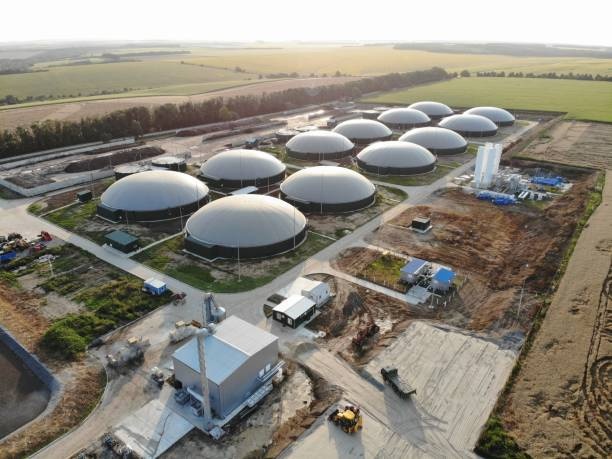
Dutch clean-energy startup MethaPlanet has raised €6 million to scale a technology designed to increase biogas production from difficult-to-digest agricultural residues, including straw-based manure.
The funding round is led by Dutch pension fund ABP, with participation from EIT InnoEnergy and other investors. MethaPlanet plans to use the capital for research and development, expansion in the Netherlands and partnerships with customers and suppliers.
MethaPlanet says its patented Maxximizer technology can convert hard-to-digest residues into compact energy pellets that can deliver up to three times more biogas in one-third of the digestion time compared with conventional processing.
The approach is aimed at improving the performance of existing biogas infrastructure rather than relying solely on new digesters or additional plant capacity.
MethaPlanet targets difficult agricultural residues
A major challenge for many biogas plants is that some organic materials are difficult for microorganisms to break down.
MethaPlanet focuses particularly on straw-based horse manure, which contains fibrous material and relatively high levels of lignin. These characteristics can make the feedstock harder to digest efficiently in conventional anaerobic digestion systems.
The company collects straw-based manure locally and applies pre-treatment before it enters the digestion process.
In simple terms, the technology is designed to break down the tough structure of the material first, making it easier for microorganisms to access the organic matter and produce biogas.
MethaPlanet’s Maxximizer technology converts the treated material into energy-dense pellets.
According to the company, the pelletisation process helps improve digestibility while also making the feedstock easier to store and transport. The resulting pellets can be used in MethaPlanet’s own biogas plants or supplied to third-party operators seeking to improve plant performance.
This creates a potential route for biogas operators to use challenging agricultural residues without necessarily making major changes to their existing digestion infrastruct
MethaPlanet says its technology can triple biogas output while reducing the required digestion time to one-third compared with conventional processing. These figures are company claims and should be understood as technology performance claims rather than independently established industry benchmarks.
Biogas can be upgraded into biomethane
MethaPlanet’s model extends beyond producing raw biogas.
The company says it upgrades the biogas produced at its facilities into biomethane, removing carbon dioxide and other impurities so that the resulting gas can meet grid-quality requirements. The biomethane can then be injected into the national gas network.
The process also creates other potential products.
MethaPlanet captures the biogenic CO₂ separated during biogas upgrading and says it can supply the gas to nearby greenhouses. Digestate remaining after anaerobic digestion can be returned to agricultural land as a soil improver.
€6m funding to support scale-up
The new €6 million investment will be used to support MethaPlanet’s next phase of development.
The company plans to increase research and development activity, expand its operations in the Netherlands and build stronger relationships with customers and suppliers.
EIT InnoEnergy has previously backed MethaPlanet. EIT’s records show that the company closed a €6 million investment round with support from EIT InnoEnergy in June 2024, while MethaPlanet currently lists both InnoEnergy and Dutch pension fund ABP among its investment partners.
MethaPlanet is building a local feedstock model
The startup’s approach relies heavily on sourcing feedstock close to its processing facilities.
MethaPlanet says it generally works within approximately a 50-kilometre radius of its biogas facilities to collect straw-based manure. It says this model is intended to reduce transport requirements while creating a more stable local feedstock supply.
The company is also developing a broader model in which it acquires or upgrades existing biogas plants and connects them to its feedstock network.
This could allow the technology to be deployed alongside existing biogas infrastructure rather than requiring every application to start with a new greenfield plant.
Technology aims to address biogas feedstock constraints
The financing comes as the European biomethane sector seeks to increase production from agricultural and organic residues.
For biogas operators, improving the conversion of difficult feedstocks could be important where suitable raw materials are available but existing digestion systems cannot process them efficiently.
MethaPlanet’s technology therefore targets two issues at the same time: feedstock utilisation and plant productivity.
However, the commercial value of the approach will depend on factors including the actual increase in gas yield at operating plants, pre-treatment costs, pellet production costs, feedstock availability, transport distances and the economics of biomethane sales.
Bioenergy Business Analysis
MethaPlanet’s funding highlights an increasingly important area of the biogas industry: getting more energy from feedstocks that conventional digestion systems struggle to process. Rather than simply adding more digesters, the company’s approach focuses on changing the feedstock before it enters the digester.
The reported threefold increase in biogas output and one-third digestion time are potentially significant, but these remain company-reported performance claims. Commercial deployment will provide a more useful test of how consistently those results can be achieved across different feedstocks, plant designs and operating conditions.
The model also has a broader circular-economy component. MethaPlanet combines feedstock preparation, biogas production, biomethane upgrading, biogenic CO₂ utilisation and digestate recovery. Its ability to create multiple products from the same waste stream could improve project economics, although the viability of each revenue stream will depend on local markets and infrastructure.
For existing biogas operators, the most relevant question is whether technologies such as Maxximizer can increase output without requiring proportionally large investments in new digestion capacity. If demonstrated at commercial scale, that could create an additional pathway for improving the utilisation of agricultural residues and expanding biomethane production.