


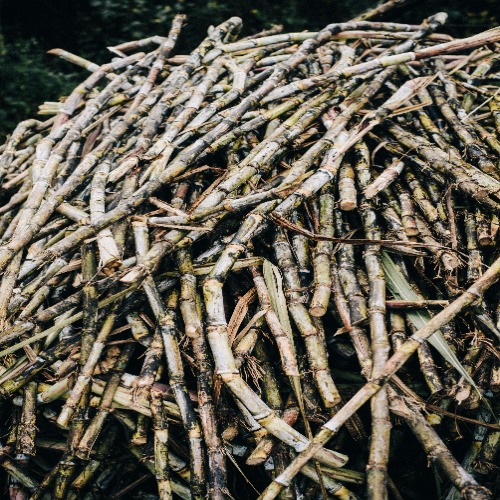
India is preparing to restrict the diversion of sugarcane juice, syrup and B-heavy molasses for ethanol production during the 2026-27 ethanol supply year (ESY), as tighter sugar availability raises pressure to prioritise domestic supplies. The proposed restriction, reported by The Times of India on October 5, comes after sugar production in 2025-26 fell well below the initial estimate and concerns emerged over another potential decline in output from Maharashtra and Karnataka.
The government is expected to notify the decision ahead of the new ESY, which runs from November 1 to October 31. India’s sugar season, by contrast, runs from October 1 to September 30. The government determines how much sugarcane juice, syrup and B-heavy molasses can be diverted to ethanol in line with the country’s petrol-blending requirements.
If implemented, the move would mark a significant adjustment in the balance between India’s sugar and ethanol markets. Mills would be expected to recover more crystallisable sugar from available cane rather than diverting juice, syrup and B-heavy molasses towards ethanol.
Sugar availability emerges as the immediate priority
The proposed restriction comes against a backdrop of weaker-than-expected sugar production and lower carry-over stocks.
According to The Times of India, mills diverted about 30 lakh tonnes of sugar for ethanol production during the sugar season that ended on September 30, equivalent to roughly 10% of output. Opening stocks for the new sugar season on October 1 were reported at around 37.5 lakh tonnes, compared with nearly 50 lakh tonnes a year earlier.
Government data published earlier put 2025-26 sugar production at approximately 306 lakh tonnes, compared with an initial estimate of 343 lakh tonnes. The reduction was attributed to factors including red rot and top-borer disease, waterlogging and adverse weather conditions in major sugar-producing regions.
The resulting sugar balance has left policymakers with less room to prioritise ethanol production from feedstocks that could otherwise generate additional sugar.
The Times of India reported that industry sources see little scope for further diversion of cane juice, syrup and B-heavy molasses in the coming ESY, particularly if production in Maharashtra and Karnataka weakens further. Restricting those feedstocks would allow mills to maximise sugar recovery from available cane.
2025-26 production fell below the initial estimate
The government’s 306-lakh-tonne estimate represents an approximately 11% reduction from the initial 343-lakh-tonne projection. After accounting for ethanol diversion, the net sugar production figure cited by The Times of India was around 279 lakh tonnes, compared with normative domestic consumption of approximately 280-285 lakh tonnes.
The figures underline why the government is reassessing the allocation of cane-derived feedstocks between sugar and fuel.
At the same time, the government’s own assessment has maintained that ethanol diversion has not been the principal cause of the recent pressure on sugar availability. A September government factsheet said the share of sugar diverted to ethanol had fallen from around 12% in 2022-23 to approximately 9% in 2025-26, while nearly three-fourths of India’s ethanol production now comes from grains, particularly maize.
Grain ethanol reduces the impact on the E20 programme
The shift in India’s ethanol feedstock mix is central to the proposed policy change.
Government data indicates that grain-based feedstocks, particularly maize, now account for nearly three-fourths of domestic ethanol production. This represents a substantial change from the earlier dependence on sugar-based feedstocks and gives policymakers greater flexibility when sugar availability is constrained.
India achieved its 20% ethanol blending target in 2025, ahead of the original 2030 deadline under the National Policy on Biofuels. Public-sector oil marketing companies recorded average blending of 19.24% in ESY 2024-25, while government data subsequently reported 20% blending during ESY 2025-26.
The country’s ethanol production capacity has also expanded considerably. The Department of Food and Public Distribution reported ethanol production capacity of 1,953 crore litres as of October 30, 2025, compared with 215 crore litres in 2013.
This expanded capacity, combined with greater use of grain feedstocks, means that reducing sugar-based ethanol does not necessarily imply an equivalent reduction in India’s ability to supply ethanol for petrol blending.
Sugar policy could become more dependent on imports and export controls
The proposed restriction would also add another layer to India’s efforts to maintain domestic sugar availability.
India has already used trade policy to support domestic supply. The government allowed imports of raw sugar earlier in 2026 amid concerns over domestic availability, while sugar export restrictions have also formed part of the policy response to tighter supplies.
An industry analyst cited by The Times of India said that maintaining the 20% ethanol blending requirement should remain manageable because of the greater contribution from grain-based ethanol. However, the analyst also indicated that the government could need to maintain restrictions on sugar exports and potentially permit additional imports if domestic supplies remain tight.
The policy therefore places the sugar market and ethanol market on somewhat different trajectories: sugar availability may require tighter feedstock diversion rules, while ethanol supply can increasingly be supported through maize and other grain-based routes.
What the 2026-27 policy could mean for sugar mills
For sugar mills, a restriction on juice, syrup and B-heavy molasses diversion would change the economics of how available cane is allocated.
Under the proposed approach, mills would have a stronger incentive to maximise sugar recovery, while ethanol production would increasingly rely on C-heavy molasses and non-sugar feedstocks where permitted. The shift could also alter the relative attractiveness of sugar and ethanol production depending on sugar realisations and administered ethanol prices.
The government’s recent policy position highlights the growing role of grain ethanol in meeting the national blending requirement. Nearly three-fourths of ethanol production now comes from grains, while the share of sugar diverted to ethanol has declined compared with 2022-23.
For the broader biofuels sector, the development reinforces the importance of feedstock diversification. India’s E20 programme was initially closely linked to surplus sugar and the financial health of sugar mills, but the growth of grain-based capacity has progressively reduced the programme’s dependence on sugarcane-derived ethanol.
Government decision still awaits formal notification
The key point is that the restriction remains a reported government decision rather than a formally notified policy at the time of publication.
The Times of India reported on October 5 that the government was expected to issue the notification before the start of the 2026-27 ESY. Until the formal order is released, the precise restrictions, permitted feedstocks and any accompanying conditions should be treated as subject to confirmation.
The distinction is important for ethanol producers and sugar mills planning feedstock allocation for the new supply year.
The proposed move nevertheless signals a clear policy priority: with sugar production below initial expectations and stocks tighter than a year earlier, the government is considering preserving more cane-derived sugar for the domestic market while relying increasingly on grain-based ethanol to support the country’s E20 requirement.