


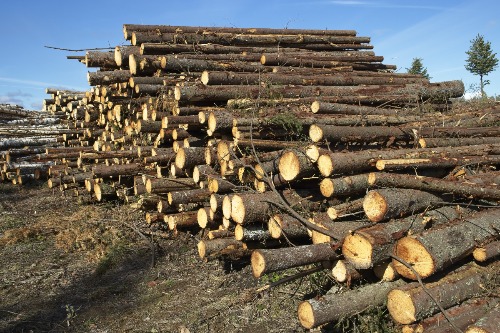
German specialty paper manufacturer Felix Schoeller is planning a roughly 30 MW waste-wood biomass power plant at its Osnabrück-Lüstringen site, aiming to replace a substantial share of its natural-gas-based energy supply with locally sourced biomass.
The proposed plant would provide steam and electricity for paper production at the company’s founding site in Osnabrück, Germany. The project forms part of Felix Schoeller’s longer-term strategy to reduce fossil-fuel consumption and support its target of achieving climate-neutral paper production by 2045.
The facility is expected to use waste wood sourced from within approximately 100 kilometres of the mill. The proposed development would occupy around 10,000 square metres on the western section of the company’s existing site on Gerhard-Schoeller-Strasse.
Biomass plant to supply steam and electricity
Paper manufacturing requires significant quantities of energy, particularly for drying and process heat. Felix Schoeller currently generates its own energy at the Osnabrück site and achieved energy self-sufficiency following the installation of a gas turbine.
However, the site’s energy system remains dependent on natural gas.
The planned biomass facility would introduce waste wood as a major alternative fuel source, allowing the mill to shift part of its energy demand away from natural gas while maintaining on-site generation of electricity and process steam.
The proposed capacity is approximately 30 MW.
For an integrated paper mill, the ability to generate both electricity and useful process heat from biomass can improve the utilisation of the fuel compared with electricity-only generation. The project’s final configuration and operating parameters, however, will be determined through the planning and permitting process.
Waste wood to be sourced locally
Felix Schoeller plans to source the biomass fuel from within a radius of about 100 kilometres of Osnabrück.
Waste-wood logistics are therefore an important component of the project. Deliveries would enter the facility through the neighbouring industrial area, with transport planned to be restricted to weekdays and daytime hours.
The proposed delivery arrangements are being considered as part of the city’s planning process, alongside potential impacts relating to traffic, noise and the environment.
The use of waste wood also distinguishes the project from biomass plants designed primarily around purpose-grown energy crops. Using an existing waste stream could provide a local outlet for suitable recovered wood while supplying renewable heat and power to an industrial process.
Osnabrück planning process is under way
The City of Osnabrück is working with Felix Schoeller on the planning framework for the development, which falls under development plan No. 683.
A preliminary building plan has been prepared, while the city’s Committee for Urban Development and Environment initiated the formal planning procedure in April 2025.
Initial public participation has already taken place. The city organised an information event for residents in the surrounding Darum, Gretesch and Lüstringen districts.
Further planning work is expected to assess the project’s potential effects on traffic, noise and the environment.
The permitting process could take up to two years before approval is granted under Germany’s Federal Immission Control Act.
Biomass facility would occupy 10,000 square metres
The planned plant would be located on approximately 10,000 square metres of the western part of Felix Schoeller’s existing site.
The location allows the proposed biomass facility to be integrated with the paper mill’s existing energy and manufacturing infrastructure. This is particularly relevant for a process industry such as paper manufacturing, where steam and heat are required continuously alongside electricity.
The project therefore represents an energy-system change at an existing industrial facility rather than the development of a standalone power plant.
Paper mill investment continues alongside energy transition
The biomass proposal comes as Felix Schoeller continues to invest in its Osnabrück manufacturing operations.
The site is home to what the company describes as Europe’s most capable decor paper machine, which recently underwent a €9 million upgrade that is expected to increase output by approximately 20%.
The combination of production expansion and energy-system changes means the site’s future energy requirements will remain an important consideration in the biomass project’s design and economics.
Felix Schoeller, founded in 1895, produces decor papers for furniture and wood-based panels, as well as photographic and digital printing papers, release liners, sublimation papers and flexible paper composites for packaging.
The company is led by Chief Executive Hans-Christoph Gallenkamp.
Local political support for biomass project
The proposed biomass plant has received support from the CDU council group in Osnabrück, which has described the development as significant for climate protection and the city’s position as an industrial and economic location.
The project’s political support comes while the planning process remains ongoing. Formal assessments covering environmental, traffic and noise impacts will form part of the process before the facility can proceed to construction.
Bioenergy Business Analysis
Felix Schoeller’s proposal is notable because it links industrial decarbonisation with local waste-wood utilisation at a site that already generates its own energy. Rather than replacing an externally supplied fossil-fuel system entirely, the project would modify an existing integrated energy system at an energy-intensive paper mill. The availability of waste wood within a 100-kilometre radius could reduce dependence on longer-distance biomass transport, although the project’s eventual sustainability and economics will depend on the quality, availability and regulatory classification of the feedstock.
The project also highlights an important application for biomass in industrial sectors where electricity is only part of the energy requirement. Paper production requires substantial quantities of process heat and steam, making combined heat and power potentially relevant to fossil-fuel substitution. However, the project remains subject to planning and permitting, including environmental, traffic and noise assessments. Its eventual contribution to Felix Schoeller’s 2045 climate-neutrality objective will therefore depend on the plant’s final design, operating profile, fuel sourcing and the extent to which it displaces natural gas.