


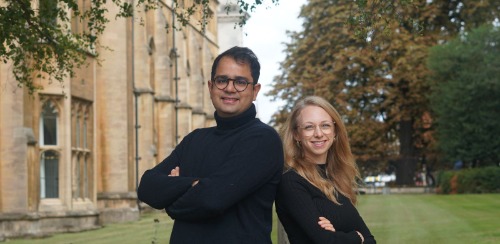
Elbow Beach has led a £2.1 million pre-seed investment in Cambridge-based Neela Biotech, backing the start-up’s effort to convert diverse waste streams into feedstocks for sustainable aviation fuel (SAF).
Neela Biotech is developing an AI-guided microbial process that converts waste from food, agriculture and forestry into fatty acids that can be used as precursors for hydroprocessed esters and fatty acids (HEFA) SAF.
The company aims to address one of the principal constraints facing HEFA-based SAF: the limited availability of suitable waste oils and fats. Rather than developing an entirely new SAF production pathway, Neela is seeking to produce alternative HEFA-compatible feedstocks using technology derived from anaerobic digestion.
The funding will support the company’s move towards pilot-scale trials.
Neela targets HEFA feedstock constraint
HEFA is currently the most established SAF production pathway and relies primarily on lipid-based feedstocks such as used cooking oil and animal fats. However, the availability of these materials is limited relative to the potential scale of aviation fuel demand.
Neela’s Controlled Microbial Upcycling process is designed to use a wider range of waste materials, including food, agricultural and forest residues. Through a controlled microbial process, these materials are converted into fatty acids that can then serve as feedstock for HEFA-based SAF production.
The company says its approach could expand the pool of materials available to the HEFA pathway without requiring the aviation industry to replace an established fuel-production route.
Neela’s technology builds on anaerobic digestion, a process already deployed commercially in biogas production. The company intends to integrate its system with existing biogas infrastructure rather than requiring entirely new standalone facilities.
Existing biogas infrastructure could reduce capital requirements
The integration model is central to Neela’s commercial proposition.
By using existing biogas plants, the company aims to reduce the capital expenditure associated with establishing new SAF production infrastructure. It could also create an additional revenue opportunity for biogas operators, particularly in the UK where some facilities face pressure as support mechanisms for the sector change.
The approach effectively positions existing anaerobic-digestion assets as part of a potential SAF feedstock supply chain.
Neela also says its microbial process requires less energy than thermochemical approaches used in some alternative SAF pathways. The company argues that combining lower-energy processing with waste-derived feedstocks and existing infrastructure could improve the economics of SAF production.
However, those cost and energy advantages still need to be demonstrated at pilot and commercial scale.
£2.1 million round funds pilot-scale development
The pre-seed round was led by Elbow Beach and includes Ascension, Cambridge Enterprise, Ventures Together and strategic angel investors.
The financing is intended to take Neela’s technology towards pilot-scale trials.
Neela is also participating in the IAG innovation programme and has received grant support from Innovate UK and the Henry Royce Institute.
The company’s earlier work has included development of its Controlled Microbial Upcycling technology and collaboration with the University of Cambridge’s Aviation Impact Accelerator on the assessment of its SAF pathway.
Jonathan Pollock, CEO of Elbow Beach, said the investment reflected the need for SAF technologies that address both fuel availability and production economics.
He argued that many SAF pathways continue to depend on constrained feedstocks such as used cooking oil, while Neela’s use of existing infrastructure could reduce capital requirements and potentially improve the route to commercial deployment.
Deepanshu Singh, CEO of Neela Biotech, said the company was founded around the challenge of making HEFA-compatible SAF feedstocks more scalable and cost competitive.
He said the company’s Controlled Microbial Upcycling process uses advances in AI-driven synthetic biology to convert waste materials into HEFA-compatible feedstocks, while integration with existing biogas plants could support distributed production.
SAF economics face renewed energy-security pressure
The investment comes against a volatile aviation-fuel market.
The effective closure of the Strait of Hormuz earlier in 2026 disrupted a major route for global oil and petroleum-product flows, with the International Energy Agency reporting significant pressure on jet-fuel markets and noting that Europe had been particularly exposed because of its dependence on Middle Eastern aviation-fuel imports.
The disruption has continued to affect energy markets. Reuters reported on October 8 that tanker attacks and reduced traffic through the Strait were contributing to renewed concerns over global oil supply, while crude flows through the corridor remained below pre-conflict levels.
This environment has strengthened the case for aviation-fuel supply chains that are less exposed to conventional petroleum markets. At the same time, SAF remains substantially more expensive than conventional jet fuel, making production cost and feedstock availability critical to future deployment.
Neela seeks cost-competitive SAF pathway
Elbow Beach and Neela argue that the combination of alternative waste feedstocks, microbial processing and existing biogas infrastructure could provide a route towards cost parity with fossil jet fuel at scale.
That remains a target rather than a demonstrated commercial result.
Neela will need to establish that its process can consistently convert heterogeneous waste streams into suitable fatty-acid feedstocks, integrate reliably with existing anaerobic-digestion facilities and achieve competitive economics as volumes increase.
The pilot phase will therefore be important in determining whether the proposed integration model can move from laboratory and development-stage technology to a commercially deployable SAF feedstock platform.
Bioenergy Business Analysis
Neela Biotech’s proposition is notable because it does not attempt to displace HEFA with another completely different SAF pathway. Instead, the company is targeting one of HEFA’s principal bottlenecks: the availability of suitable lipid feedstocks.
That distinction could be commercially important. HEFA already has an established production and certification ecosystem, so expanding the range of feedstocks compatible with the pathway could potentially offer a faster route to market than developing an entirely new fuel-production chain. Neela’s proposed integration with existing biogas plants also creates a link between two sectors that have traditionally operated as separate markets.
The critical question is whether the process can deliver consistent fatty-acid output from diverse waste materials at the required scale and cost. Feedstock variability, process yields, integration with existing digesters, downstream upgrading requirements and SAF certification will all determine the commercial potential.
The £2.1 million round provides capital to reach pilot-scale development, but it should not yet be interpreted as evidence of commercial-scale SAF production. If the pilot validates the technology and its economics, however, Neela could offer UK and European biogas operators a potential additional pathway for monetising waste streams while supplying feedstock into an established SAF production route.