


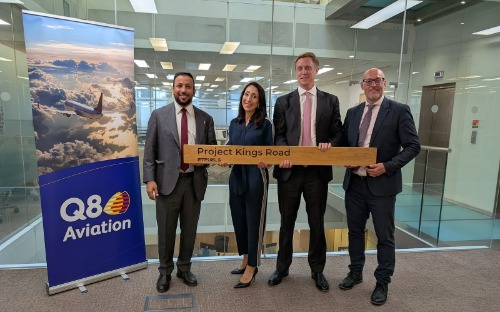
ETFuels has been selected by aviation fuel supplier Q8Aviation as a prospective long-term supplier of power-to-liquid sustainable aviation fuel (e-SAF) from its planned Project Kings Road Humber facility at the Port of Immingham in the UK. The companies are negotiating a long-term binding offtake agreement, which could help advance the proposed project towards a final investment decision (FID).
The facility is designed to produce 70,000 tonnes of e-SAF annually for aviation markets in the UK and Europe. While Q8Aviation’s selection marks a commercial milestone for ETFuels, the supply arrangement remains under negotiation and has not yet been confirmed as a binding agreement.
The development comes as the UK and European Union introduce regulatory requirements intended to increase the use of sustainable aviation fuels, including synthetic fuels produced using renewable electricity and other eligible inputs. These policies could create a stronger market for e-SAF, although project delivery will depend on factors including production costs, regulatory compliance, financing and the availability of suitable feedstocks.
Q8Aviation evaluates ETFuels as a prospective e-SAF supplier
According to ETFuels, Q8Aviation selected the company after assessing potential supply partners against several criteria, including project maturity, feedstock strategy, cost competitiveness, regulatory compliance and the ability to deliver fuel.
For ETFuels, securing a prospective long-term customer is an important step towards commercialising Project Kings Road Humber. Long-term offtake agreements can provide prospective producers with greater revenue visibility and help demonstrate market demand when seeking financing and making investment decisions.
However, the commercial significance of the selection will depend on the outcome of negotiations, including the final agreement’s terms, volumes, pricing and delivery schedule. These details have not been disclosed in the supplied announcement.
Project Kings Road Humber targets 70,000 tonnes of annual e-SAF production
The proposed facility is planned for the Port of Immingham, a location that ETFuels says offers access to established fuel infrastructure and deep-water port facilities.
The company also identifies the site’s potential connection to the UK’s approximately 2,000-kilometre aviation fuel pipeline network as an advantage for distributing finished fuel. The actual arrangements for connecting the project to the network, including the necessary infrastructure and approvals, have not been detailed in the announcement.
Project Kings Road Humber is intended to serve aviation customers in both the UK and Europe. Its planned production capacity of 70,000 tonnes per year would make securing dependable feedstock supplies, competitive production economics and reliable distribution important considerations for project development.
US e-methanol portfolio forms part of the supply strategy
ETFuels says its development model combines a UK-based conversion facility with access to e-methanol from its US production portfolio.
The company attributes the potential cost advantages of this arrangement to renewable energy resources located close to production facilities and US incentives supporting hydrogen production. The e-methanol would serve as the intermediate feedstock for the planned methanol-to-jet process.
The proposed model is intended to combine access to competitively priced e-methanol with the UK’s aviation fuel infrastructure and access to European markets. However, the claimed cost advantages remain subject to verification of the project’s technical design, feedstock supply arrangements, logistics, applicable incentives and regulatory eligibility.
UK and EU SAF policies strengthen the case for synthetic fuels
The proposed supply arrangement comes against a changing regulatory backdrop for aviation fuels.
The UK’s Sustainable Aviation Fuel (SAF) Mandate and the EU’s ReFuelEU Aviation framework establish requirements for increasing the use of eligible sustainable aviation fuels. Both frameworks also include provisions relevant to synthetic aviation fuels, although their eligibility rules, targets and compliance mechanisms differ.
These policies provide a potential demand driver for e-SAF producers. Their commercial impact will depend on the specific obligations applicable to fuel suppliers, the pace of market development and the availability of compliant fuel at prices customers can absorb.
For Project Kings Road Humber, a prospective long-term offtake arrangement could help connect planned production capacity with demand from an established aviation fuel supplier. It does not, by itself, establish that the project has met the requirements for investment approval or that future production will qualify under the relevant mandates.
ETFuels and Q8Aviation executives outline the proposed partnership
ETFuels chief executive Lara Naqushbandi described Q8Aviation’s selection as a major commercial milestone for Project Kings Road Humber, highlighting the importance of long-term offtake commitments in advancing new e-SAF capacity towards FID.
She said the proposed partnership moves the project closer to an investment decision and supports the company’s ambition to develop domestic UK e-SAF production.
Adam Harrison, commercial director at Q8Aviation, said the selection represented a step in the company’s strategy to support aviation’s sustainable growth and secure long-term access to e-SAF for its customers.
Harrison added that Q8Aviation intended to support the development of e-SAF production capacity as the market moves from policy objectives towards commercial implementation.
Neither statement confirms that a binding supply contract has been signed. The next significant commercial milestone will be the conclusion of negotiations and the disclosure of further details about the proposed arrangement.
Bioenergy Business Analysis
Q8Aviation’s selection of ETFuels highlights the growing importance of customer commitments in the development of power-to-liquid aviation fuel projects. For a proposed facility such as Project Kings Road Humber, a credible offtake partner could strengthen the commercial case by providing evidence of prospective demand. However, selection as a supplier is an early commercial milestone rather than proof of project bankability. Financing, construction costs, operating assumptions and the terms of a binding agreement will remain central to the investment decision.
The project’s proposed integration of US e-methanol supply with UK-based fuel conversion and distribution infrastructure also raises an important question for the emerging e-SAF industry; whether international feedstock strategies can deliver fuel at competitive prices while satisfying applicable lifecycle-emissions and regulatory requirements. Access to renewable power and hydrogen incentives may support production economics, but the overall cost will also depend on conversion efficiency, transport, carbon sourcing and the treatment of imported intermediates under relevant rules.
The UK’s and EU’s aviation fuel policies provide a potential source of structural demand, but policy requirements alone do not guarantee that a project will proceed. Project Kings Road Humber will need to demonstrate that it can secure compliant feedstock, obtain the necessary approvals, finance construction and deliver fuel on commercially acceptable terms.
The key milestone to watch is the transition from supplier selection to a binding offtake agreement and, subsequently, a final investment decision. Until those steps are confirmed, the 70,000-tonne annual capacity should be treated as planned rather than operational production.