


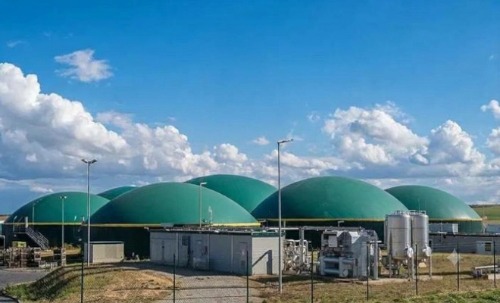
Organic Recycling Systems Limited (ORSL), through its wholly owned subsidiary Solapur Bioenergy Systems Private Limited (SBESPL), has secured its fifth contract from Bharat Petroleum Corporation Limited (BPCL) for an organic municipal solid waste-based compressed biogas (CBG) plant in Bhilai, Chhattisgarh. Announced on 16 October 2026, the contract covers engineering, procurement, construction, operation and maintenance (EPCOM) of the proposed facility, adding to the company’s growing portfolio of waste-to-energy projects.
According to ORSL’s announcement, the latest award takes its cumulative BPCL order book to a stated range of ₹350–500 crore. The company has not disclosed the individual contract value in the supplied announcement.
The project will process organic municipal solid waste to produce compressed biogas, converting a portion of the urban waste stream into a usable fuel. Its scope covers the project lifecycle, from engineering and procurement through construction, installation, commissioning and long-term operations and maintenance.
BPCL CBG Project Covers End-to-End EPCOM Services
SBESPL’s contract includes project management, licensing, basic and detailed engineering, procurement, construction, fabrication, transportation, installation and testing. It also covers statutory approvals, commissioning and performance guarantee testing.
The integrated EPCOM structure places responsibility for multiple stages of project delivery within the contract, extending beyond plant construction to include operations and maintenance.
For CBG infrastructure, this scope is relevant because project performance depends not only on equipment installation but also on commissioning, process reliability, feedstock handling and consistent gas production. The specific technical configuration, processing capacity, commissioning schedule and expected CBG output of the Bhilai facility were not disclosed in the announcement.
Organic Municipal Waste to Be Converted into Compressed Biogas
The proposed Bhilai facility will use organic municipal solid waste as its feedstock to produce compressed biogas. Depending on the composition and quality of incoming waste, organic material can be treated through anaerobic digestion, in which microorganisms break down biodegradable matter in oxygen-free conditions and generate biogas. The gas can then be processed to remove impurities and upgrade its methane content before compression for use as fuel.
Municipal waste-based CBG projects can support two connected objectives: diverting biodegradable waste from less controlled disposal routes and recovering energy from organic material. Their effectiveness depends on reliable waste collection, segregation, contamination control, plant operations and arrangements for managing digestate and other residual materials.
The project also fits within India’s broader efforts to develop compressed biogas production and strengthen links between waste management and renewable fuel supply. However, the announcement does not quantify the facility’s anticipated waste-processing volume, gas output or emissions reductions.
ORSL Expands BPCL Project Portfolio Through Fifth Contract
The Bhilai award marks the fifth BPCL contract secured by SBESPL, according to ORSL. The company said the development strengthens its bioenergy project development and EPCOM business, building on its capabilities in engineering, process technology, plant execution and ongoing operations and maintenance.
Pankaj Tanwar, CEO – Bioenergy at ORSL, said the project would provide an opportunity to demonstrate the company’s capabilities across the EPCOM value chain, from engineering and execution to commissioning and long-term plant operations.
He added that the company intended to execute the project in accordance with its contractual requirements, with an emphasis on safety, quality and operational performance.
ORSL positions the latest contract within its wider waste-to-valorisation business, which focuses on converting waste streams into useful resources. The announcement does not identify the other four BPCL contracts or provide a project-by-project breakdown of the cumulative order book.
Although the announcement describes the Bhilai project as a large-scale EPCOM contract, the individual award value is not disclosed in the supplied material. The company’s stated cumulative BPCL order book of ₹350–500 crore should therefore not be interpreted as the value of this single contract.
The distinction matters when assessing the company’s project pipeline, revenue visibility and future execution obligations.
Bioenergy Business Analysis
The Bhilai contract highlights the role of integrated engineering, procurement, construction and operating services in India’s expanding compressed biogas sector. As public-sector energy companies continue to participate in waste-based fuel infrastructure, experienced EPCOM contractors can play an important role in connecting municipal waste management with renewable gas production.
A CBG facility must manage an interconnected operating system: feedstock collection, organic waste preparation, biological processing, gas upgrading, compression and the handling of residual material. Failures or inefficiencies at any stage can affect gas output, operating costs and plant availability.
An EPCOM contract that covers commissioning and long-term operations and maintenance may provide continuity between construction and plant operation. However, the actual allocation of performance risks and responsibilities will depend on the detailed contract terms, which have not been disclosed.
The Bhilai award reinforces the importance of EPCOM capabilities in India’s waste-to-CBG value chain. Its longer-term significance will depend on successful plant execution, dependable organic waste supply and sustained operational performance. Until project-level technical and financial details become available, the contract’s precise contribution to ORSL’s revenues and India’s CBG output cannot be quantified.


