


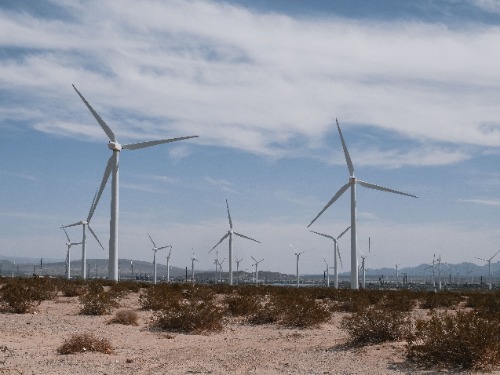
Kutch Copper Ltd, a subsidiary of Adani Enterprises, plans to integrate 115 MW of renewable energy into its copper refining operations in Mundra, Gujarat, as it prepares to double production capacity and strengthen its environmental management strategy.
The proposed renewable energy integration forms part of the company’s broader sustainability plans, which include reducing the carbon footprint of its operations, conserving freshwater resources and controlling sulphur emissions.
Kutch Copper currently operates a copper smelter with a capacity of 500,000 tonnes per annum (tpa). The company plans to expand capacity to 1 million tpa, a development it says would make the facility the world’s largest single-location custom copper smelter.
In its maiden sustainability report, the company outlined its approach to environmental, social and governance (ESG) priorities as demand for copper grows across electricity networks, renewable energy infrastructure, electric mobility and other industrial applications.
Renewable energy to support copper production
The planned integration of 115 MW of renewable energy is a central element of Kutch Copper’s decarbonisation strategy.
“A key element of our sustainability strategy is the planned integration of 115 megawatts of renewable energy, a significant step towards reducing the carbon footprint of our operations and advancing long-term decarbonisation goals,” the company said in its sustainability report.
The report does not specify the renewable energy technologies to be deployed, the expected commissioning date or the proportion of the refinery’s electricity demand that the planned capacity would supply.
Copper is an important input for the energy transition because it is widely used in power transmission and distribution, renewable energy systems, electric vehicles and industrial electrification. Expanding production while reducing the emissions associated with refining could therefore become an increasingly important consideration for copper producers.
However, the overall climate benefit of Kutch Copper’s proposed renewable energy integration will depend on factors including the source of the electricity, its contribution to total energy consumption and the emissions associated with the refinery’s wider operations.
Refinery expansion targets 1 million tonnes per year
Kutch Copper’s proposed renewable energy integration comes alongside plans to expand its existing smelting capacity from 500,000 tpa to 1 million tpa.
According to the company, the expansion would establish the Mundra facility as the world’s largest single-location custom smelter. The company has not provided a project completion timeline in the information available for this report.
The Adani Group has committed $1.2 billion to the project, according to the company. The available information does not clarify the allocation of this investment between capacity expansion, renewable energy integration and other project components.
The proposed scale-up reflects the strategic importance of copper to India’s infrastructure and industrial development. At the same time, increasing production capacity could raise the facility’s overall energy requirements, making the role of renewable electricity and improvements in resource efficiency important to its environmental performance.
Desalinated water and zero-liquid-discharge approach
Water conservation is another component of Kutch Copper’s sustainability strategy.
The company said its operations rely on nearly 100% desalinated water and follow a zero-liquid-discharge approach. These measures are intended to limit dependence on freshwater resources and reduce the discharge of industrial wastewater.
Zero-liquid-discharge systems generally seek to recover and reuse wastewater, minimising or eliminating liquid effluent discharged from a facility. Their environmental performance depends on the design and operation of the treatment system, water recovery rates and the management of residual waste streams.
Kutch Copper’s reported reliance on desalinated water may reduce pressure on freshwater supplies, although a full assessment would also need to consider the energy required for desalination and the management of the resulting brine.
The company’s sustainability report positions water management alongside renewable energy use and emissions control as part of its broader approach to operational resource efficiency.
Sulphur emissions treatment reported at 99.8%
Kutch Copper also highlighted its sulphur emissions management performance, reporting that it treats 99.8% of sulphur emissions generated by its operations.
“We are currently treating 99.8 per cent of sulphur emissions, reflecting our commitment to adopting global standards in environmental stewardship and pollution control by leveraging advanced environmental technologies,” the company said.
Sulphur dioxide emissions are an important environmental consideration in copper smelting. Smelting processes can generate sulphur-bearing gases, which can be captured and processed using appropriate gas-treatment systems. Depending on the process and feedstock, captured sulphur can also be recovered for industrial use, including sulphuric acid production.
The reported treatment rate indicates the company’s stated focus on emissions control. However, it should not be interpreted as a 99.8% reduction in all greenhouse gas emissions. Sulphur emissions and greenhouse gas emissions are distinct environmental measures, and the report information provided does not establish the refinery’s total greenhouse gas emissions or its emissions intensity.
Community programmes form part of ESG strategy
Beyond its industrial operations, Kutch Copper said it is investing in community initiatives covering healthcare, education, livelihoods and social development.
These programmes form part of the company’s stated effort to incorporate ESG considerations into business decisions, operations and engagement with stakeholders.
The company also linked the domestic copper industry to India’s longer-term climate ambitions, including the national target of achieving net-zero emissions by 2070.
As demand for copper increases with investment in low-carbon infrastructure, the environmental performance of the metal’s production will be relevant to the broader energy transition. Renewable electricity, emissions treatment and responsible water management can contribute to that effort, although the extent of their impact will depend on implementation and measurable operating results.
Bioenergy Business Analysis
Kutch Copper’s planned 115 MW renewable energy integration illustrates how energy-intensive industrial sectors are incorporating cleaner electricity into expansion strategies. Copper is essential to electrification and renewable energy deployment, but producing more of the metal also requires careful management of energy consumption, industrial emissions and water use.
The key question is how the planned renewable capacity will translate into measurable improvements at the Mundra refinery. Details on the renewable energy mix, commissioning schedule, expected electricity contribution and projected emissions reductions would help establish the initiative’s likely impact. Similarly, transparent reporting on greenhouse gas emissions, energy intensity, water recovery and sulphur emissions would make it easier to assess environmental performance as capacity moves towards the proposed 1 million tpa level.


