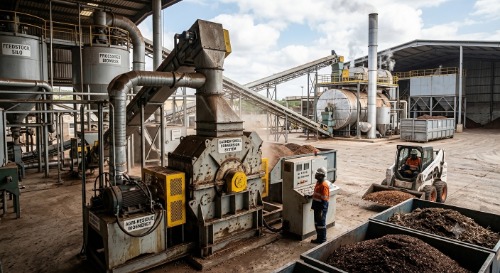
Climate Bonds Initiative has certified a US$60 million green bond issued by Valency International Pte Ltd to finance a cashew-waste-to-bioenergy project in Côte d’Ivoire, marking the first certification under its newly introduced Bioenergy Criteria. The bond carries a 1.5°C-aligned Use of Proceeds classification and will support an integrated industrial complex designed to convert cashew processing residues into renewable energy and bio-based products.
Announced on 15 October 2026, the transaction is backed by a US$60 million guarantee from the Green Guarantee Company (GGC), managed by Development Guarantee Group. HSBC arranged the bond, with Legal & General (L&G) acting as the sole investor. The bond is scheduled to be listed on the Vienna Stock Exchange.
The financing will contribute to Valency International’s broader US$150 million investment programme to develop a circular cashew-processing ecosystem in Côte d’Ivoire. The wider project is expected to process approximately 90,000 tonnes of cashew shell waste annually and avoid an estimated 880,000 tonnes of carbon dioxide equivalent (CO₂e) emissions over 20 years, according to the announcement.
The proceeds will support an integrated Cashew Waste Value Park in Côte d’Ivoire, designed to recover value from cashew nut shells and other processing by-products.
The proposed complex will produce industrial bio-oils, bio-based chemicals and renewable energy, alongside infrastructure for green warehousing and storage. The approach aims to shift cashew residues from disposal or uncontrolled decomposition towards higher-value industrial applications.
Climate Bonds Introduces Certification Under New Bioenergy Criteria
The transaction is the first green bond to receive certification under Climate Bonds Initiative’s new Bioenergy Criteria, extending its climate-alignment framework to eligible bioenergy investments.
According to the announcement, the bond has received a 1.5°C-aligned Use of Proceeds classification. The certification is intended to provide investors with a framework for assessing whether the financed activities meet the applicable climate criteria.
Andrew Rolland, Senior Certification Manager at Climate Bonds Initiative, said the certification marked a milestone for science-aligned investment in bioenergy. He highlighted the potential for agricultural waste conversion to support emissions reductions, renewable energy generation and local economic development.
Climate Bonds Criteria address sustainability risks in bioenergy
The updated Bioenergy Criteria cover a range of bioenergy activities, including biomass-based fuels, electricity generation and supporting infrastructure. Climate Bonds Initiative says the framework incorporates safeguards addressing feedstock sustainability, lifecycle emissions, biodiversity, soil carbon, water use and food security. It also includes measures aimed at reducing methane leakage across the biogas and biomethane value chain.
These safeguards are relevant to agricultural-residue projects because using waste as feedstock does not automatically make every downstream product or production pathway low-carbon. Processing energy, transportation, emissions from conversion and the final use of the products all affect overall climate performance.
Climate Bonds Certification assesses the climate alignment of eligible assets, projects or activities against its applicable standards. It does not constitute a guarantee of an investment’s financial performance or creditworthiness.
Financing structure links institutional investment with industrial development
The US$60 million guarantee from the Green Guarantee Company underpins the bond issued by Valency International. HSBC arranged the transaction, and L&G is the sole investor. The bond is intended to be listed on the Vienna Stock Exchange.
Lasitha Perera, CEO of Development Guarantee Group, said the guarantee would help Valency access long-term financing from a major UK institutional investor. He also highlighted the project’s potential to add value within Côte d’Ivoire’s cashew supply chain, create employment, support smallholder livelihoods and reduce emissions.
Valency International CEO Sumit Jain said the investment programme aims to retain more value from cashew production within Côte d’Ivoire by converting processing residues into energy and bio-based products.
The financing structure illustrates how guarantees can help connect institutional investors with industrial projects in emerging markets. The extent to which this model can be replicated across other agricultural-residue and bioenergy projects will depend on project economics, credible certification, investor appetite and the availability of suitable feedstocks.
Côte d’Ivoire targets higher domestic cashew processing
The project is intended to support Côte d’Ivoire’s national objective of increasing domestic cashew processing to 50% by 2030, as stated in the announcement.
By processing cashew shells and associated residues locally, the proposed Cashew Waste Value Park could expand domestic value addition beyond the sale of raw agricultural commodities. The planned outputs include bio-based chemical substitutes, renewable fuels, biochar, biofertiliser and electricity.
The development also has potential employment implications, particularly through expanded domestic processing and associated supply-chain activities. However, the announcement does not quantify expected direct jobs, employment for women or the number of smallholder farmers expected to benefit.
The climate case will ultimately depend on the project’s implementation and the credibility of its emissions accounting. The estimated 880,000 tonnes of CO₂e avoided over 20 years is a projected benefit, not a measured operating result.
Bioenergy Business Analysis
The Valency International transaction is notable for bringing three strands of the energy transition together: agricultural waste valorisation, industrial decarbonisation and institutional green finance. It also highlights a practical route for bioenergy development in agricultural economies, where residues can serve as feedstock for fuels, electricity and bio-based materials rather than being treated solely as waste.
One of the transaction’s main implications is the application of Climate Bonds Initiative’s revised Bioenergy Criteria to a green bond financing an integrated agricultural-residue processing complex.
For investors, these indicators will help connect the bond’s intended use of proceeds with project delivery. For bioenergy developers, the transaction provides a case study in combining feedstock valorisation with climate-focused financing. For policymakers, it highlights the potential link between domestic agro-industrial processing, renewable energy and local economic development.
Valency International’s green bond is a meaningful financing milestone for agricultural-residue bioenergy in Côte d’Ivoire. Its broader significance will depend on whether the project converts its planned processing capacity into commercially sustainable operations and demonstrable climate benefits.