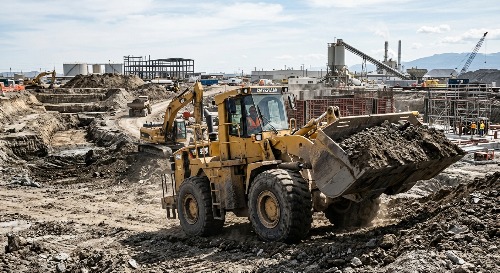
International construction group STRABAG has partnered with Omani biofuel producer Wakud to test biodiesel use in heavy construction machinery, launching a pilot project designed to assess the fuel’s operational suitability under real-world site conditions.
The trial in Oman is expected to run for approximately three months, consuming an estimated 27,400 litres of B7 fuel. Initial testing will use a Caterpillar 966GC wheel loader, with performance monitored to determine whether the biodiesel blend can be used reliably in construction operations.
The initiative could provide a practical basis for evaluating renewable fuel adoption across Oman’s construction and industrial sectors.
B7 Biodiesel Trial to Assess Machinery Performance
B7 is a diesel blend containing 7% biodiesel and 93% conventional diesel. STRABAG has selected the blend as a starting point for assessing alternative fuels in heavy equipment, with the trial intended to establish how the fuel performs under demanding operating conditions.
According to STRABAG Oman, the pilot will operate under a two-shift schedule. The evaluation will cover fuel consumption, engine performance, operational reliability, maintenance requirements and day-to-day equipment performance.
The findings will help the company determine whether B7 can be integrated into construction activities without compromising machinery reliability or productivity. Any expansion beyond the initial wheel loader will depend on the trial results and the compatibility of additional equipment with the fuel.
The company’s decision to begin with a limited pilot allows it to assess operational risks and practical requirements before considering wider deployment.
Around Half of STRABAG Oman’s Fleet Could Be Suitable
STRABAG estimates that approximately 50% of its construction equipment fleet in Oman could potentially be suitable for B7 use.
This represents an initial assessment rather than a confirmed deployment plan. Wider adoption will depend on the outcome of the trial, equipment manufacturers’ requirements, fuel quality and the availability of dependable supplies.
The results could also provide useful information for other contractors and industrial operators that rely on diesel-powered machinery and are evaluating lower-carbon fuel alternatives.
Heavy construction equipment presents a particular challenge for decarbonisation because machines must operate reliably for extended periods under demanding conditions. Fuel substitution therefore needs to be assessed not only in terms of emissions potential but also in terms of performance, maintenance and operating costs.
Biodiesel Supports STRABAG’s Emissions Strategy
The pilot forms part of STRABAG Group’s broader sustainability efforts, which include alternative propulsion technologies, renewable fuels and lower-carbon construction materials.
The group’s emissions targets include reducing absolute Scope 1 and Scope 2 emissions by 42% and Scope 3 emissions by 25% by 2030, following its 2023–2030 reduction pathway.
STRABAG also has experience using B7 and hydrotreated vegetable oil (HVO) in its European operations. That experience provides a basis for evaluating alternative fuels in Oman, although local deployment will depend on operating conditions, equipment requirements and fuel supply arrangements.
Biodiesel can potentially reduce the lifecycle greenhouse gas emissions associated with diesel use, but the scale of the benefit depends on the feedstock, production pathway, fuel quality and emissions methodology. The Oman pilot is primarily intended to assess technical and operational feasibility; it should not be treated as evidence of a quantified emissions reduction before results are available.
Fuel Availability and Cost Remain Key Challenges
STRABAG has identified fuel availability, competitive pricing, supplier diversity and supply-chain reliability as important conditions for wider commercial adoption.
These factors will influence whether biodiesel can move from a controlled trial to routine use across construction fleets. Even where machinery is compatible, contractors need dependable supplies at prices that support commercially viable operations.
Oman’s domestic biodiesel industry has also faced broader market-development challenges, including access to used cooking oil (UCO), pricing pressures and limited uptake by corporate customers. Omani stakeholders have also sought to address regulatory and supply-chain barriers affecting the sector.
A successful equipment trial could help demonstrate a practical end use for locally produced biodiesel. However, sustained adoption will require both technical suitability and a reliable commercial supply model.
Potential Implications for Oman’s Construction Sector
The STRABAG–Wakud initiative could provide a reference point for other construction companies, contractors and industrial operators considering alternative fuels for diesel-powered equipment.
If the trial demonstrates reliable performance and acceptable operating costs, STRABAG may consider higher biodiesel blends or other lower-carbon fuels. Any such move would require further evaluation of equipment compatibility, fuel specifications and supply availability.
The project also aligns with Oman’s broader energy-transition ambitions and its stated goal of achieving net-zero emissions by 2050. Its immediate contribution will depend on the results of the pilot and whether the findings support deployment beyond the initial machine.
Related reporting on biodiesel demand and palm oil trade examines how fuel policies can influence feedstock availability in other markets.
Bioenergy Business Analysis
The STRABAG–Wakud pilot highlights a practical route for expanding biodiesel use into construction, a sector where heavy machinery continues to depend on liquid fuels. Rather than committing immediately to a fleet-wide transition, the companies are testing a defined blend under actual operating conditions and monitoring the factors that determine commercial viability.
The estimated potential suitability of around half of STRABAG Oman’s equipment fleet suggests a possible opportunity for expansion, but compatibility alone will not determine uptake. Reliable fuel supply, competitive pricing, maintenance requirements and equipment warranties will all influence the business case.