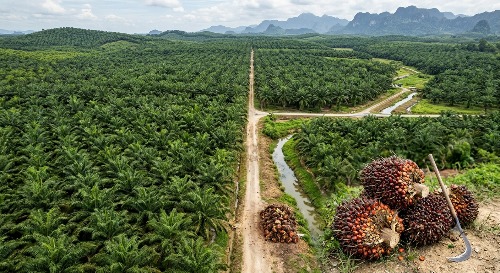
India’s edible oil industry is exploring Colombia as an alternative source of palm oil as biodiesel expansion in Indonesia and Malaysia raises concerns over the availability of supplies for food consumption.
The Solvent Extractors’ Association of India (SEA), the country’s edible oil trade body, said Colombia could help diversify India’s palm oil sourcing as biofuel policies reshape global vegetable oil trade flows. Indonesia and Malaysia are the world’s leading palm oil producers and are increasing the use of palm oil in biodiesel, potentially tightening supplies available for food and other applications.
“Colombia, the world’s fourth-largest palm oil producer, offers promising opportunities for deeper trade engagement,” SEA president Angshu Mallick said in a statement, according to a report by Press Trust of India (PTI).
Mallick said Colombia had supplied around 200,000 tonnes of palm oil to India in the recent past, indicating scope for strengthening trade ties. India is the world’s largest importer of vegetable oils, leaving its edible oil market exposed to changes in international production, pricing and export availability.
SEA Plans Colombia Delegation and Trade Cooperation
SEA plans to send a high-level delegation to Colombia early next year to explore opportunities for closer engagement with the country’s palm oil industry.
The association also expects to sign a memorandum of understanding (MoU) with Fedepalma, Colombia’s national federation of oil palm growers. The proposed agreement is intended to provide a framework for greater cooperation between the two countries’ industry stakeholders.
The initiative comes as India seeks to broaden its supplier base amid changing global demand for vegetable oils. Diversifying import sources could help reduce reliance on a limited number of producing countries, although the scale of any additional supply will depend on Colombia’s export availability, commercial terms and logistics.
Biodiesel Policies Reshape Vegetable Oil Trade
Indonesia and Malaysia play a central role in global palm oil supply. As these countries expand biodiesel blending, a larger share of their palm oil output may be directed towards domestic fuel markets rather than exports or food-related applications.
The shift highlights the growing links between biofuel policy and agricultural commodity markets. Palm oil is used in food production as well as in biodiesel, meaning changes in fuel demand can influence the availability and price of supplies for other uses.
For India, which imports large volumes of edible oils, these developments increase the importance of monitoring international biofuel policies alongside conventional agricultural supply-and-demand factors.
SEA has called for diversified sourcing, higher domestic oilseed production and greater value addition within India to help the sector navigate price volatility and changing trade patterns.
Mozambique Emerges as Another Potential Trade Partner
Alongside its engagement with Colombia, SEA has signed a statement of interest with the government of Mozambique’s Nampula province to explore a sustainable oilseed and vegetable oil trade corridor with India.
The initiative signals interest in expanding commercial links with additional producing regions. However, the statement of interest represents an exploratory step rather than confirmation of a fully operational trade corridor or a committed volume of future supplies.
SEA’s engagement with Colombia and Mozambique reflects a broader effort to strengthen sourcing options as global vegetable oil markets respond to biofuel demand, changing trade flows and price fluctuations.
Higher Mustard MSP Could Support Domestic Oilseed Production
Mallick also welcomed the Indian government’s higher minimum support prices (MSP) for the 2027–28 rabi marketing season, saying the increase could create an opportunity to strengthen mustard production.
The MSP for rapeseed and mustard was raised by ₹413 per quintal to ₹6,613 per quintal. The MSP for safflower increased by ₹675 to ₹7,215 per quintal.
Higher support prices can improve the potential returns available to farmers, but their effect on production depends on factors including input costs, weather conditions, procurement arrangements and access to markets.
Mallick said the effectiveness of the support would depend on procurement mechanisms, market access and the prices farmers actually receive. The announced MSP increases therefore represent one element of a broader strategy to strengthen domestic oilseed supply, rather than a guarantee of increased output.
India’s Edible Oil Imports Remain Substantial
According to SEA data cited by PTI, India imported 15.16 million tonnes of edible oils during the first 11 months of the 2025–26 marketing year, which began in November.
The scale of these imports underlines the importance of securing reliable overseas supplies while developing domestic oilseed production. Greater sourcing diversity could provide additional flexibility, while stronger domestic output could help reduce exposure to international market disruptions over time.
For the edible oil sector, the challenge will be to balance food demand, expanding biofuel consumption and the commercial interests of farmers, processors and importers.
Bioenergy Business Analysis
India’s interest in Colombia as an alternative palm oil supplier illustrates how biodiesel policies in major producing countries can affect markets beyond the energy sector. When more palm oil is directed towards domestic biofuel production, the volumes available for export and food use can come under pressure, depending on production growth and other market conditions.
For India, the response involves two complementary approaches: diversifying international sourcing and strengthening domestic oilseed production. Colombia could offer another supply channel, while the proposed engagement with Mozambique may create additional opportunities over time. Neither initiative, however, should be viewed as a guaranteed substitute for existing import volumes until supply commitments and commercial arrangements are established.
The MSP increases for mustard and safflower may support domestic production incentives, but the eventual impact will depend on farm-level economics and the effectiveness of procurement and market access.
The wider development is relevant to the bioenergy industry because it demonstrates the connection between fuel mandates and agricultural commodity markets. As countries expand biofuel use, policymakers and traders will need to account for the competing demands placed on vegetable oils, while ensuring that energy-transition policies do not overlook food-market security and farmer returns.