


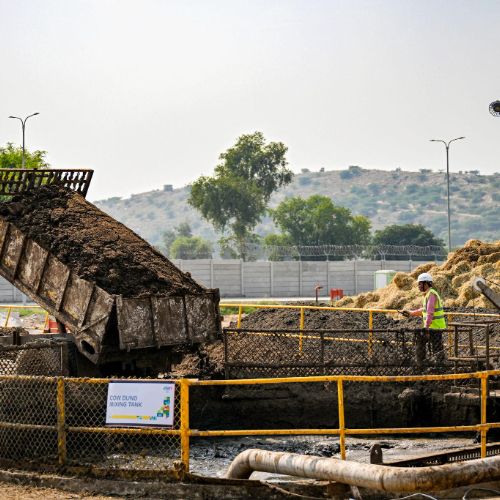
Around 75 tonnes of cow dung are reportedly entering Punjab’s Buddha Nullah every day, according to Rajya Sabha MP Balbir Singh Seechewal, who has criticised the handling of dairy waste and the functioning of sewage treatment infrastructure during inspections across Ludhiana. The findings raise concerns about the effectiveness of existing wastewater treatment systems and the management of organic waste generated by the city’s dairy complexes as reported by Hindustan Times.
Seechewal’s inspections covered sewage treatment plants (STPs), effluent treatment facilities, dairy complexes and compressed biogas (CBG) projects. He said untreated dairy waste was obstructing treatment operations despite substantial public expenditure on pollution-control infrastructure.
Dairy Waste Disrupts Sewage Treatment Operations
During an inspection of the 160 million litres per day (MLD) sewage treatment plant at Balloke, Seechewal highlighted the impact of wastewater containing animal urine and other dairy waste on plant operations. He said the sludge cake produced at the facility consisted almost entirely of raw cow dung, indicating the scale of the waste entering the treatment system.
The reported daily discharge presents a challenge for infrastructure designed to treat municipal wastewater. When concentrated animal waste enters sewerage networks and treatment facilities without adequate management, it can increase the organic load and contribute to operational blockages, potentially affecting treatment performance.
The findings underscore the need to manage dairy waste closer to its source rather than allowing it to enter municipal drainage and sewage systems.
Treatment Arrangements at Tajpur and Nearby Villages Face Blockages
At the Tajpur Dairy Complex, a temporary wastewater treatment arrangement based on the Seechewal Model reportedly became clogged, allowing untreated wastewater to flow directly into the water body.
Similar blockages were reported in three pits constructed under the model for Talwara and Barnahara villages. Following the inspections, Seechewal directed the Panchayati Raj Department to take strict action against dairies operating in the affected areas.
He also criticised officials from multiple departments, alleging that agencies were shifting responsibility rather than resolving the pollution problem.
The reported failures highlight the importance of maintaining treatment infrastructure, monitoring incoming waste and establishing clear accountability for the operation of dairy wastewater management systems.
263 FIRs Registered, but No Arrests Reported
Seechewal raised concerns about enforcement against dairy operators accused of discharging waste into Buddha Nullah.
According to the account of his remarks, 263 first information reports (FIRs) have been registered against dairy operators in connection with the discharge of waste into the water body.
Seechewal said no arrests had been made in these cases so far. The figures point to a potential gap between the registration of pollution-related cases and subsequent enforcement, although the procedural status of individual cases was not provided in the source material.
Officials Directed to Address Electricity and Animal Welfare Violations
The inspections also covered alleged electricity violations and concerns about the treatment of dairy cattle.
Seechewal instructed officials from Powercom, Punjab’s power utility, to act against dairy operators allegedly using unauthorised electricity connections after their regular supplies had been disconnected.
He also asked the Animal Husbandry Department to monitor the administration of potentially harmful injections to dairy cattle and ensure compliance with appropriate animal welfare standards.
These issues broaden the scope of the reported concerns beyond wastewater treatment, highlighting the need for coordination among pollution-control authorities, local government bodies, electricity officials and animal husbandry agencies.
Bioenergy Business Analysis
The reported discharge of approximately 75 tonnes of cow dung into Buddha Nullah each day highlights a waste-management challenge with implications for both water quality and bioenergy development in Punjab. Dairy waste is not merely a disposal problem; when collected and processed under suitable conditions, it can also serve as a feedstock for biogas and compressed biogas production.
The immediate priority is to prevent untreated dairy waste from entering the drainage network. Treatment infrastructure cannot deliver its intended benefits if incoming waste overwhelms or obstructs operations. The reported blockages at Balloke, Tajpur and the village-level facilities suggest that infrastructure maintenance, waste segregation and effective monitoring need to be addressed alongside enforcement.
The situation illustrates an opportunity to connect pollution control with resource recovery. Dairy clusters can potentially supply feedstock for decentralised biogas systems, but successful implementation depends on collection logistics, contamination control, plant reliability, financing and a viable route to market for the resulting gas.
For policymakers and project developers, the key lesson is that CBG infrastructure must be integrated into a wider waste-management system rather than treated as a standalone energy solution. Until the reported discharges and treatment failures are independently assessed and addressed, the scale of recoverable feedstock and the likely environmental benefits remain uncertain.
Related coverage: Aemetis’s two new dairy biogas digesters in California illustrate a separate project using dairy waste for renewable gas production.


