


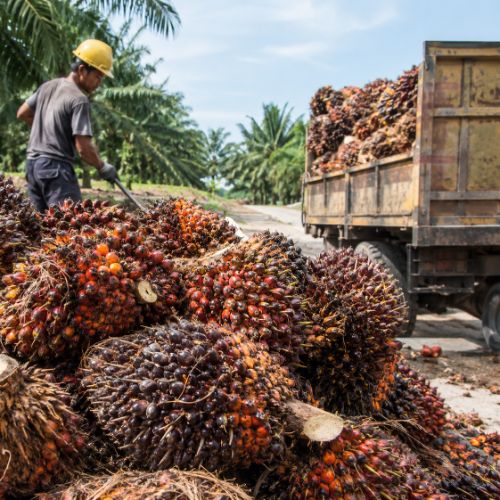
Malaysian palm oil futures fell below MYR 4,800 per tonne as weakness in competing edible oil markets and lower crude oil prices offset strong export demand. The decline came despite a reported surge in Malaysian palm oil shipments during the first 20 days of October, while festival-related buying from India provided additional support.
The price movement highlights the competing forces shaping the vegetable oil market: export demand and expectations of tighter supplies are supporting prices, while weaker energy markets and softer food-sector demand are weighing on sentiment.
Lower Crude Oil Prices Weigh on Palm Oil Futures
Palm oil futures came under pressure alongside weaker prices for palm oil contracts in Dalian and soybean oil futures in Chicago. The decline in crude oil prices added to the downward pressure by reducing the relative attractiveness of vegetable oils as feedstocks for biodiesel production.
Palm oil competes with other vegetable oils in food markets and can also be used in renewable fuel production. When fossil fuel prices decline, the economics of biodiesel production may become less favourable, depending on feedstock costs, government mandates, blending requirements and policy incentives.
Persistent inflationary pressures also weighed on sentiment by potentially limiting demand from food manufacturers and consumers. Together, these factors offset some of the support provided by stronger export activity.
Malaysian Palm Oil Exports Rebound in October
Export demand provided a counterweight to the decline in futures prices. Cargo surveyors reported that Malaysian palm oil shipments increased by 58.5% to 78.4% during 1–20 October compared with the corresponding period in September, according to the market report published by Trading Economics on 26 October.
India’s festival-season buying also supported market sentiment. As a major importer of palm oil, India can influence international demand through changes in purchasing volumes, import costs and the relative prices of competing edible oils.
The Malaysian Palm Oil Council (MPOC) expects crude palm oil prices to remain above MYR 4,600 per tonne in November. Its outlook reflects expectations of stronger exports, seasonal production declines and tighter availability of competing vegetable oils.
The MPOC expects India and China to rely more heavily on palm oil if supplies of sunflower oil and soybean oil tighten. Such substitution could support palm oil demand even as prices fluctuate in response to wider commodity-market conditions.
However, the outlook is not without risks. Weaker food-sector consumption, persistent inflationary pressures and lower energy prices could limit price gains. The balance between export demand, production, inventories and biodiesel consumption will remain important to the market’s direction.
Indonesia’s B50 Biodiesel Policy Adds to Demand Outlook
Indonesia’s planned B50 biodiesel programme is another factor influencing expectations for palm oil demand. The policy aims to increase the proportion of palm-based biodiesel blended into conventional diesel to 50%, potentially increasing domestic palm oil consumption in the world’s largest producing country.
The programme’s implications extend beyond Indonesia’s fuel market. Greater domestic use of palm oil for biodiesel could affect the volume available for exports, although the ultimate effect would depend on implementation, feedstock availability, production levels and policy decisions.
For Malaysia, Indonesia’s biodiesel policy is therefore an important variable in the regional supply-and-demand outlook. Stronger biodiesel consumption could support prices, but it would operate alongside other forces, including crude oil prices, competing vegetable oil supplies and global food demand.
Bioenergy Business Analysis
The latest decline in Malaysian palm oil futures illustrates how closely the commodity market is linked to both food demand and renewable fuel policy. Strong export shipments and expectations of higher biodiesel consumption are providing support, but weaker crude oil prices and competition from other vegetable oils continue to influence short-term price movements.
For the biofuel sector, the key variable is the relationship between fossil fuel prices, biodiesel blending requirements and feedstock costs. Lower crude oil prices can weaken the commercial incentive to use vegetable oils for biodiesel, particularly where blending economics depend on the price difference between conventional diesel and biofuel. Mandatory blending programmes, however, can sustain demand even when market conditions become less favourable.
Indonesia’s B50 programme is particularly relevant because a higher blending target could increase domestic demand for palm oil. The scale of the effect will depend on implementation, biodiesel production capacity, feedstock availability and the government’s policy framework.
For the broader renewable fuels industry, the development reinforces an important point: biofuel demand is shaped by both energy policy and commodity-market economics. A blending mandate can create structural demand, but it does not insulate feedstock prices from changes in global energy markets or edible oil consumption.
Related coverage: India’s discussions on Colombian palm oil supply provide further context on feedstock sourcing and biodiesel demand.


