


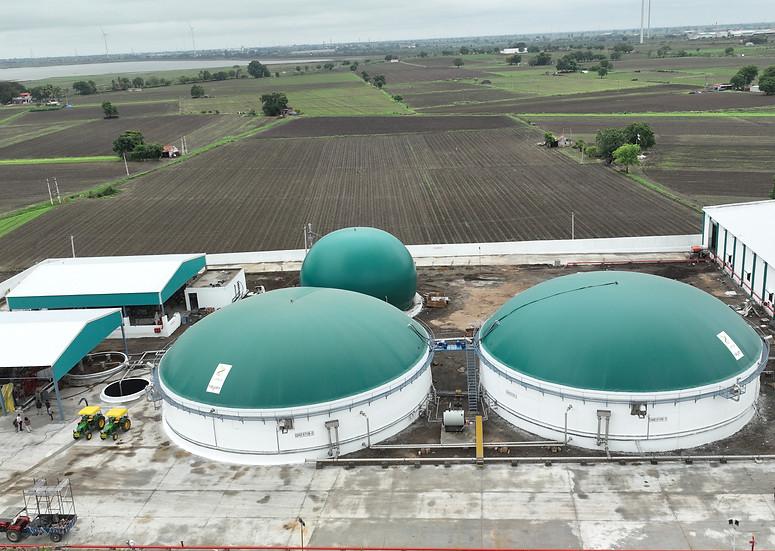
Uttar Pradesh is expanding efforts to channel agricultural residue into biogas production, connecting farmers and Farmer Producer Organisations (FPOs) with compressed biogas (CBG) plants through organised collection and transportation networks.
According to state Agriculture Department officials cited in a report published on 10 November, 40 biogas plants are currently operational in the state, with another 78 planned. The initiative aims to reduce stubble burning, lower crop-residue disposal costs for farmers and establish agricultural waste as a feedstock for renewable gas production.
The model has been developed by the Gates Foundation’s Technical Support Unit (TSU) under the guidance of the state Agriculture Department. It brings together farmers, FPOs, aggregators, super aggregators and CBG plant operators to coordinate residue collection, transportation and supply.
Barabanki plants anchor crop-residue collection network
Barabanki district is among the areas where the model is being implemented. According to Deputy Director of Agriculture Umesh Kumar Sah, CBG plants at Deva Road and Haidergarh have helped extend collection activities across Harkh, Haidergarh, Fatehpur and Ramnagar blocks.
Farmers in these areas can have crop residue collected soon after harvesting, allowing them to prepare their fields for the next sowing cycle. The organic material remaining after processing at the plants is also being made available for use as manure.
The Deva Road facility reportedly processes around 150 tonnes of stubble per day, producing approximately 15,000–19,000 kg of biogas daily. Paddy and maize residues are used as feedstock. Their relatively high silica content limits their suitability for animal fodder, making energy production an alternative utilisation route.
Wheat straw, by comparison, is commonly retained by farmers for livestock feed.
Collection model connects FPOs with biogas plants
The initiative uses a supply-chain structure intended to align the availability of crop-residue management machinery with the feedstock requirements of biogas plants.
The TSU has facilitated memorandums of understanding between FPOs and aggregators, which are connected to CBG facilities through super aggregators. These organisations coordinate with farmers, map fields and schedule collection according to harvesting timelines.
Participants are also trained in machinery operation and maintenance, residue collection and quality management. Equipment used in the process includes slashers and rakers for cutting and gathering straw, and balers for compressing it into transportable bundles. Vehicles and hydraulic equipment then move the material to collection centres and processing facilities.
The state Agriculture Department also provides subsidy assistance to FPOs and individual beneficiaries for purchasing crop-residue management machinery.
Farmers report lower residue-disposal costs
The collection system is intended to reduce the time and expense involved in clearing fields after harvesting.
Yogesh, a farmer from Karamatkheda village in Barabanki’s Harkh block who cultivates wheat, paddy and potatoes, said the timely removal of residue has helped him prepare land for the next crop without delays.
Another farmer, Balram from Tikra village, reported that removing residue from one acre previously cost approximately Rs 2,500–3,000. Collection through the biogas supply chain has helped avoid this disposal expense.
Farmers may also receive additional income where arrangements are in place for the purchase and supply of crop residue. However, the reported account does not specify procurement prices or the amount paid to participating farmers.
Rural employment and use of organic by-products
The programme is creating work across activities including residue cutting, collection, baling, loading, transportation and plant processing.
Sah said around 10–12 people are engaged in field-level stubble collection activities, while approximately 2,000 people are employed at the plant. The employment figure was reported by the district official and has not been independently verified.
The model also aims to return organic by-products from processing to agricultural fields. Their use as manure could support soil organic matter, moisture retention and nutrient management, although the extent of these benefits will depend on the characteristics and quality of the material and how it is applied.
The Agriculture Department says the wider approach is intended to shift residue management away from open-field burning and towards organised collection and productive use.
78 additional biogas plants planned across Uttar Pradesh
Agriculture Department Director T.M. Tripathi said the state currently has 40 operational biogas plants and plans to establish another 78. The proposed facilities are expected to use agricultural residue to produce compressed biogas, with organic processing by-products made available for agricultural use.
The reported plant count should be read alongside a separate Ministry of Petroleum and Natural Gas response to Parliament. That response recorded 41 commissioned CBG plants in Uttar Pradesh as of 31 July 2026, including facilities under the SATAT and CBG-CGD synchronisation schemes. The figures may reflect different reporting dates or definitions of plant status.
Bioenergy Business Analysis
Uttar Pradesh’s crop-residue management model highlights the importance of feedstock aggregation in developing agricultural-residue-based biogas projects. Plant capacity alone does not guarantee a reliable supply of biomass: collection equipment, local organisations, transport arrangements and coordination with harvesting schedules are also required.
The Barabanki example illustrates how CBG facilities can create a structured outlet for paddy and maize residue, which may otherwise be difficult to utilise as animal fodder. For farmers, the immediate benefit can include lower field-clearance costs and faster preparation for the next crop. Additional earnings depend on whether a functioning procurement arrangement offers payment for the collected material.
The proposed addition of 78 plants could expand demand for agricultural residues, but the scale of the opportunity will depend on project execution, feedstock availability, logistics and the economics of supplying plants throughout the year. Transparent reporting of plant commissioning, actual feedstock procurement, farmer payments and verified employment will be important in assessing the programme’s results.
Related: Read about Thiruvananthapuram’s CBG plant proposal.



