


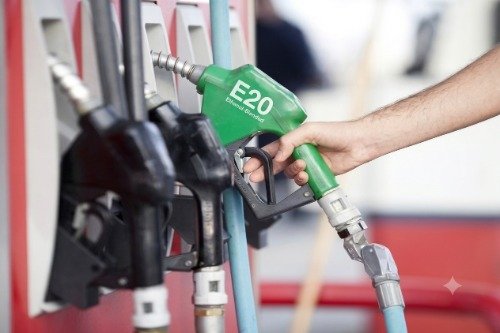
Union Minister for Road Transport and Highways Nitin Gadkari has defended India’s ethanol-blending programme, rejecting claims that ethanol-blended petrol is damaging vehicles and alleging that a paid campaign was organised to create concerns among motorists.
Speaking at the 14th CII Bioenergy Summit in New Delhi on 17 November 2026, Gadkari said a campaign had been launched two to three months earlier to portray ethanol-blended petrol as harmful to vehicles. He alleged that the campaign was backed by interests seeking to protect the business of imported fossil fuels. The debate comes as Bioenergy Business has reported on Kerala’s E20 petrol testing after Karnataka flagged excess ethanol.
“No one’s car is getting damaged. The car is fine now,” Gadkari said.
The minister’s remarks come amid continuing public debate over E20 petrol, which contains 20% ethanol blended with petrol. Concerns raised by motorists have included potential effects on older vehicles, fuel efficiency and the compatibility of engine and fuel-system components.
Gadkari cites tests while addressing E20 concerns
Gadkari’s latest comments follow statements he made in Parliament in July 2026 on the impact of E20 petrol on vehicles.
In a written reply to the Lok Sabha, the minister said studies conducted by the Automotive Research Association of India (ARAI), the Society of Indian Automobile Manufacturers (SIAM) and Indian Oil Corporation had examined E20 use in BS-III, BS-IV and BS-VI petrol vehicles originally designed for E10 fuel.
According to the minister’s reply, vehicle fuel efficiency could decline by 2% to 6%, depending on vehicle category and age. However, engine durability tests and on-road trials had not shown failures attributable to E20, he said.
Gadkari also said mileage depended on factors beyond fuel composition, including driving conditions and habits, oil changes, air-filter maintenance, tyre pressure, wheel alignment and air-conditioning use.
The parliamentary response also addressed older vehicles. The minister said some rubber components and gaskets in certain older BS-III vehicles could require replacement during routine servicing. The government’s position, therefore, distinguishes between potential fuel-efficiency changes or component-maintenance requirements and evidence of widespread engine failure.
Minister highlights ethanol, biodiesel and other alternative fuels
At the CII summit, Gadkari also called for wider adoption of alternative fuels, including ethanol, methanol, biodiesel and hydrogen, as part of efforts to reduce fossil-fuel imports and improve domestic energy security.
He highlighted the potential to produce Sustainable Aviation Fuel (SAF) from ethanol and rectified spirit, as well as the possibility of converting carbon dioxide into urea.
The minister also discussed dimethyl ether (DME), which can be used as an alternative to conventional LPG. Greater use of such fuels, he said, could help reduce India’s reliance on imported energy.
Gadkari points to GOBARdhan plants and bioenergy potential
Gadkari referred to around 3,000 upcoming plants under the GOBARdhan initiative, which aims to convert organic waste into useful energy products.
Addressing the same summit, he highlighted the potential of bioenergy and domestic feedstocks to support energy security and economic self-reliance. An official account of his address also reported that he referred to approximately 3,000 plants being set up under the initiative, with 250 already operational and nearly 200 under development.
GOBARdhan supports the conversion of organic resources, including cattle dung, agricultural residues and other biodegradable waste, into biogas and compressed biogas, alongside organic manure production.
The minister’s remarks place ethanol blending within a broader alternative-fuels strategy that includes waste-based gas, biodiesel, hydrogen and potential aviation-fuel pathways. The debate over E20, meanwhile, continues to involve questions of vehicle compatibility, fuel economy and the evidence available from laboratory testing and real-world use.



