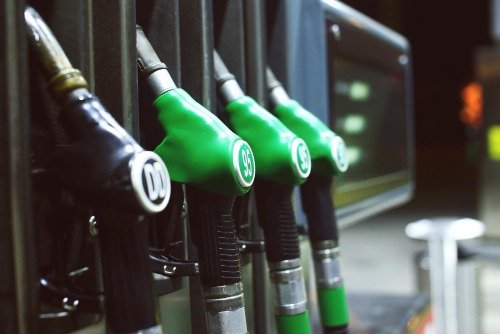
Biofuel consumption in Southeast Asia is projected to increase by 11% in 2026, outpacing the expected 7% growth in global consumption, as governments expand biodiesel and ethanol blending programmes to strengthen energy security and reduce dependence on imported oil.
Indonesia’s introduction of mandatory B50 biodiesel and Thailand’s tax incentives for E20 gasoline and B20 diesel are among the developments supporting regional demand. Vietnam has also implemented nationwide E10 gasoline, while other Asian markets are adjusting their biofuel policies in response to feedstock availability and fuel costs.
The projections were reported by Click Petróleo e Gás on 22 November, citing the International Energy Agency (IEA). The developments point to growing policy support for biofuels in road transport, although aviation and shipping are progressing at a different pace.
Indonesia implements B50 and prepares for higher ethanol blends
Indonesia officially launched its mandatory B50 biodiesel programme on 9 July 2026, increasing the biodiesel share in diesel fuel from 40% under B40 to 50%.
The government has described the programme as part of its efforts to strengthen energy independence and reduce reliance on imported diesel. The Ministry of Energy and Mineral Resources said B50 implementation had undergone testing across several sectors, including maritime and rail transport. <Cite refs={[“turn592040search0″,”turn592040search2”]}/>
The country is also preparing to expand ethanol blending in gasoline. According to the report, Indonesia currently uses E5 under Energy Ministry Decision No. 113 of 2026, with plans to introduce mandatory E10 in 2028 and move towards E20 between 2028 and 2029.
However, increasing ethanol blending will require substantial additional feedstock. The report estimates that an E20 programme would require around 4 billion litres of ethanol annually. Government discussions have also identified the need to expand sugarcane cultivation, with land availability and the environmental implications of plantation expansion remaining important considerations.
Thailand uses tax incentives to encourage E20 and B20 consumption
Thailand has introduced fiscal incentives to encourage greater use of ethanol-blended gasoline and biodiesel.
On 27 October 2026, the Cabinet approved three-month excise tax reductions of 5.60 baht per litre for E20 gasoline and 5.50 baht per litre for B20 biodiesel. The measure took effect on 28 October and is scheduled to run until 27 January 2027, subject to review. <Cite refs={[“turn311929search3″,”turn311929search68”]}/>
The Click Petróleo e Gás report said B20 sales increased from approximately 6 million litres per day to 10 million litres per day by 30 October. The sustainability of this higher sales level has not yet been established.
Thailand is also considering longer-term changes to its fuel mix through the draft 2026 Oil Plan, covering the period to 2050. The proposal would make 95-octane E20 the standard gasoline grade and retain B7 as the standard diesel blend while encouraging greater B20 use.
By 2032, the draft plan aims for E20 to account for 50% of gasoline sales and B20 to represent 20% of diesel sales. Between August and October 2026, their respective market shares were approximately 20.5% and 9.8%.
The draft remains open for public consultation until 27 November and requires Cabinet approval. These targets therefore remain proposed policy objectives rather than binding requirements. <Cite refs={[“turn311929search10”]}/>
Vietnam’s E10 rollout increases demand for imported ethanol
Vietnam introduced nationwide E10 gasoline on 1 June 2026, requiring a 10% ethanol blend in the relevant gasoline grade.
The expansion has increased the country’s requirement for fuel-grade ethanol. Monthly demand is estimated at approximately 100,000 cubic metres, while domestic production supplies around 25,000 cubic metres, or roughly one-quarter of the requirement. The balance is met through imports. <Cite refs={[“turn311929search0″,”turn311929search2”]}/>
The supply gap highlights a challenge facing countries that increase blending requirements without sufficient domestic production capacity. Expanding the market for biofuels can create opportunities for local producers, but it can also increase exposure to imported feedstock or finished ethanol.
Philippines and India face different feedstock constraints
The Philippines has taken a more cautious approach to increasing biodiesel blends. The report says plans to raise the blend to B4 and subsequently B5 have faced delays because of high coconut oil prices, leaving B3 in place.
Although the country’s Department of Agriculture approved a move to B5 in June, the report said a subsequent decision confirming implementation had not been announced. Producers have indicated that they could supply enough biodiesel for a 7% blend. Chemrez, a subsidiary of D&L Industries, is also planning a second coconut biodiesel facility in Batangas, with construction scheduled to begin in the first quarter of 2027.
In India, feedstock availability and sugar supply are influencing ethanol policy. The government restricted the use of sugarcane juice, syrup and B-heavy molasses for ethanol production during the supply period beginning in November 2026, citing low sugar inventories. Other feedstocks, including maize, damaged food grains, surplus rice and C-heavy molasses, remain part of the ethanol supply framework.
These developments illustrate how agricultural supply conditions can influence the pace and composition of national biofuel programmes.
Asian aviation sector prepares for SAF requirements
Biofuel adoption in aviation is progressing more slowly than in road transport, with several countries still developing their sustainable aviation fuel (SAF) policies.
Singapore is scheduled to introduce a sustainable fuel levy for departing flights from 1 January 2027. Its approach will use centralised procurement rather than requiring individual fuel suppliers to blend SAF directly. The first procurement auction is expected to cover 20,000–30,000 tonnes, with deliveries scheduled to begin in June 2027.
South Korea is also planning a 1% SAF blending requirement for international flights from 2027, followed by higher targets in 2030 and 2035. Malaysia, meanwhile, has postponed its proposed 1% SAF requirement for international departures from January 2027 to 2030, citing fuel costs and the time needed to establish the regulatory framework.
India has also been discussing a proposed SAF blending roadmap, with indicative targets of 1% in 2027, 2% in 2028, 3% in 2029 and 5% in 2030. The proposal had not yet been released for public consultation at the time of the report.
High prices remain a significant barrier to wider adoption. The Asia-Pacific Airlines Association estimates that SAF costs two to five times as much as conventional jet fuel, according to the report.
Shipping biofuel adoption depends on international rules
The maritime sector has seen commercial activity in biofuel blends, but national blending requirements remain limited across Asia.
In Thailand, Bangchak and PTT Oil and Retail Business are distributing B24 marine fuel. Malaysia has set a target of achieving a 40% share of low-carbon marine fuels by 2050 and plans to introduce a single licensing system for vessel bunkering in February 2027.
Marine biofuel bunkering operations have also begun at Taiwan’s Port of Kaohsiung, while Singapore and Qingdao in China are discussing pilot projects involving methanol.
The International Maritime Organization’s proposed global emissions regulations remain a key uncertainty for the sector. The report points to a further international meeting scheduled for December 2026 to address the delayed regulatory process. If the proposed rules are adopted, the IEA projects that marine biodiesel demand could exceed 12 billion litres by 2031.
Across Asia, the expansion of road-transport blending programmes is creating near-term demand for biodiesel and ethanol. However, the region’s ability to sustain that growth will depend on feedstock availability, domestic production capacity, fuel economics and the development of regulatory frameworks for aviation and shipping.