


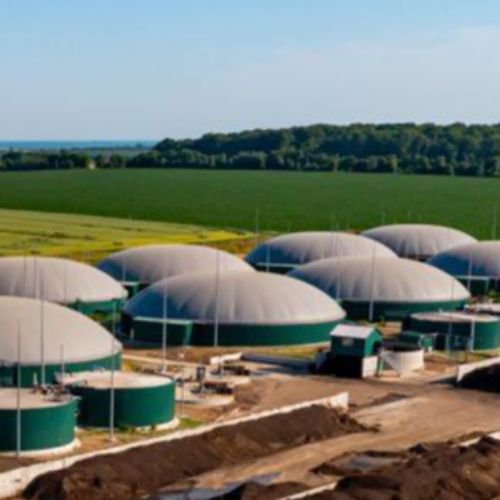
The Municipal Council of Palwal in Haryana has proposed a biogas plant at the city’s vegetable market to process up to five tonnes of organic waste daily and supply gas to the farmers’ canteen. The project is intended to reduce the accumulation of discarded fruits and vegetables while providing an alternative to commercial LPG for cooking.
According to the project details provided, the proposed facility is expected to produce around 400–500 cubic metres of biogas per day. However, the plant remains at the proposal stage, with installation and operations dependent on securing financial support and the necessary approvals.
Proposed Plant to Process Market Waste
The facility would use discarded fruits, vegetables and other biodegradable waste generated at Palwal vegetable market as feedstock. Processing this material locally is expected to help address waste accumulation, unpleasant odours and unhygienic conditions within the market premises.
The project envisages a processing capacity of five tonnes of waste per day. Its projected biogas output is approximately 400–500 cubic metres daily, although actual production would depend on feedstock quality, plant design and operating conditions.
The gas is intended to be used at the farmers’ canteen within the market, which reportedly serves around 400 farmers and workers each day. Meals are available at a subsidised rate of ₹10 per plate.
Biogas Planned as an Alternative to LPG
Under the proposal, biogas generated from the market’s organic waste would be used for cooking at the canteen, reducing its reliance on commercially supplied LPG.
The project information estimates that the arrangement could reduce LPG consumption by around 180 cylinders annually. This figure requires clarification against the proposed daily biogas output and the canteen’s existing fuel consumption before it can be treated as a verified displacement estimate.
Using locally generated biogas could also provide the canteen with an alternative cooking-fuel source while linking the market’s waste-management system with an end-use application.
Organic Residue to Be Used for Manure
The project also envisages using the organic material remaining after biogas production to prepare manure. This would allow the facility to recover value from the biodegradable waste stream beyond the gas produced.
If implemented, the proposed system could support a local waste-to-energy model in which market discards are processed into biogas and the residual material is used as an agricultural input.
Separate Plan to Explore Cow Dung Collection
Alongside the vegetable-market project, the Municipal Council is also expected to explore a system for collecting cow dung from different wards of Palwal city.
The proposal includes assessing the possibility of processing the collected dung at a designated location to produce energy. The initiative also seeks to encourage the manufacture of products such as earthen lamps from cow dung.
These activities are intended to address the accumulation of dung on roads and vacant plots while exploring opportunities for its productive use. The available project information does not establish whether the city-wide collection and processing system will form part of the five-tonne-per-day market plant or be developed separately.
The proposed plant is expected to provide employment for approximately 17 people for its operation and maintenance. A further three positions have reportedly been earmarked for project management and monitoring.
These employment figures are projections associated with the proposed facility and should not be interpreted as jobs already created.
Bioenergy Business Analysis
The Palwal proposal illustrates how organic waste generated at a wholesale market could be linked directly to a local energy demand. Supplying biogas to the farmers’ canteen would create an on-site use for the gas, while the proposed manure production could provide an additional outlet for the material remaining after digestion.
However, the project is still at the proposal stage. Its implementation will depend on funding, approvals, plant design and the establishment of a reliable system to segregate and collect suitable organic waste.
The project’s eventual impact will depend on whether the proposed facility is funded, built and operated at the stated capacity.



