


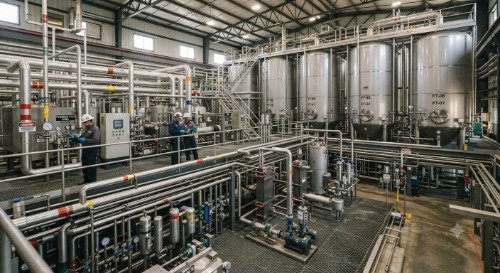
Prayagraj-based Mahakaushal Distillery is nearing completion of a ₹155 crore ethanol production facility in Shankargarh, Uttar Pradesh, with commercial operations scheduled to begin in January 2027. The plant is designed to produce approximately 100,000 litres of fuel-grade ethanol per day, equivalent to a potential annual output of 36.5 million litres at continuous full-capacity operation.
According to a news report published on 26 November 2026, the facility is being developed across 10 hectares and is expected to become the first ethanol plant in the Prayagraj division.
Plant director Raj Jaiswal said the project will combine fuel-grade ethanol production with plans to manufacture fruit-based alcoholic beverages using locally grown produce, particularly Allahabadi guava.
The project is also expected to create opportunities for agricultural residue utilisation, animal feed production and employment in surrounding rural areas.
Mahakaushal Distillery Targets 100 KLPD Ethanol Capacity
The Shankargarh facility has a planned daily production capacity of approximately 100,000 litres of fuel-grade ethanol. At full capacity, this translates into an annual production potential of approximately 36.5 million litres, assuming 365 days of uninterrupted operation.
The ₹155 crore investment covers a facility being established over approximately 10 hectares. Production is currently scheduled to begin in January 2027, although the announcement does not provide a detailed commissioning schedule or confirm the completion of all installation and testing activities.
The project represents an addition to Uttar Pradesh’s ethanol production infrastructure as India continues to expand domestic fuel ethanol availability under its Ethanol Blended Petrol (EBP) Programme.
However, the company has not disclosed the specific feedstock mix intended for the plant’s fuel-grade ethanol production, its expected procurement arrangements or the proportion of output committed to oil marketing companies.
Allahabadi Guava Planned for Fruit-Based Wine Production
Alongside its fuel ethanol operations, Mahakaushal Distillery plans to explore value addition through alcoholic beverages made from locally cultivated fruits.
Jaiswal identified Allahabadi guava as a potential raw material for fruit wine production. Other fruits highlighted for possible use include amla, jamun and mango, reflecting the horticultural potential of Prayagraj, Kaushambi and Pratapgarh districts.
The proposal comes amid policy support for fruit-based wine production in Uttar Pradesh.
The distillery’s proposed wine production should be distinguished from its fuel-grade ethanol operations. The available announcement does not establish that Allahabadi guava will be used as a feedstock for petrol-blending ethanol.
Agricultural Residue Utilisation and Employment Opportunities
The Shankargarh project is also expected to establish links with surrounding agricultural communities through the procurement and utilisation of agricultural by-products.
According to Jaiswal, the facility plans to purchase crop residue, including stubble, from farmers, providing an additional potential source of income while supporting agricultural residue management.
Waste generated by the facility is also expected to be processed into manure and supplied to farmers at affordable prices. The project is further expected to produce animal feed as an additional output.
These arrangements could create opportunities for local agricultural supply chains, although the company has not disclosed expected residue procurement volumes, manure output or animal feed production capacity.
The project is expected to generate employment for more than 600 people from surrounding areas, according to the report. The announcement does not provide a breakdown of direct and indirect jobs or the expected employment timeline.
District Magistrate Manish Kumar Verma said the concerned departments had been instructed to extend the necessary cooperation for the construction and operation of the facility.
Prayagraj Explores Opportunities in Fruit Processing and Agri-Tourism
The proposed fruit-wine initiative could also create opportunities for agricultural tourism in the Prayagraj division.
The region has established fruit-growing areas, with Prayagraj and Kaushambi known for guava cultivation and Pratapgarh associated with amla and mango production.
Jaiswal identified these horticultural resources as potential sources of raw material for fruit-based beverages beyond conventional grape wine.
Prayagraj-based tour operator Nilesh Narayan also suggested that resorts, winery visits and orchard tours could create additional tourism opportunities around the proposed facility.
However, these remain prospective tourism concepts. No confirmed resort development, winery tourism investment or commercial tourism programme has been announced as part of the project.
Bioenergy Business Analysis
Mahakaushal Distillery’s Shankargarh project combines planned fuel-grade ethanol production with a proposed fruit-processing business, creating two distinct opportunities for agricultural value addition in the Prayagraj region.
Its planned capacity of 100,000 litres per day would make it a significant addition to the division’s ethanol production infrastructure. The proposed use of crop residues and processing waste could also strengthen links between the distillery and local farming communities.
The project’s broader contribution to the biofuel sector will depend on its actual feedstock mix, commissioning timeline, operating performance and access to ethanol procurement markets.
For now, the January 2027 start-up remains a target rather than a confirmed operational date. The planned fruit-wine business and associated agricultural and tourism opportunities will also require further