

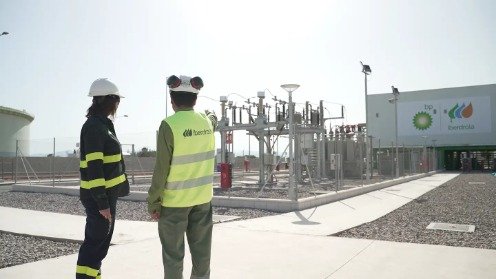
bp and Iberdrola have started operations at a 25 MW green hydrogen plant at bp’s Castellón refinery in Spain. The facility is expected to produce approximately 2,800 tonnes of renewable hydrogen annually, replacing part of the grey hydrogen currently used in the refinery’s industrial processes.
The project is being developed through a 50:50 joint venture and operated by bp. It is described by the companies as the largest green hydrogen plant currently operating in Spain. Renewable electricity for the facility is supplied by Iberdrola under a power purchase agreement (PPA), supporting the production of hydrogen through electrolysis.
Castellón plant replaces part of refinery’s grey hydrogen
Hydrogen is used in refining operations, including processes that help remove impurities from petroleum products. The Castellón facility will supply renewable hydrogen to replace part of the refinery’s existing grey hydrogen consumption.
The companies estimate that this substitution will avoid approximately 23,000 tonnes of CO₂ emissions annually and reduce associated carbon costs at the refinery. The projected emissions reduction is based on the expected displacement of grey hydrogen; it is not a reported, independently measured annual saving yet.
Iberdrola will provide 170 GWh of renewable electricity each year, sourced from its Spanish wind and solar farms under a PPA. The electricity will power the plant’s hydrogen production process. The project has received €15 million in funding through Spain’s renewable hydrogen value-chain incentive programmes, managed by the Institute for the Diversification and Saving of Energy (IDAE) and financed by the European Union’s NextGenerationEU programme under Spain’s Recovery, Transformation and Resilience Plan.
The initiative also involved the Instituto Tecnológico de la Energía (ITE). According to the companies, around 25 Spanish firms participated in supplying equipment or supporting construction, contributing to the development of domestic industrial capabilities linked to renewable hydrogen.
Companies highlight industrial competitiveness and emissions reduction
Brenda Stout, bp’s senior vice-president for refining, terminals and pipelines, said:
“Our European refineries play an important role in energy security. Closely integrated with our supply, trading and shipping business, they’re helping to meet customer demand for jet fuel, diesel and gasoline. The start-up of the green hydrogen plant with our partner Iberdrola further improves the competitiveness of our Castellón refinery, as we continue to deliver for our customers and shareholders.”
Mario Ruiz-Tagle, CEO of Iberdrola España, said:
“This green hydrogen project shows how innovation and electrification with renewable energy can improve the competitiveness of our industry, create jobs and strengthen our energy autonomy, while reducing emissions from industrial processes such as refining.”
The start of operations follows the partners’ final investment decision in September 2024 and the commencement of construction in February 2025. In March 2026, the project had reached 90% completion of its assembly phase, with all equipment delivered to the site.
The plant’s start-up represents a further step in the use of renewable hydrogen in industrial applications in Spain, where refineries offer an established source of demand for hydrogen to replace fossil-based supplies.