


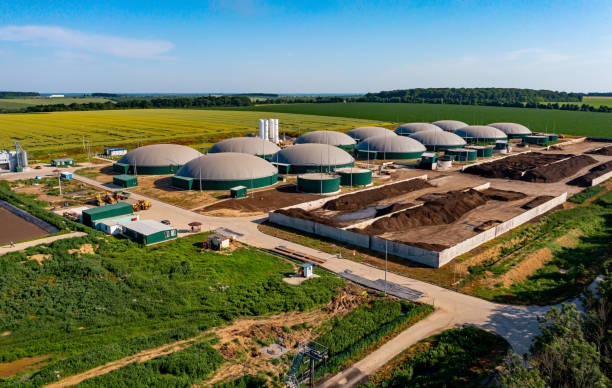
The proposed ₹361-crore Integrated Solid Waste Management (ISWM) project at Achan in Srinagar has entered the tendering stage, with the planned facility designed to process up to 800 tonnes of municipal solid waste per day and incorporate a Bio-CBG plant alongside composting, material recovery and refuse-derived fuel facilities.
Chief Minister Omar Abdullah informed the Jammu and Kashmir Legislative Assembly on September 28 that the project is currently under tendering and that no agency or contractor has been awarded the project so far. The project has a 25-year timeline, including a construction period of 24 months.
The Council of Ministers had approved the 800 TPD project at an estimated cost of ₹361 crore in May 2026, with the objective of strengthening scientific processing and disposal of Srinagar’s municipal waste.
The Bio-CBG component would provide a route for processing suitable biodegradable municipal waste through anaerobic digestion and converting the resulting biogas into compressed biomethane. Earlier project documentation cited by the National Green Tribunal identified a 300 TPD compressed biogas component within the ₹361-crore project, alongside dry-waste processing and windrow composting.
Achan project designed for 800 TPD
The proposed facility is being developed to address Srinagar’s growing municipal waste-management requirements.
The Srinagar Municipal Corporation (SMC) is currently handling approximately 500–550 TPD of municipal solid waste generated within its jurisdiction through collection, transportation, processing and disposal.
The proposed 800 TPD capacity would therefore provide additional processing headroom compared with the volume currently handled by the civic body.
The project is being developed at Achan under a public-private partnership framework, with the tender documentation providing for development and long-term operation of the integrated facility. The tender process has been subject to changes and extensions during 2026, with a fresh tender issued after an earlier process was cancelled.
SMC reaches full door-to-door collection
While the new facility remains in procurement, SMC is continuing to strengthen its existing waste-management system.
According to the government’s Assembly response, door-to-door collection has reached 100% coverage across Srinagar’s wards, while source segregation is currently around 60%.
The corporation has deployed more than 380 waste collection and transportation vehicles and has engaged over 2,700 sanitation workers for collection, transportation and sanitation services.
The level of source segregation will be particularly relevant to the future performance of the integrated facility because separate collection can improve the quality of biodegradable feedstock entering biomethanation and reduce contamination in recyclable and combustible waste streams.
Existing Achan facilities provide interim processing capacity
Several waste-processing facilities are already operating or being developed at Achan while the larger integrated project moves through procurement.
A 100 TPD Material Recovery Facility has been established to segregate and recover recyclable materials including plastics, paper, cardboard and metals. The recovered material is channelled to authorised recyclers and end users through a specialised operating agency.
An 85 TPD wet-waste processing plant is also operating at the site for treatment of segregated wet and biodegradable municipal waste.
Together, these facilities provide an existing foundation for material recovery and biological waste treatment ahead of commissioning of the proposed 800 TPD integrated facility.
Legacy waste remediation continues at Achan
The new project is being developed alongside efforts to address the waste already accumulated at the Achan site.
The government has initiated biomining and bioremediation of approximately 11 lakh tonnes of legacy waste, with windrow formation, civil works, segregation and recovery of recyclable materials underway. A 60 KLD leachate treatment plant is also under construction.
A separate 125 TPD construction and demolition waste facility is being established under Swachh Bharat Mission-Urban 2.0. Civil works have been completed, with mechanical works and equipment installation in progress, according to the Assembly response.
The parallel projects are intended to reduce the environmental burden of the existing dumpsite while new processing infrastructure is developed.
Project links waste recovery with renewable gas production
The planned Achan facility represents a broader shift from disposal-based municipal waste management towards resource recovery.
Its proposed architecture combines biological processing for organic waste, material recovery for recyclables, RDF production from suitable combustible fractions and engineered disposal for residual waste.
For the bioenergy sector, the Bio-CBG component is particularly significant. A sufficiently segregated organic waste stream can be processed through anaerobic digestion to produce biogas, which can subsequently be upgraded and compressed as renewable gas.
The earlier NGT-recorded project configuration envisaged 300 TPD of compressed biogas capacity, although the latest Assembly response focuses on the overall 800 TPD integrated facility and does not separately state the Bio-CBG plant’s capacity.
Bioenergy Business Analysis
The Achan project is notable because it combines municipal waste processing with a dedicated Bio-CBG pathway rather than treating waste management and renewable-gas production as separate systems.
The immediate priority, however, is project execution. The facility remains at the tendering stage, while Srinagar continues to process waste through existing MRF and wet-waste infrastructure and undertake remediation of the legacy dumpsite.
For the Bio-CBG component to deliver its intended value, consistent source segregation and reliable collection will be critical. The current 60% source-segregation level means Srinagar still has room to improve the quality of organic waste reaching biological-processing facilities. The eventual performance of the project will therefore depend not only on the construction of the 800 TPD plant, but also on the city’s ability to maintain segregated feedstock and integrate collection, processing and downstream renewable-gas utilisation.