


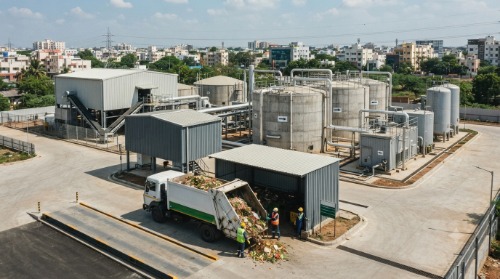
The Bharat Petroleum Corporation Limited (BPCL) compressed biogas (CBG) plant at Brahmapuram in Kochi has reached its designed waste-processing capacity of 150 tonnes per day, but operations have again fallen below that level because of inadequate supplies of source-segregated biodegradable waste from the Kochi Corporation.
Plant officials told The Times of India that the facility reached its maximum processing capacity last week after gradually increasing waste intake following operational problems earlier in the year. However, waste treatment has subsequently declined as the corporation has been unable to supply sufficient segregated material.
The development highlights the importance of consistent waste collection and segregation for the utilisation of municipal CBG infrastructure.
Plant reached 150 tonnes per day
The Brahmapuram facility initially increased its intake to around 100 tonnes of waste per day by the end of August, according to officials associated with the plant.
Processing subsequently rose to about 150 tonnes per day, matching the facility’s designed capacity. The plant is designed to process 150 tonnes of source-segregated biodegradable municipal solid waste daily and produce around 5.6 tonnes of CBG and 28 tonnes of organic manure per day at full capacity.
The purified biogas is supplied to BPCL’s Kochi Refinery through a dedicated pipeline, according to BPCL.
The facility was inaugurated by Kerala Chief Minister Pinarayi Vijayan on February 27, 2026. It was developed by BPCL at Brahmapuram as a waste-to-CBG project intended to process Kochi’s biodegradable municipal waste.
Waste quality has affected operations
The latest reduction in throughput follows a difficult initial operating period.
According to plant sources cited by The Times of India, operations were disrupted during April, May and June because of initial technical problems and inadequate segregation of incoming biodegradable waste. Metal and wood pieces mixed into the feedstock reportedly contributed to technical issues during the March-June period.
Processing subsequently fell to below 30 tonnes per day in July, before recovering as operations were gradually stabilised.
A June report had already highlighted interruptions at the plant, with the facility processing around 80-100 tonnes per day during part of April before waste availability declined sharply. The Kochi Corporation reportedly collected only about 460 tonnes of wet waste throughout May, compared with the plant’s 150-tonne daily design capacity.
Feedstock supply remains central to utilisation
The Brahmapuram project was designed around source-segregated biodegradable waste, meaning the quality and consistency of municipal waste collection are directly linked to plant utilisation.
BPCL’s original project description specifies source segregation and a pre-treatment stage that removes non-biodegradable material before the organic fraction enters the anaerobic digestion process.
This makes contamination with materials such as metal and wood more than a waste-management issue: it can also affect equipment reliability and the ability of a CBG facility to maintain steady throughput.
The issue is particularly relevant because Kochi has been seeking to strengthen its waste-management system following the Brahmapuram waste-site fire in 2023. The Kerala government approved BPCL’s proposal for a 150-tonne-per-day bio-methanation facility in 2023 as part of efforts to establish a more scientific system for handling biodegradable waste.
BPCL facility is part of wider CBG plans
The Brahmapuram project is among Kerala’s developing municipal-waste-to-CBG initiatives.
Government records list a 150-tonne-per-day CBG plant for Kochi Corporation, alongside proposed or developing facilities in other municipalities and corporations across the state.
In August, the Kochi Corporation also sought expressions of interest from private companies for food-waste treatment. At the time, the corporation said the existing Brahmapuram plant was insufficient to handle the city’s waste, while reporting indicated that the plant was then processing substantially below its 150-tonne-per-day capacity.
The latest increase to full design throughput demonstrates that the facility can process its intended volume when adequate feedstock is available. Maintaining that level will depend on consistent collection, segregation and delivery of suitable biodegradable waste.
Bioenergy Business Analysis
The Brahmapuram plant’s operating experience illustrates a fundamental constraint for municipal CBG projects: installed processing capacity does not automatically translate into equivalent feedstock throughput.
The facility has demonstrated that it can reach its 150-tonne-per-day design capacity, but the subsequent reduction in waste intake shows that municipal collection and segregation systems remain critical to its utilisation. The earlier contamination-related technical problems further underline the operational importance of feedstock quality.
For Kochi, improving the reliability of source segregation could therefore have implications beyond waste disposal. Higher utilisation of the BPCL facility would allow more biodegradable waste to enter anaerobic digestion, potentially increasing CBG and organic-manure output while reducing the volume requiring alternative treatment.
The broader lesson for India’s municipal CBG programme is that plant construction is only one part of project delivery. Long-term performance also requires dependable feedstock contracts or municipal supply arrangements, effective source segregation, contamination control and collection infrastructure capable of sustaining the plant’s designed throughput.
Read also: Chennai Metrowater explores CBG production from Sewage Sludge at 11 STPs