


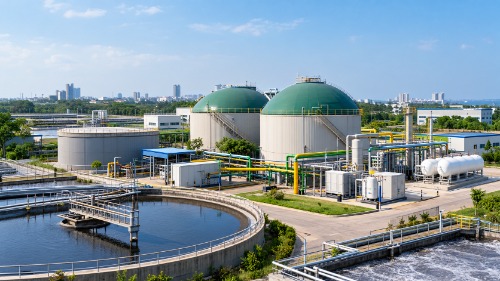
The Chennai Metropolitan Water Supply and Sewerage Board (Metrowater) is examining the commercial potential of biogas generated from sewage sludge, with plans to assess whether the gas can be upgraded into compressed biogas and sold to external consumers.
The proposal covers 11 sewage treatment plants (STPs) with a combined capacity of 844 million litres a day (mld). Metrowater plans to use a detailed feasibility study to determine the technical, commercial and infrastructure requirements for converting existing biogas production into a revenue-generating CBG business.
The initiative was reported by the Times of India, which said Metrowater intends to appoint a consultant to examine the purification, compression and sale of biogas generated through anaerobic digestion of sewage sludge.
The Chennai Metropolitan Water Supply and Sewerage Board has also floated a consultancy tender for preparing a detailed Feasibility Report and providing transaction advisory services for monetising compressed biogas under a PPP-based revenue model. The latest tender was published on 18 September 2026, with bids scheduled to close on 5 October.
11 Chennai STPs under CBG feasibility study
Metrowater operates 20 sewage treatment plants with a combined treatment capacity of 957.8 mld and treats around 650 mld of sewage on average.
The sewage treatment process generates sludge, which can produce biogas through anaerobic digestion. At present, the gas is either flared or used internally, including for electricity generation at treatment facilities.
According to Metrowater officials quoted by the Times of India, around 50 kg of biogas is generated for every 1 mld of STP capacity. The board currently uses biogas for power generation, with the existing process capturing around 65% of the methane contained in the generated gas.
The feasibility exercise will focus on 11 plants where biogas generation infrastructure is already available. These include facilities at Kodungaiyur, Koyambedu, Nesapakkam and Perungudi.
Earlier reporting by the New Indian Express also identified 11 Metrowater plants equipped for biogas generation and said the facilities collectively generated about 24,500 cubic metres of biogas per day.
Study to assess biogas output and upgrading potential
The proposed consultant will undertake wastewater and sludge sampling across the selected plants.
The study will examine wastewater characteristics, sludge generation and sludge quality while comparing theoretical biogas production with actual output. Treatability studies will also assess whether changes in the treatment process could increase biogas production.
A central question will be whether Metrowater should continue using the gas for electricity generation or redirect it towards commercial CBG production.
The consultant will assess infrastructure requirements covering sludge thickening, anaerobic digestion, biogas purification, gas holders, flaring and gas bottling. The study is therefore expected to evaluate the complete value chain rather than only the gas-upgrading stage.
CBG sales and potential off-takers
Metrowater is also looking beyond production to determine whether there is a commercially viable market for the upgraded gas.
Potential CBG off-takers identified for assessment include oil marketing companies, city gas distribution companies, CNG retail outlets, public and municipal transport fleets, commercial establishments and industrial consumers.
The consultant will examine market demand, applicable commercial mechanisms, logistics, infrastructure requirements and the regulatory framework governing CBG sales.
The study will ultimately recommend an appropriate PPP structure, including potential revenue-sharing or concession arrangements, based on the project’s techno-economic viability.
The latest tender issued by Metrowater specifically describes the assignment as preparation of a Detailed Feasibility Report and transaction advisory services for generating revenue from CBG under a PPP-mode revenue model.
Carbon dioxide and digestate could add additional revenue streams
Metrowater’s proposed assessment will also examine whether the carbon dioxide separated during biogas purification could be further purified and sold.
The feasibility study is similarly expected to evaluate the commercial potential of the digested sludge. Possible downstream uses include composting and other routes for generating additional revenue.
This creates the possibility of a broader resource-recovery model in which the sewage treatment process produces multiple marketable outputs rather than treating biogas as only an internal energy source.
From wastewater treatment to resource recovery
The proposed CBG initiative forms part of a wider shift towards recovering economic value from municipal wastewater infrastructure.
Metrowater has already explored revenue generation from treated sewage water, while the biogas proposal focuses on converting an existing by-product of sludge treatment into a transport or industrial fuel.
The earlier New Indian Express report said Metrowater had generated more than ₹550 crore since 2020 by selling treated sewage water to industries and was subsequently examining biogas as another potential source of revenue.
For the CBG proposal, however, the immediate stage remains feasibility assessment rather than confirmed commercial production. The technical study will need to establish actual gas yields, methane concentration, upgrading requirements, capital expenditure, operating costs and potential revenues before a final investment and PPP structure can be determined.
Bioenergy Business Analysis
Chennai’s proposal highlights an underused pathway for municipal bioenergy: converting sewage sludge into a commercially saleable gas rather than relying solely on internal power generation or flaring.
The key issue will be economics rather than gas availability alone. Upgrading sewage-derived biogas to CBG requires gas cleaning, methane recovery, compression, storage and distribution infrastructure. The value of the project will therefore depend on how the cost of these systems compares with the value of electricity currently generated from the gas and the achievable CBG sale price.
The feasibility study’s examination of CO₂ and digested sludge is also significant. If CBG, recovered CO₂ and treated digestate can all generate revenue, the economics could be assessed on a broader resource-recovery basis. The eventual PPP structure, identified off-takers and logistics network will determine whether Chennai can move from pilot-level resource recovery to a scalable municipal CBG model.