


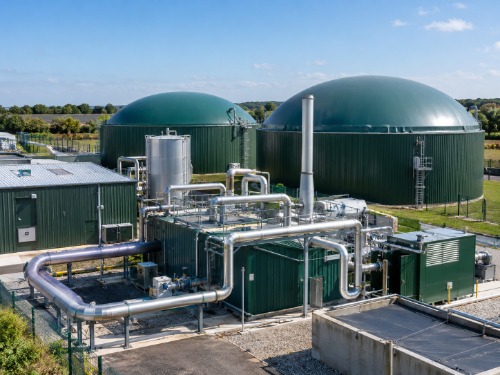
The Delhi Jal Board (DJB) has invited expressions of interest from private companies to purchase raw biogas generated at two sewage treatment plants (STPs), opening a route to commercialise gas currently being flared and potentially convert it into electricity or vehicle fuel.
The initiative covers the Keshopur Phase-I and Yamuna Vihar Phase-II STPs. Under the proposed arrangement, selected companies will purchase untreated biogas from the plants and establish their own processing facilities for applications that could include purification, compression, bottling, bio-compressed natural gas (bio-CNG) production and power generation.
The DJB will supply raw biogas at designated delivery points and provide land within the STP premises on a lease or licence basis. Private operators will be responsible for designing, installing, operating and maintaining their facilities, as well as securing the required statutory approvals and clearances.
DJB targets biogas utilisation at Keshopur and Yamuna Vihar
The first phase covers two facilities from the DJB’s network of 37 sewage treatment plants across Delhi.
The Keshopur Phase-I STP is being upgraded from 12 million gallons per day (MGD) to 18 MGD. Its design allows biogas generation of up to 257.26 cubic metres per hour. Project estimates for the upgraded plant indicate potential daily gas generation of between 10,436 and 13,045 cubic metres, depending on assumptions about volatile suspended solids.
At the Yamuna Vihar Phase-II STP, which has a treatment capacity of 15 MGD, reported biogas generation is 18,173 cubic metres per month. According to the reported project details, the gas at both facilities is currently being flared.
The EOI process is intended to assess market interest, technical capabilities and the commercial terms prospective buyers are willing to offer. The DJB plans to shortlist eligible applicants before issuing a detailed request for proposals (RFP). The same approach could subsequently be considered for other STPs.
Private operators to finance processing infrastructure
Under the proposed structure, the DJB will make raw biogas available at specified delivery points, while private companies will invest in the equipment needed to process and use it.
Potential routes include removing impurities from the gas, compressing it for storage and transport, converting it into bio-CNG or using it for power generation. The final pathway will depend on gas quality, available volumes, technology requirements, project economics and applicable regulations.
The arrangement would shift the cost of processing infrastructure and day-to-day operations to the selected companies. It would also allow the DJB to explore commercial returns from biogas without necessarily having to develop and operate every downstream facility itself.
The tender listing for the raw-biogas supply EOI identifies 3 November 2026 as the submission deadline. Applicants should verify the latest terms, deadlines and any amendments against the official tender documents.
Delhi’s sewage treatment network offers a potential resource
Delhi generates nearly 1,000 MGD of sewage, while its reported sewage treatment capacity stands at 814 MGD. The DJB operates 37 STPs across the capital, creating multiple potential sites where gas produced during sludge digestion could be assessed for productive use.
Biogas is generated when microorganisms break down organic matter in the absence of oxygen. At sewage treatment plants, this process can produce a methane-containing gas that may be used for heat or electricity, or upgraded to a higher-quality fuel if its composition and the economics support further processing.
The DJB already uses some biogas from certain STPs for captive power generation and internal requirements. The proposed initiative focuses on gas at the two identified plants that is currently being flared, with the aim of evaluating whether external operators can put it to productive use.
Bioenergy Business Analysis
The DJB’s initiative could create a commercial pathway for recovering energy from sewage sludge while reducing the amount of biogas that is flared at the two selected facilities. Its significance lies in testing whether a public utility can make raw biogas available to private operators and use competitive interest to identify viable downstream applications.
The project’s commercial viability will depend on more than the volume of gas generated. Methane concentration, contaminants, consistency of supply, processing costs, equipment requirements and proximity to potential fuel or electricity users will influence the value of the resource. The costs of compression, upgrading and compliance will also affect the returns available to operators and the terms they can offer the DJB.
The EOI and subsequent RFP will therefore be important indicators of market appetite. If the first two sites attract viable proposals and demonstrate reliable operations, the DJB may have a basis for evaluating similar arrangements at other treatment plants. For now, the initiative remains a procurement and market-assessment exercise; no private operator, final investment or bio-CNG output has yet been confirmed in the cited reports.


