


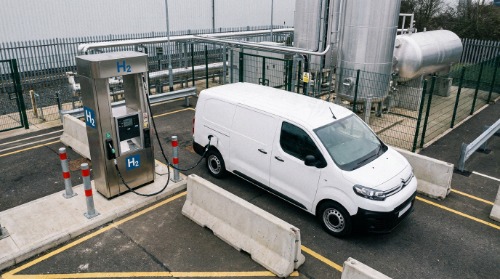
Wales & West Utilities (WWU) has launched a 12-week trial of a prototype Ford Transit light commercial vehicle powered by a hydrogen fuel cell in Swansea, Wales, to assess the technology’s suitability for reducing emissions from its operational fleet.
The trial brings together WWU, Ford, green hydrogen supplier Protium Green Solutions, Fuel Cell Systems Ltd and Hyppo Hydrogen Solutions. It will evaluate the vehicle’s performance under typical working conditions, including its driving range, refuelling requirements and payload capacity.
The initiative focuses on vehicle applications where battery-electric alternatives can face operational constraints, particularly in terms of payload, towing capacity, range and access to suitable charging infrastructure.
Hydrogen transit van to undergo real-world operational testing
During the 12-week trial, WWU employees will use the prototype vehicle in their daily operations across Swansea and the wider West Wales region. The company aims to determine whether hydrogen fuel cell technology can meet the practical requirements of its utility operations.
The vehicle uses a hydrogen fuel cell system, with hydrogen gas serving as the fuel. The project team will examine how the vehicle performs during a typical working day, including its operational range, refuelling needs and ability to carry the loads required for fieldwork.
WWU said refuelling at 700 bar enables the vehicle to maximise the potential of hydrogen fuel cell technology in light commercial vehicle applications. The project builds on an earlier hydrogen vehicle trial and is intended to provide further evidence of the technology’s suitability for demanding commercial uses, including utility and construction work.
Green hydrogen supply and refuelling infrastructure
Protium Green Solutions is supplying and delivering the hydrogen for the trial, while Fuel Cell Systems Ltd is supporting the refuelling arrangements at the Hyppo Hydrogen Solutions site in Swansea.
The partnership highlights the importance of coordinating vehicle deployment with hydrogen production, distribution and refuelling infrastructure. For commercial fleet operators, the availability of dependable refuelling facilities is an important consideration alongside vehicle performance and operating costs.
The trial will help the participating organisations assess the practical requirements of operating hydrogen-powered vehicles in a regional service network. However, the operational and emissions benefits will need to be evaluated against the results of the trial.
WWU fleet emissions provide decarbonisation opportunity
WWU operates approximately 1,300 vehicles across Wales and the south-west of England. According to the company, its fleet travelled more than 15 million miles in 2025, consuming 4.3 million litres of diesel.
The scale of its vehicle operations makes fleet decarbonisation an important part of the company’s wider sustainability efforts.
Stephen Offley, transport lead for WWU’s net zero and sustainability team, said the fleet represents a significant proportion of the company’s carbon footprint and offers considerable potential for emissions reductions through suitable technologies.
He said the trial reflects WWU’s commitment to identifying low-carbon solutions that can reduce emissions while maintaining the reliable and efficient services customers expect.
Offley added that the company expects hydrogen to play an important role in decarbonising road transport as the sector moves away from fossil fuels. WWU also hopes its vehicle trials will encourage other organisations to assess hydrogen as a potential zero-emission transport option.
Industry partners highlight hydrogen’s role in commercial transport
Stelios Karagiorgis, innovation project lead at Ford, said the company was pleased to work with WWU on the initiative. He said the trial combines Ford’s engineering expertise with hydrogen fuel cell technology to assess whether zero-emission vehicles can meet the demands of everyday fleet operations.
David Muckle, chief operating officer at Protium, said green hydrogen could offer a practical solution for light commercial vehicles where payload, range, operating schedules and rapid refuelling are important considerations. He said Protium’s involvement would demonstrate how regional hydrogen supply networks could support the decarbonisation of essential commercial fleets.
Lee Juby, CEO of Fuel Cell Systems Ltd, highlighted the importance of reliable and accessible refuelling infrastructure in enabling organisations to transition to lower-emission commercial vehicles. He said the project would provide operational insights to help inform the development of zero-emission transport.
Chris Foxall, CEO of Hyppo Hydrogen Solutions, said collaboration between industry participants was helping develop the infrastructure, skills and confidence needed to deploy hydrogen across transport, power and industrial applications. He also highlighted the work being undertaken at H2Bay and across South Wales.
Hydrogen fuel cell vehicles face practical deployment tests
The Swansea trial forms part of the wider challenge of reducing emissions from commercial road transport, particularly for operators running heavily loaded heavy goods vehicles (HGVs) or light commercial vehicles that travel long distances or require substantial towing capacity.
Battery-electric vehicles remain an option for some fleet applications, but WWU said limitations relating to payload, range, towing and recharging infrastructure can make electrification more challenging for certain operational requirements.
Hydrogen fuel cell vehicles offer an alternative pathway, although their suitability depends on vehicle performance, hydrogen availability, refuelling infrastructure and the overall economics of deployment.
The 12-week trial is expected to provide practical information on how a hydrogen-powered Ford Transit performs in WWU’s working environment. Its findings could help the company determine whether the technology can support its fleet decarbonisation objectives while maintaining operational reliability.