


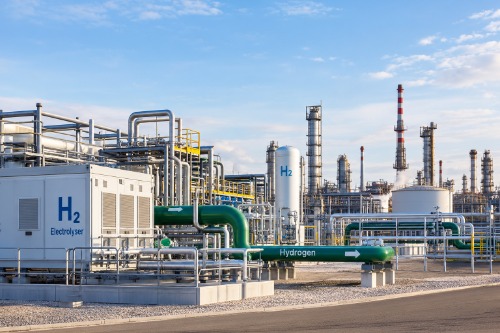
ITM Power’s Hydropulse subsidiary has signed preliminary terms with a European oil refinery for a proposed 150 MW green hydrogen project, with production targeted to begin by 2029.
The project would use ITM Power’s Alpha electrolyser platform and operate under a 10-year agreement. Before development can proceed, the project must complete a Front-End Engineering Design (FEED) study and reach a final investment decision (FID), both of which are targeted for 2027.
Under the proposed arrangement, Hydropulse would build, own and operate the hydrogen production facility. The model is intended to provide long-term contracted revenue while reducing the business’s exposure to fluctuations in electricity prices.
Hydropulse targets long-term industrial hydrogen supply
The proposed refinery project supports ITM Power’s strategy of supplying hydrogen directly to industrial customers rather than relying solely on equipment sales.
Through the build-own-operate model, Hydropulse would retain ownership and operational responsibility for the facility while supplying hydrogen under a long-term commercial arrangement. This structure could give the company a recurring revenue stream over the contract period, subject to the final terms and successful delivery of the project.
The preliminary terms mark an early step towards a larger industrial hydrogen development. The refinery has not been identified in the supplied announcement, and further details on the project’s location, investment value, hydrogen output and electricity supply arrangements have not been disclosed.
Alpha electrolyser platform at the centre of the project
The proposed 150 MW facility would use ITM Power’s Alpha electrolyser platform. Electrolysers produce hydrogen by using electricity to split water into hydrogen and oxygen. When the electricity comes from qualifying renewable sources, the resulting hydrogen can have substantially lower lifecycle greenhouse gas emissions than hydrogen produced from unabated fossil fuels.
The project’s eventual emissions performance will depend on factors including the source of electricity, the facility’s operating profile and the wider production process. The supplied announcement does not specify the planned renewable electricity procurement arrangements or provide an emissions-intensity target.
The proposed capacity places the development in the industrial-scale category of green hydrogen projects, with a refinery providing a potential application for hydrogen in existing industrial processes.
FEED study and investment decision remain key milestones
The next major development stage is a Front-End Engineering Design study, which is intended to establish the technical scope and engineering basis for the project. A final investment decision is targeted for 2027, while hydrogen production is planned to begin by 2029.
These milestones remain prospective. The project’s construction schedule, capital requirements and final commercial terms will depend on the outcome of the engineering work and the investment decision.
The proposed 10-year arrangement could support Hydropulse’s build-own-operate strategy by linking facility ownership with contracted industrial demand. However, the financial contribution of the project cannot yet be assessed from the information disclosed.
Bioenergy Business Analysis
The proposed project highlights a commercial route for scaling green hydrogen in hard-to-abate industrial sectors. By retaining ownership of the facility and contracting directly with an industrial customer, Hydropulse aims to combine equipment deployment with longer-term hydrogen supply revenues. For refineries, green hydrogen can potentially replace hydrogen produced from fossil fuels, although the project’s precise end use and emissions benefits have not been disclosed.
The key questions are whether the project secures its final investment decision in 2027, how competitively it can access low-carbon electricity, and what commercial terms underpin the 10-year arrangement. The build-own-operate structure may provide revenue visibility, but it does not eliminate exposure to electricity costs, utilisation rates, financing conditions or project-delivery risks. Until the FEED study and FID are completed, the 150 MW development should be treated as a proposed project rather than committed operating capacity.


